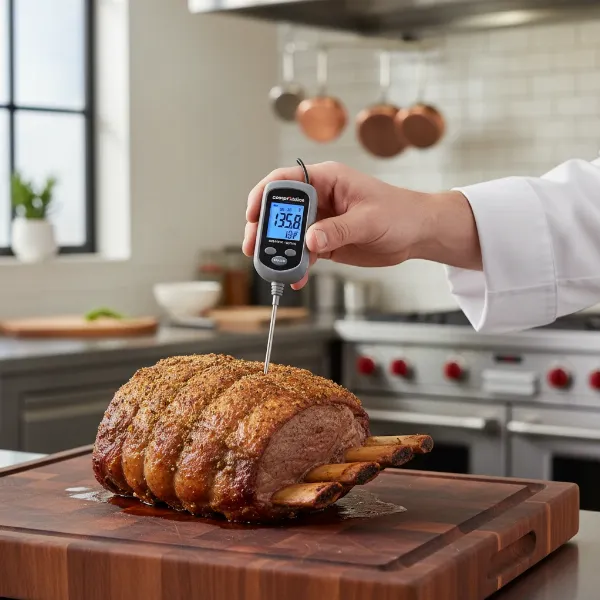
Have you ever meticulously inserted your meat thermometer, only to find wildly different temperature readings just a moment later or in what seems like the exact same spot? This frustrating inconsistency can lead to culinary confusion, resulting in overcooked dryness or, worse, dangerously undercooked meat. As an experienced technician specializing in meat thermometers, I understand the science and subtle nuances behind these seemingly erratic readings. This comprehensive guide will demystify why your thermometer might be giving you varied results and equip you with the knowledge to achieve perfectly cooked, safe, and delicious meals every single time.
Meat Thermometer: Overview and Benefits
A meat thermometer is an indispensable kitchen tool designed to measure the internal temperature of cooked foods, ensuring they reach a safe level of doneness while maintaining optimal texture and flavor. Beyond preventing foodborne illnesses, these devices empower home cooks and professional chefs alike to achieve consistent, restaurant-quality results. Guessing doneness by color or texture is unreliable; a meat thermometer provides objective, precise data.
There are several common types of meat thermometers, each suited for different cooking scenarios. Digital thermometers offer fast, easy-to-read displays, often with quick response times. Probe thermometers (or leave-in thermometers) are designed to remain in the meat throughout the cooking process, often connected to an external display or even a smart device for continuous monitoring. Instant-read thermometers provide rapid temperature checks in seconds but are not typically designed to be left in food during cooking. Analog thermometers, while often more affordable, can be slower and less precise.
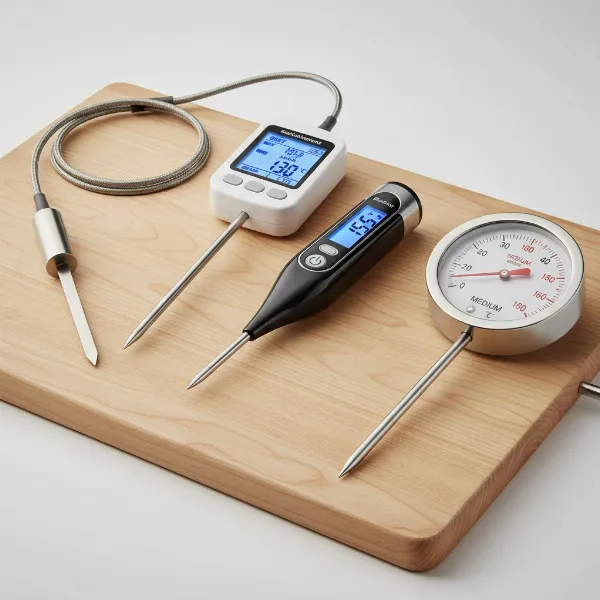 Various types of meat thermometers including digital instant-read, probe, and analog models.
Guide to Choosing the Right Meat Thermometer
Selecting the ideal meat thermometer depends on your specific cooking habits and preferences. Considering key factors will help you make an informed decision:
- Type of Meat and Dishes: For large roasts or smoking, a leave-in probe thermometer with remote monitoring is invaluable. For quick checks on steaks, chicken breasts, or burgers, an instant-read digital thermometer is best.
- Budget: While high-end models offer superior accuracy and features, reliable and affordable options are available. Investing in a quality thermometer is an investment in food safety and culinary success.
- Essential Features:
- Accuracy: Look for models that state a high degree of accuracy, typically within ±1°F (±0.5°C).
- Speed: Instant-read thermometers can display a stable reading in 1-5 seconds, crucial for quick checks without losing too much heat from your oven or grill.
- Connectivity: Bluetooth or Wi-Fi enabled thermometers offer convenience for monitoring from afar.
- Durability: Stainless steel probes and waterproof designs contribute to longevity.
Comparing types, digital instant-read thermometers are often lauded for their speed and precision, making them excellent for quick spot checks. Wireless probe thermometers are ideal for longer cooks like roasts or smoked meats, allowing you to monitor internal temperature without opening the oven or grill. While analog thermometers are simple, their slower response time and harder-to-read dials can contribute to inconsistencies.
Why Your Meat Thermometer Reads Different Temps in the Same Spot: Understanding the Variables
Even with a high-quality thermometer, variations in readings can occur. Understanding these underlying factors is key to achieving consistent results.
Improper Probe Placement
One of the most frequent culprits behind inconsistent readings is incorrect probe placement. Meat doesn’t cook uniformly; there can be cooler and warmer pockets.
- Too Close to Bone: Bones conduct heat, often leading to falsely high readings.
- Near Fat or Gristle: These tissues can also impact temperature measurement accuracy.
- Touching the Pan/Grill: If the probe tip touches a hot cooking surface, it will read the temperature of the pan, not the meat.
|
Our Picks for the Best Meat thermometer in 2026
As an Amazon Associate I earn from qualifying purchases.
|
||
| Num | Product | Action |
|---|---|---|
| 1 | Alpha Grillers Meat Thermometer Digital - Instant Read Food Thermometer for Cooking and Grilling Gifts for Men Valentines Day Gifts for Him Her Mom Dad |

|
| 2 | Professional Meat Thermometer - Instant Read Food Thermometer with Waterproof Design, Backlight, Hold/Min/Max Function - Cooking Thermometer for Grilling, BBQ, Kitchen Use |
|
| 3 | Meat Thermometer Digital, Instant Read Meat ThermometerI for Grill and Cooking, Waterproof Food Thermometer for Kitchen and Outside, BBQ, Turkey, Candy, Liquids, Beef |
|
| 4 | 0.5 Sec Instant Read Meat Thermometer Digital with ±0.5℉ Precision, Food Thermometer for Cooking Kitchen Gadgets, Oven Grill Candy BBQ Essentials Accessories, Gifts for Him Dad Men Birthday, Red |
|
| 5 | Meat Thermometer Digital - Instant Read Food Thermometer for Cooking Grilling, Candy, Air Fryer, Griddle Probe Kitchen Gadgets Essentials BBQ Accessories, Valentines Day Gifts for Him Her, Red |
|
| 6 | TempPro TP829 1000ft Wireless Meat Thermometer Digital for Grilling and Smoking, 4 Meat Probes Grill Thermometer for Outside Grill, BBQ Thermometer for Cooking Food Temperature (Previously ThermoPro) |
|
| 7 | ThermoPro TP19H Digital Meat Thermometer for Cooking with Ambidextrous Backlit and Motion Sensing Kitchen Cooking Food Thermometer for BBQ Grill Smoker Oil Fry Candy Instant Read Thermometer |
|
| 8 | Ultrean Digital Meat Thermometer for Cooking,Ultra-Fast Instant Read Food Thermometer with Backlight,Foldable Probe,Waterproof Kitchen Thermometer for BBQ,Grill,Fry,Oven,Candy Making |
|
| 9 | Meat Thermometer Digital with 1 Second Instant Read, Large LED Display, Food Thermometer |
|
| 10 | ThermoPro TP03B Digital Meat Thermometer for Cooking, Instant Read Thermometer with Backlight, Kitchen Food Thermometer for Grill Smoker BBQ Oil Deep Fry Candy Bread Coffee with Pop-up Meat Probe |
|
Always insert the probe into the thickest part of the meat, away from bones, fat, or gristle. For larger cuts like roasts or whole poultry, check the temperature in several different locations to ensure the entire piece is cooked evenly. For thinner cuts, insert the probe horizontally from the side to reach the center.
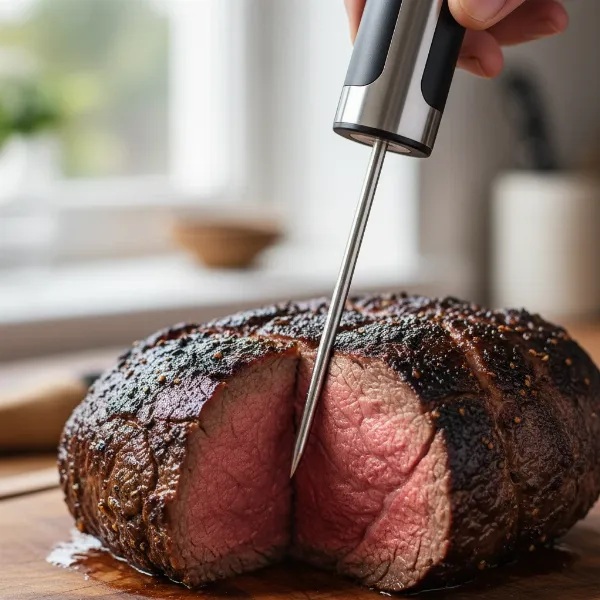 A close-up image showing a meat thermometer probe correctly inserted into the thickest part of a roast.
Lack of Calibration
Even the best thermometers can lose their calibration over time due to normal wear and tear, physical shocks (like being dropped), or exposure to extreme temperatures. An uncalibrated thermometer will consistently provide readings that are slightly higher or lower than the actual temperature, leading to errors. Regular calibration ensures your device is reading accurately.
Insufficient Stabilization Time
Many home cooks are eager to get their reading and pull the thermometer out too quickly. The thermometer’s sensor needs time to reach thermal equilibrium with the food it’s measuring. If you don’t allow sufficient time for the reading to stabilize, you might get a lower or higher reading than the actual internal temperature. For most instant-read thermometers, this means waiting 5 to 10 seconds until the number on the display stops rising and holds steady.
Inherent Thermometer Inaccuracies
The quality and design of your thermometer play a significant role.
- Manufacturing Tolerances: Cheaper thermometers may have wider manufacturing tolerances, leading to slight inaccuracies between units or even within the same unit over time.
- Sensor Quality: The type and quality of the temperature sensor (e.g., thermistor vs. thermocouple) affect its accuracy and response time.
- Circuitry: Electronic thermometers require precise electrical measurements and calculations. Faulty circuitry can introduce errors.
- Sensor Drift/Hysteresis: Over prolonged use, a thermometer’s sensor can “drift,” gradually losing accuracy. Some thermometers may also exhibit hysteresis, giving different readings depending on whether the temperature is rising or falling.
Uneven Heat Distribution in Meat
Meat itself is not a perfectly homogeneous material, and heat distribution during cooking can be uneven. Even within the “same spot,” microscopic temperature gradients can exist. Larger, irregularly shaped cuts are particularly prone to this, where the center of the thickest muscle cooks slower than areas closer to the surface. Taking multiple readings, especially in large items, helps account for this natural variation.
Troubleshooting and Ensuring Accurate Meat Thermometer Readings
Achieving consistent, accurate readings is a skill refined through proper technique and regular maintenance.
- How to Properly Calibrate Your Thermometer:
- Ice Bath Test: Fill a large glass with crushed ice, then add cold tap water until full. Stir well and let it sit for a minute. Insert your thermometer probe at least two inches deep into the ice water, ensuring it doesn’t touch the bottom or sides of the glass. Wait 30 seconds for the reading to stabilize. It should read 32°F (0°C). If it doesn’t, many dial thermometers have a recalibration nut under the dial; digital thermometers may have a reset button (check your manual).
- Boiling Water Test: At sea level, boiling water should read 212°F (100°C). Bring a pot of water to a rolling boil, insert the probe, and wait for it to stabilize. Adjust if necessary.
- Best Practices for Probe Insertion: Always insert the probe into the absolute thickest part of the meat. For poultry, this is typically the thickest part of the thigh or breast, avoiding bones. For roasts, penetrate to the center. For thin items like burgers or fish fillets, insert from the side horizontally.
- Allow for Stabilization: Patience is key. Wait until the thermometer reading stops changing and settles on a consistent number before removing it.
- Invest in Quality Equipment: A reliable, well-regarded meat thermometer from a reputable brand minimizes inherent inaccuracies. Look for features like fast response times and sturdy construction.
- Cleaning and Maintenance: Always clean your thermometer probe thoroughly with hot, soapy water before and after each use to prevent cross-contamination and ensure accurate readings. Store it safely to avoid physical shocks that can knock it out of calibration.
Mastering Meat Temperatures: Tips for Perfect Cooking
Armed with a properly functioning thermometer and correct technique, you can elevate your cooking to new heights.
- Ideal Temperatures for Various Meats:
- Beef, Pork, Veal, Lamb (steaks, roasts, chops):
- Medium-Rare: 130-135°F (54-57°C)
- Medium: 135-140°F (57-60°C)
- Medium-Well: 140-145°F (60-63°C)
- Ground Meats (Beef, Pork, etc.): 160°F (71°C)
- Poultry (Chicken, Turkey, Duck): 165°F (74°C)
- Fish: 145°F (63°C)
- Beef, Pork, Veal, Lamb (steaks, roasts, chops):
- Accounting for Carryover Cooking: Meat continues to cook after being removed from the heat source due to residual heat. This “carryover cooking” can raise the internal temperature by 5-15°F (3-8°C) for larger cuts. To achieve your desired final temperature, remove the meat from the heat 5-10°F (3-5°C) before it reaches its target, then let it rest.
- Flavorful Recipes: A meat thermometer is your secret weapon for perfectly juicy roasts, tender steaks, and safely cooked poultry. Experiment with different cooking methods, knowing your thermometer will guide you to optimal doneness.
“Precision in temperature is the cornerstone of both food safety and exceptional culinary results. Never underestimate the power of a calibrated thermometer and proper probe placement.” – Chef Antoine Dubois, Culinary Institute Instructor
In conclusion, encountering different temperature readings from your meat thermometer in the same spot is a common experience, but it’s rarely a mystery. Factors such as improper probe placement, a lack of regular calibration, insufficient time for the thermometer to stabilize, the inherent quality of the device, and the natural unevenness of heat distribution within meat all contribute to these variations. By understanding these variables and implementing best practices in thermometer use and maintenance, you gain the confidence to consistently cook meat to perfection. Don’t let inconsistent readings deter you; embrace your meat thermometer as a vital tool for safe, delicious, and repeatable cooking success. What’s your go-to method for ensuring your meat thermometer is always accurate?
Frequently Asked Questions
How often should I calibrate my meat thermometer?
It’s recommended to calibrate your meat thermometer regularly, ideally before each critical use or at least once a month if used frequently. Calibration should also be performed after any significant physical shock, such as dropping the thermometer, or if you suspect inaccurate readings.
Can using a dirty probe affect my temperature readings?
Yes, a dirty probe can indeed affect temperature readings. Food residue or grease on the probe can insulate the sensor, slowing down its response time and potentially leading to inaccurate readings. More importantly, it poses a significant food safety risk due to cross-contamination. Always ensure your probe is clean before and after each use.