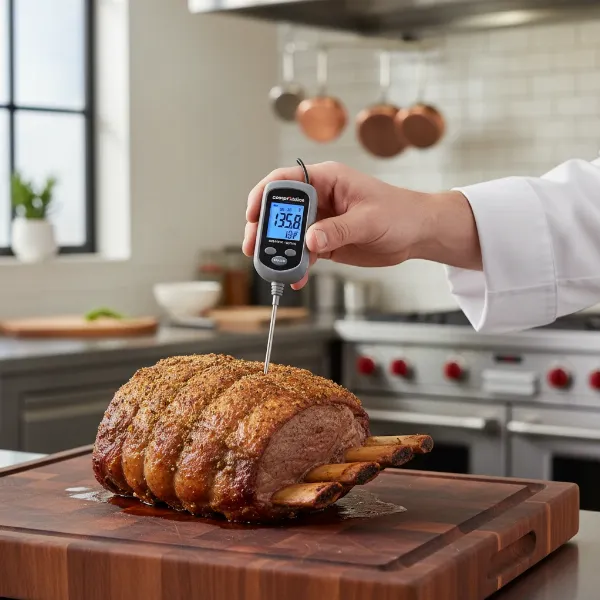
Achieving perfectly crispy, golden-brown deep-fried foods at home can feel like a culinary challenge. Often, the secret lies not just in the ingredients or the technique, but in one crucial element: precise oil temperature control. Many home cooks wonder if their trusty meat thermometer, a staple for ensuring safe and perfectly cooked meats, can also be their guide for the dangerously hot world of deep-frying oil. While it might seem convenient, the answer isn’t a simple yes.
This comprehensive guide will demystify the art of deep-frying temperature management, explain the critical differences between meat and deep-fry thermometers, and provide clear, actionable advice to help you achieve restaurant-quality fried dishes safely and consistently.
The Crucial Role of Oil Temperature in Deep Frying
Deep frying is a delicate balance where oil temperature dictates the success or failure of your dish. When oil is at the ideal temperature, food cooks quickly and forms a crispy crust, preventing excessive oil absorption. This results in a light, non-greasy, and uniformly cooked product.
However, inconsistent or incorrect oil temperatures can lead to culinary disappointment and even safety hazards. If the oil is too cool, food will absorb too much oil, becoming soggy and unappetizing. Conversely, oil that is too hot will burn the outside of the food before the inside has a chance to cook through, leading to a tough, raw center and a charred exterior. Overheated oil also degrades faster, produces harmful compounds, and significantly increases the risk of kitchen fires, making precise temperature monitoring not just about taste, but about safety.
Meat Thermometer vs. Deep-Fry Thermometer: Understanding the Differences
It’s tempting to grab the nearest thermometer for any temperature task, but when it comes to deep frying, understanding the distinct designs and limitations of different thermometers is paramount. A standard meat thermometer, while invaluable for roasts and grilled items, is fundamentally different from a dedicated deep-fry or candy thermometer.
Meat Thermometers
Most meat thermometers are designed to measure the internal temperature of solid food. They typically feature:
- Shorter Probes: Ideal for inserting into meat, but often too short to safely or accurately measure the temperature of deep oil without getting too close to the hot liquid or resting on the bottom of the pot.
- Lower Temperature Ranges: Many are rated to approximately 400°F (200°C). While this overlaps with typical frying temperatures (350-375°F), cooking oils can sometimes exceed 450°F (232°C), putting these thermometers at risk of damage or inaccuracy.
- Design for Intermittent Use: Instant-read meat thermometers are meant for quick spot-checks, not for prolonged exposure to intense heat. Leave-in meat thermometers are designed for oven use, where ambient temperatures are typically lower than direct oil heat.
- Safety Concerns: Their handheld design often necessitates placing your hand uncomfortably close to hot, splattering oil and steam, posing a burn risk. The electronic components of digital meat thermometers are also vulnerable to sustained high heat.
|
Our Picks for the Best Meat thermometer in 2026
As an Amazon Associate I earn from qualifying purchases.
|
||
| Num | Product | Action |
|---|---|---|
| 1 | Ultrean Digital Meat Thermometer for Cooking,Ultra-Fast Instant Read Food Thermometer with Backlight,Foldable Probe,Waterproof Kitchen Thermometer for BBQ,Grill,Fry,Oven,Candy Making |

|
| 2 | ThermoPro TP03B Digital Meat Thermometer for Cooking, Instant Read Thermometer with Backlight, Kitchen Food Thermometer for Grill Smoker BBQ Oil Deep Fry Candy Bread Coffee with Pop-up Meat Probe |
|
| 3 | ThermoPro TP19H Digital Meat Thermometer for Cooking with Ambidextrous Backlit and Motion Sensing Kitchen Cooking Food Thermometer for BBQ Grill Smoker Oil Fry Candy Instant Read Thermometer |
|
| 4 | Meat Thermometer Digital - Instant Read Food Thermometer for Cooking Grilling, Candy, Air Fryer, Griddle Probe Kitchen Gadgets Essentials BBQ Accessories, Valentines Day Gifts for Him Her, Red |
|
| 5 | Professional Meat Thermometer - Instant Read Food Thermometer with Waterproof Design, Backlight, Hold/Min/Max Function - Cooking Thermometer for Grilling, BBQ, Kitchen Use |
|
| 6 | 0.5 Sec Instant Read Meat Thermometer Digital with ±0.5℉ Precision, Food Thermometer for Cooking Kitchen Gadgets, Oven Grill Candy BBQ Essentials Accessories, Gifts for Him Dad Men Birthday, Red |
|
| 7 | Meat Thermometer Digital with 1 Second Instant Read, Large LED Display, Food Thermometer |
|
| 8 | Meat Thermometer Digital, Instant Read Meat ThermometerI for Grill and Cooking, Waterproof Food Thermometer for Kitchen and Outside, BBQ, Turkey, Candy, Liquids, Beef |
|
| 9 | Alpha Grillers Meat Thermometer Digital - Instant Read Food Thermometer for Cooking and Grilling Gifts for Men Valentines Day Gifts for Him Her Mom Dad |
|
| 10 | TempPro TP829 1000ft Wireless Meat Thermometer Digital for Grilling and Smoking, 4 Meat Probes Grill Thermometer for Outside Grill, BBQ Thermometer for Cooking Food Temperature (Previously ThermoPro) |
|
Deep-Fry and Candy Thermometers
These specialized thermometers are engineered with the demands of high-temperature liquid cooking in mind:
- Longer Stems and Pot Clips: A hallmark of deep-fry thermometers is their extended probes and adjustable clips. This design allows the thermometer to securely attach to the side of the pot, immersing the probe deep into the oil while keeping the display and your hands at a safe distance from the heat and splatters.
- Designed for Continuous Monitoring: Deep-fry thermometers are built to remain in the hot oil for extended periods, providing constant, real-time temperature readings. This is crucial as oil temperatures fluctuate significantly when cold food is added.
- Higher Heat Resistance: They are constructed with materials like stainless steel that can withstand the sustained high temperatures of frying oil, often with ranges extending well beyond 450°F (232°C).
- Accuracy and Durability: Built for the specific stresses of deep frying, they offer reliable accuracy in volatile oil conditions and are more durable under such demanding use.
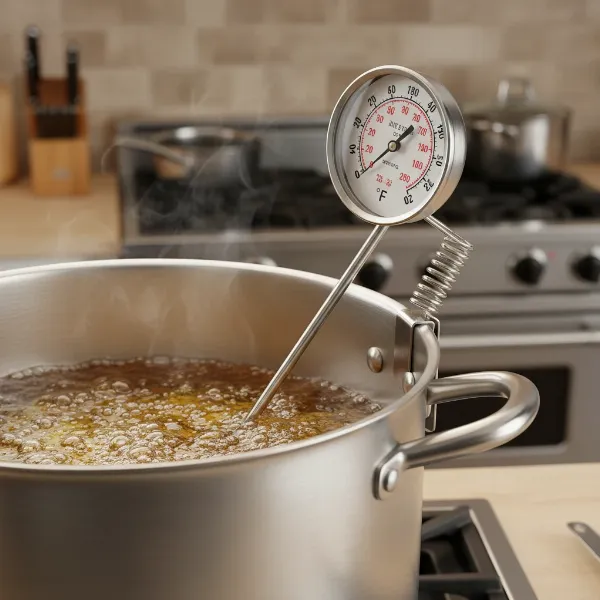 A deep-fry thermometer securely clipped to a pot, measuring hot oil.
When (and How) You Might Use a Meat Thermometer for Oil (With Extreme Caution)
While dedicated deep-fry thermometers are always the recommended choice, there might be rare occasions when you find yourself in a bind with only a meat thermometer available. In such extreme circumstances, you might be able to use a digital instant-read meat thermometer for a quick spot-check, but only if you adhere to stringent safety protocols:
- Verify Temperature Range: Absolutely ensure your meat thermometer is rated to handle temperatures exceeding 400°F (200°C). If its maximum temperature is lower, do not attempt to use it, as it could be permanently damaged.
- For Spot-Checks ONLY: A meat thermometer is not designed to be left in hot oil. The sustained intense heat will almost certainly damage the sensitive electronics in the handheld body.
- Prioritize Your Safety:
- Wear a heavy-duty oven mitt or heat-resistant glove to protect your hand from steam and splattering oil.
- Carefully dip only the very tip of the probe into the center of the oil for a few seconds to get a reading, then immediately withdraw it.
- Never let the electronic body of the thermometer touch the hot pot.
- Keep your face and body at a safe distance.
Using a meat thermometer for hot oil is a last resort and comes with significant risks. For consistent, safe, and delicious results, always opt for the right tool for the job.
Choosing the Ideal Thermometer for Safe and Perfect Deep Frying
Investing in the correct thermometer for deep frying is a game-changer for your kitchen safety and culinary outcomes. When selecting a deep-fry thermometer, keep these key features in mind:
- High Temperature Range: Look for thermometers that can accurately read temperatures up to at least 400-450°F (200-232°C). This ensures it can handle typical frying temperatures and unexpected spikes.
- Long Probe and Pot Clip: Essential for safety, a long probe keeps your hands away from the hot oil, while a sturdy pot clip allows for secure attachment to the side of your frying vessel, providing continuous, stable readings.
- Durability: Opt for models made from high-grade stainless steel, which can withstand the corrosive nature of hot oil and repeated high-heat exposure without degradation.
- Accuracy and Speed: Deep-frying oil temperatures can fluctuate rapidly, so a thermometer that provides fast and accurate readings (within ±2°F or 1°C) is crucial for making timely adjustments.
- Readability: Choose a thermometer with a clear, easy-to-read display. Digital models often feature backlit screens for visibility, while analog models should have large dials with distinct temperature markings.
- Alarms (Recommended): Advanced deep-fry thermometers, like the ThermoWorks ChefAlarm, often include high and low-temperature alarms. These features alert you if the oil temperature falls outside your desired range, allowing you to maintain optimal frying conditions effortlessly.
“Using a dedicated deep-fry thermometer isn’t just about getting a crispier fry; it’s a fundamental safety measure that protects you and ensures your oil maintains its integrity for better food quality,” says Chef Antoine Dubois, a culinary expert with two decades of experience in commercial kitchens.
Step-by-Step Guide: Best Practices for Deep Frying with a Thermometer
Once you have the right thermometer, mastering its use for deep frying is straightforward. Follow these steps for safe and consistent results:
- Preparation and Placement: Pour your desired oil into a heavy-bottomed pot or deep fryer. Attach your deep-fry thermometer securely to the side of the pot using its clip. Ensure the probe is submerged deep enough into the oil to get an accurate reading, ideally in the middle of the oil, without touching the bottom or sides of the pot. Touching the bottom can lead to an artificially high reading due to direct contact with the hot metal.
- Gradual Heating: Begin heating the oil over medium heat. Monitor the thermometer as the temperature rises. Heating gradually prevents scorching the oil and gives you better control over reaching the target temperature.
- Monitor and Adjust: Most deep-frying recipes call for oil temperatures between 350°F and 375°F (175°C and 190°C). As the oil approaches this range, keep a close eye on the thermometer. When you add cold food, the oil temperature will drop significantly. Use your thermometer to guide your burner adjustments, increasing heat to bring it back into the desired range and reducing it if it gets too hot. Consistent temperature is key to evenly cooked food.
- Safe Removal and Cleaning: After frying, turn off the heat and allow the oil and thermometer to cool completely before handling. Carefully remove the thermometer, clean its probe thoroughly with warm, soapy water, and dry it before storing. Never immerse the digital head of an electronic thermometer in water unless it’s explicitly rated as fully waterproof.
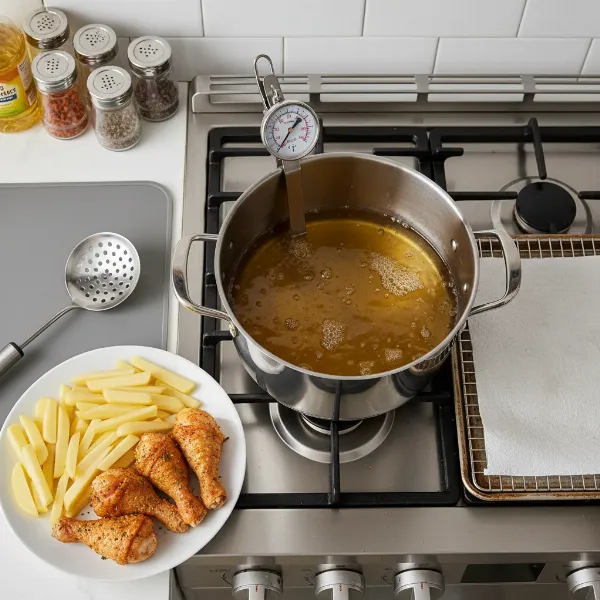 Home deep frying setup with a pot, oil, food, and a thermometer.
Beyond the Thermometer: Tips for Deep Frying Success
While a reliable thermometer is your most important tool, integrating these additional tips will elevate your deep-frying game:
- Don’t Overcrowd the Pot: Frying too much food at once will drastically drop the oil temperature, leading to soggy results. Fry in small batches to maintain consistent heat.
- Use High Smoke Point Oils: Choose oils like canola, peanut, vegetable, or sunflower oil, which have high smoke points and can withstand high frying temperatures without breaking down or imparting off-flavors.
- Properly Dry Food: Moisture on food causes oil to splatter violently and lowers oil temperature. Pat food thoroughly dry before lowering it into the hot oil. For battered items, ensure the batter is well-adhered.
- Understand Ideal Temperatures:
- French Fries/Crispy Vegetables: Often start lower, around 325-350°F (163-177°C), sometimes requiring a double-fry for ultimate crispness.
- Chicken/Fish/Doughnuts: Typically fried at 350-375°F (177-190°C) for a golden-brown exterior and thoroughly cooked interior.
- Rest Fried Foods: After frying, transfer food to a wire rack set over a baking sheet to drain excess oil. This also allows for carryover cooking and helps maintain crispness.
Conclusion
Deep frying can transform simple ingredients into culinary delights, but it demands respect for the process and the right tools. While a meat thermometer is an indispensable kitchen gadget, it is generally not the ideal or safest choice for monitoring the intense temperatures of deep-frying oil. Investing in a dedicated deep-fry or candy thermometer, equipped with a long probe, pot clip, and high heat resistance, will provide the accuracy, safety, and peace of mind you need.
By understanding the differences, choosing the appropriate equipment, and following best practices, you’ll ensure that your deep-fried creations are consistently crispy, perfectly cooked, and a delight to share. Are you ready to elevate your deep-frying skills and achieve truly restaurant-quality results at home?
Frequently Asked Questions
What happens if you leave a meat thermometer in hot oil?
Leaving a standard meat thermometer in hot oil will almost certainly ruin it. The sustained, intense heat travels up the probe and damages the sensitive electronic components in the thermometer’s body, leading to permanent malfunction and making it unreliable or unusable.
What is the ideal temperature range for deep frying?
Most deep-frying recipes require oil temperatures between 350°F and 375°F (175°C and 190°C). This range ensures food cooks quickly, develops a crispy exterior, and absorbs minimal oil, resulting in a delicious and non-greasy finish.
Are instant-read meat thermometers safe for quick oil checks?
While some high-quality instant-read meat thermometers might technically have a temperature range that covers deep-frying, they are generally not recommended for oil. If used in an absolute emergency, only perform quick, brief spot-checks with extreme caution, wearing protective gear, and ensuring the electronic body never touches the hot pot or oil. They are not designed for continuous monitoring in oil.