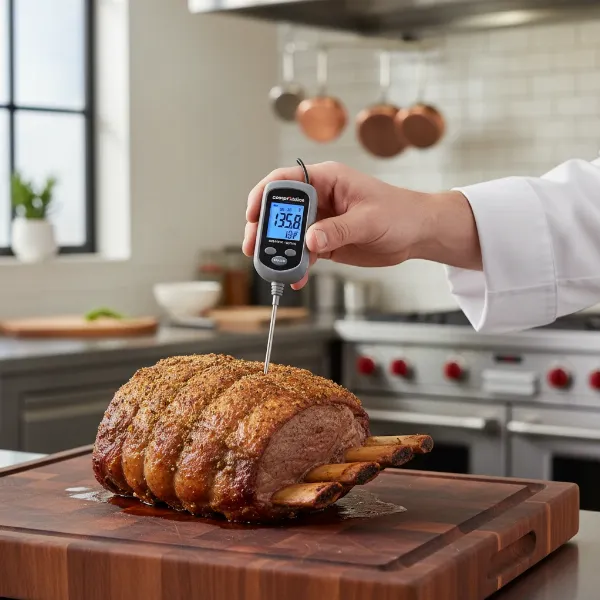
A reliable thermometer is an indispensable tool in any kitchen, laboratory, or healthcare setting, ensuring accuracy in everything from perfectly cooked roasts to precise medical readings. Yet, even the most advanced thermometers are delicate instruments susceptible to damage if not stored correctly. Ignoring proper storage can lead to inaccurate readings, shortened lifespan, and costly replacements. This comprehensive guide will equip you with the knowledge and practical tips to safeguard your thermometers, ensuring they remain accurate, functional, and ready for use whenever you need them.
Understanding Thermometer Vulnerabilities: Why Proper Storage Matters
Thermometers, regardless of their type, are precision instruments designed to measure temperature with great sensitivity. This inherent precision also makes them vulnerable to various forms of damage. Why is correct storage so critical? Primarily, it impacts the longevity and accuracy of your device. Physical impacts can knock sensors out of calibration, while environmental factors like extreme temperatures or moisture can degrade electronic components or even lead to hazardous situations, especially with older mercury thermometers. Improper handling and storage are often the root causes of malfunction, leading to unreliable readings that can compromise safety in food preparation or health monitoring.
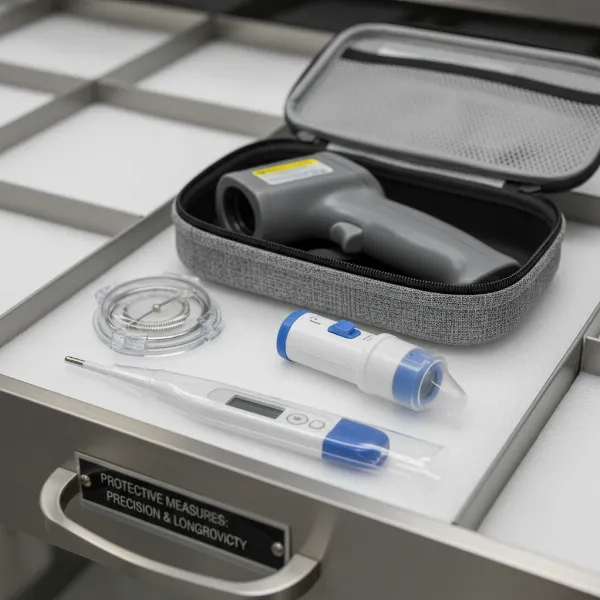 Various thermometers, highlighting their delicate nature and need for proper, protective storage to maintain accuracy.
Choosing the Right Storage Environment for Your Thermometers
The environment where you store your thermometers plays a pivotal role in their preservation. Selecting an appropriate spot can shield them from the elements and extend their functional life.
Temperature and Humidity Control
|
Our Picks for the Best Meat thermometer in 2026
As an Amazon Associate I earn from qualifying purchases.
|
||
| Num | Product | Action |
|---|---|---|
| 1 | Meat Thermometer Digital - Instant Read Food Thermometer for Cooking Grilling, Candy, Air Fryer, Griddle Probe Kitchen Gadgets Essentials BBQ Accessories, Valentines Day Gifts for Him Her, Red |

|
| 2 | ThermoPro TP19H Digital Meat Thermometer for Cooking with Ambidextrous Backlit and Motion Sensing Kitchen Cooking Food Thermometer for BBQ Grill Smoker Oil Fry Candy Instant Read Thermometer |
|
| 3 | ThermoPro TP03B Digital Meat Thermometer for Cooking, Instant Read Thermometer with Backlight, Kitchen Food Thermometer for Grill Smoker BBQ Oil Deep Fry Candy Bread Coffee with Pop-up Meat Probe |
|
| 4 | Alpha Grillers Meat Thermometer Digital - Instant Read Food Thermometer for Cooking and Grilling Gifts for Men Valentines Day Gifts for Him Her Mom Dad |
|
| 5 | Professional Meat Thermometer - Instant Read Food Thermometer with Waterproof Design, Backlight, Hold/Min/Max Function - Cooking Thermometer for Grilling, BBQ, Kitchen Use |
|
| 6 | Meat Thermometer Digital with 1 Second Instant Read, Large LED Display, Food Thermometer |
|
| 7 | 0.5 Sec Instant Read Meat Thermometer Digital with ±0.5℉ Precision, Food Thermometer for Cooking Kitchen Gadgets, Oven Grill Candy BBQ Essentials Accessories, Gifts for Him Dad Men Birthday, Red |
|
| 8 | Meat Thermometer Digital, Instant Read Meat ThermometerI for Grill and Cooking, Waterproof Food Thermometer for Kitchen and Outside, BBQ, Turkey, Candy, Liquids, Beef |
|
| 9 | TempPro TP829 1000ft Wireless Meat Thermometer Digital for Grilling and Smoking, 4 Meat Probes Grill Thermometer for Outside Grill, BBQ Thermometer for Cooking Food Temperature (Previously ThermoPro) |
|
| 10 | Ultrean Digital Meat Thermometer for Cooking,Ultra-Fast Instant Read Food Thermometer with Backlight,Foldable Probe,Waterproof Kitchen Thermometer for BBQ,Grill,Fry,Oven,Candy Making |
|
Extreme temperatures, both hot and cold, are detrimental to most thermometers. Digital models contain electronic components that can fail under excessive heat or cold, leading to display issues or complete malfunction. Analog thermometers can also suffer, with components expanding or contracting, affecting calibration. Aim for a dry, cool environment, typically between 40 to 149 degrees Fahrenheit (4 to 65 degrees Celsius) for many digital units. High humidity is equally damaging, as moisture can seep into electronic circuitry, causing corrosion and short circuits.
Ideal Location: Away from Harm
Always store thermometers indoors, in a designated spot that offers protection. Keep them away from direct heat sources such as ovens, stovetops, radiators, or direct sunlight. These can cause internal components to overheat or, in the case of mercury thermometers, create dangerous pressure. Similarly, avoid areas prone to moisture, like sinks or damp basements. A dry, cool cabinet or drawer in your kitchen or workspace is often ideal.
Maintaining a Clean Environment
Dirt, dust, fog, smoke, and other debris can interfere with a thermometer’s delicate sensors, particularly for infrared models. Storing your thermometer in a clean, dust-free area, perhaps within its original packaging or a dedicated case, prevents accumulation that could impair its accuracy or function. Regularly wipe down the storage area to ensure it remains free of contaminants.
Essential Protective Measures for Different Thermometer Types
Protecting your thermometers requires a multi-faceted approach, tailored slightly to the specific type of device you own.
General Tips for All Thermometers
Regardless of the model, several universal practices apply to all thermometers:
- Utilize Protective Cases: Always use the protective case, sheath, or original packaging your thermometer came with. These are designed to cushion the device from impacts and guard against contaminants.
- Dedicated Storage: Give each thermometer a specific “home.” This could be an instrument station, a labeled drawer, or a hook. Having a dedicated spot prevents them from being jostled or lost among other tools.
- Avoid Clutter: Never simply toss thermometers into a cluttered drawer or storage bin with other utensils or tools. This significantly increases the risk of physical damage, such as bending probes, scratching screens, or dislodging sensitive parts.
- No Hanging by Wires: For probe thermometers, never hang the unit by its probe wire. While wires may appear flexible, they contain delicate electronic components that can easily break or fray under stress, leading to intermittent readings or complete failure.
- Clean and Dry Before Storage: Always ensure your thermometer is thoroughly cleaned and completely dry before putting it away. Residual food particles, moisture, or cleaning solutions can lead to bacterial growth, corrosion, or damage to the device over time.
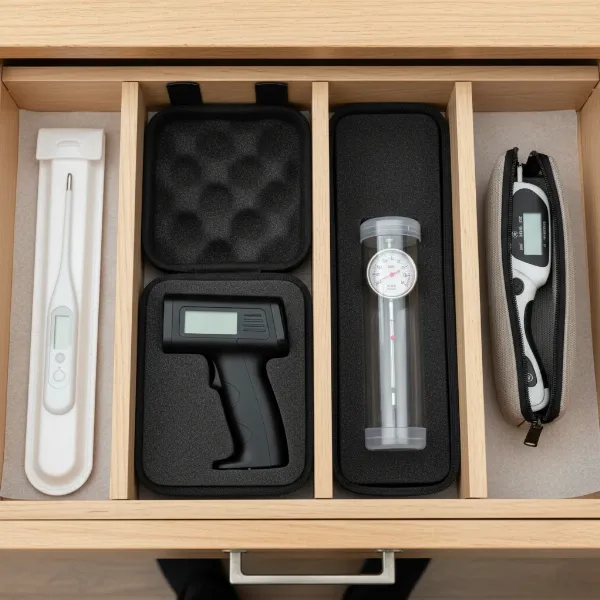 Organized drawer showing various thermometers in their cases, demonstrating best practices for clean and protective storage.
Digital and Probe Thermometers
These are perhaps the most common types and often feature sensitive electronics.
- Protect from Shocks and Drops: Digital thermometers are susceptible to damage from drops. Consider models with a silicone boot for added grip and shock absorption, or use a wrist-strap or lanyard during active use to prevent accidental falls.
- Safeguard the Probe: The metal probe is critical for accurate readings. Keep the shaft straight and avoid bending, twisting, or using it as a prying tool or ice pick. Many come with probe covers or stem sheaths; always use these to protect the tip and keep it sanitary.
- Mind the Cable: For wired probe thermometers, manage the cable carefully. Avoid wrapping it too tightly around the handle or exposing it to excessive heat, which can melt the insulation or damage the internal wires.
Infrared Thermometers
These non-contact thermometers require special attention, particularly to their optical components.
- Lens Care: The infrared lens is the most crucial part of these devices. It must be kept impeccably clean and free of dirt, dust, and debris. Inspect the lens regularly and clean it only when necessary, using a damp, soft cloth or cotton swab with water only. Avoid soaps, chemicals, or excessive cleaning, which can damage the delicate lens coating.
- Impact Protection: The infrared sensor is also vulnerable to drops and shocks. Store the device in a protective case and handle it gently to prevent internal sensor misalignment.
Mercury Thermometers
Though less common now, mercury thermometers require careful storage due to the hazardous nature of mercury.
- Robust Casing: Always store mercury thermometers in their original, sturdy protective cases to prevent breakage.
- Outdoor Maintenance: If any maintenance or extensive cleaning is required, perform it outdoors to avoid exposing indoor spaces to potential mercury vapor in case of an accidental break.
Best Practices for Handling and Transporting Thermometers
Damage often occurs during handling or transport, not just during static storage.
- Gentle Handling is Key: Never throw or roughly set down your thermometer. Treat it as the precision instrument it is.
- Secure Transport: When moving thermometers between locations, always use a dedicated, secure carry case or a toolbox with padded compartments. This prevents them from rolling around or colliding with other items.
- Two-Handed Carry: For larger or more delicate units, carry both the thermometer body and its probe with two hands to distribute the weight and maintain control, minimizing the risk of drops.
- Utilize Accessories: Wrist-straps or lanyards can provide an extra layer of security, especially when using a thermometer in a busy or precarious environment.
Regular Maintenance: Key to Thermometer Longevity
Proper storage works hand-in-hand with regular maintenance to ensure your thermometers remain in peak condition.
- Routine Inspection: Periodically inspect your thermometers for any signs of wear, damage, or loose components. Check for cracks in the casing, bent probes, frayed wires, or dim displays. Addressing minor issues early can prevent major failures.
- Thorough Cleaning: After each use and certainly before long-term storage, clean your thermometer according to the manufacturer’s instructions. For most food thermometers, this involves wiping the probe with hot soapy water and then sanitizing it. For infrared lenses, remember to use only water and a soft cloth. Ensure the device is completely dry before storing.
- Battery Management: For digital thermometers, if you plan to store them for an extended period, consider removing the batteries. This prevents potential battery leakage, which can corrode internal electronics and permanently damage the device.
Conclusion
Protecting your thermometers from damage is a simple yet crucial step to ensure their accuracy, extend their lifespan, and ultimately save you money on replacements. By understanding their vulnerabilities and implementing smart storage practices—such as choosing a dry, temperate environment, utilizing protective cases, and handling them with care—you safeguard these vital tools. Regular cleaning and inspection further contribute to their reliability. Investing a little time in proper storage now will ensure your thermometers are always ready to provide precise measurements when you need them most, helping you achieve perfect results every time. How do you ensure your thermometers are always ready for action?
Frequently Asked Questions
How often should I clean my meat thermometer before storing it?
You should clean your meat thermometer thoroughly after every use and ensure it’s completely dry before storing it. This prevents bacterial growth and corrosion, maintaining hygiene and extending the device’s life.
Can I store my digital thermometer in a drawer with other kitchen utensils?
It’s generally not recommended to store a digital thermometer loosely in a drawer with other utensils. The thermometer can be scratched, dropped, or have its probe bent by contact with harder objects, leading to damage or inaccuracies. Use its protective case or a dedicated compartment.
What is the ideal temperature range for storing most thermometers?
Most thermometers, especially digital ones, perform best and last longest when stored in a cool, dry place within a temperature range of approximately 40 to 149 degrees Fahrenheit (4 to 65 degrees Celsius). Avoid extreme heat or cold.
Why shouldn’t I hang my probe thermometer by its wire?
Hanging a probe thermometer by its wire can strain the internal electronic components and connections within the cable. This stress can lead to fraying, breakage, or intermittent readings, ultimately shortening the thermometer’s lifespan.
How do I protect the lens of my infrared thermometer during storage?
To protect the sensitive lens of your infrared thermometer, always store it in its original protective case or a dedicated padded compartment. Ensure the lens is clean and free of dust or debris before storage, and avoid touching the lens directly with your fingers.
Is it okay to store thermometers in direct sunlight?
No, thermometers should not be stored in direct sunlight. Prolonged exposure to sunlight can lead to overheating, which can damage the electronic components of digital thermometers, fade display screens, or affect the calibration of any type of thermometer.