As an expert in temperature measurement, particularly in culinary applications, the question of using a meat thermometer for baby formula and milk often arises. Ensuring your baby’s formula or breast milk is at the perfect temperature is paramount, not just for comfort but for their delicate health and safety. The goal is to avoid both overheating, which can destroy vital nutrients and cause burns, and underheating, which risks bacterial growth or poor formula dissolution. While a meat thermometer is an indispensable tool in the kitchen, its application for infant feeding requires careful consideration of both technical accuracy and, more critically, stringent hygiene.
The Crucial Role of Temperature in Baby Formula and Milk Safety
Temperature is more than just a preference when it comes to infant feeding; it’s a cornerstone of health and safety. Babies have sensitive digestive systems, making precise temperature control essential for their well-being.
The ideal temperature for baby formula and breast milk is consistently around body temperature, which is approximately 98.6°F (37°C). Some experts suggest a slightly broader range of 98-102°F (37-39°C) for breast milk, mimicking its natural warmth. This temperature range is crucial for several reasons:
- Comfort and Acceptance: Warm milk feels natural and soothing to a baby, similar to breast milk, which can improve feeding acceptance.
- Nutrient Preservation: Overheating breast milk, especially above 104°F (40°C), can significantly degrade essential immunoglobulins, live cells, and other delicate nutrients vital for a baby’s immune system and development.
- Formula Dissolution and Digestion: For powdered infant formula, the initial water temperature is critical. Many manufacturers recommend dissolving formula in boiled water cooled to at least 158°F (70°C) to kill any potential bacteria present in the non-sterile powder. However, the final feeding temperature must be cooled down to body temperature to prevent burns and preserve heat-sensitive nutrients that might be added to the formula. Too cold water can lead to poor dissolution and uncomfortable lumps.
- Preventing Burns: Overly hot milk poses an immediate burn risk to a baby’s delicate mouth and throat.
Maintaining this narrow, optimal temperature range requires accurate measurement, highlighting the need for reliable temperature-checking tools.
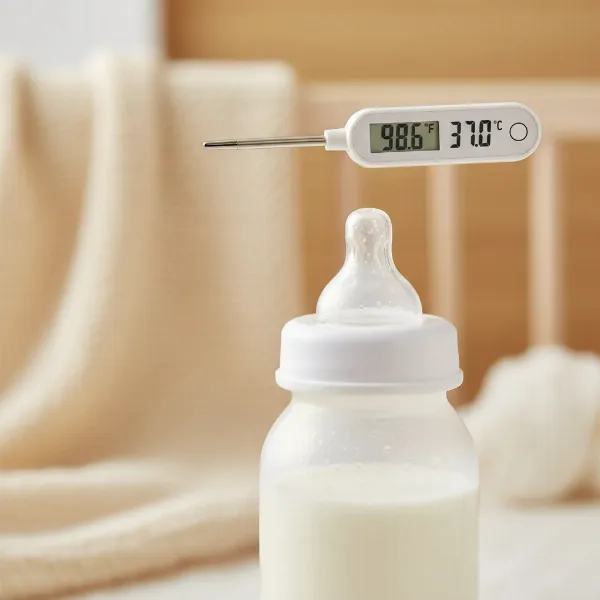 Close-up of a baby bottle with a thermometer showing ideal feeding temperature for safety and nutrition.
Can a Meat Thermometer Measure Baby Formula Temperature? The Technical Aspect
Technically speaking, many modern digital probe meat thermometers can accurately measure the temperature of liquids like baby formula and milk. These devices are designed for precise temperature readings within a wide range, often from sub-freezing to hundreds of degrees Fahrenheit, encompassing the delicate temperatures required for infant feeding.
What makes some digital meat thermometers capable of this task includes:
- Liquid Immersion Probe: They often feature a thin, stainless steel probe specifically designed to be submerged into liquids without trapping air bubbles, which can cause inaccurate readings.
- Fast Response Time: High-quality digital thermometers provide quick, real-time feedback, updating temperatures within seconds. This rapid response is critical when warming milk to avoid overshooting the target temperature.
- Sufficient Temperature Range: The operational range of most digital meat thermometers easily covers the 98-102°F (37-39°C) needed for baby milk, as well as the initial 158°F (70°C) for dissolving powdered formula.
However, it is vital to understand that “can” does not equate to “should,” particularly when it comes to infant feeding, where safety standards are exceptionally high.
The Critical Safety Concerns: Why it’s Generally Not Recommended
Despite the technical capability of some meat thermometers to measure liquid temperatures, their use for baby formula and milk is broadly not recommended by health and food safety authorities due to significant hygiene and cross-contamination risks.
The primary concern is cross-contamination. Meat thermometers are typically used to check the internal temperatures of raw meats such as poultry, beef, and pork. These raw foods can harbor harmful bacteria like Salmonella, E. coli, and Listeria. Even with thorough cleaning, achieving complete sterilization of a meat thermometer, especially one that has been used with raw animal products, is extremely challenging in a home kitchen environment.
Introducing a non-sterile thermometer into a baby’s food can directly transfer these dangerous pathogens, posing a severe risk of gastrointestinal infection and other foodborne illnesses to an infant whose immune system is still developing. Health organizations explicitly advise against placing non-sterile instruments directly into a baby’s bottle or food.
Furthermore, while some meat thermometers offer good accuracy, they are calibrated for a broader temperature spectrum typical of cooking, rather than the very narrow and critical body temperature range for infant feeding. Dedicated baby thermometers are specifically designed with the sensitivity and hygiene requirements for this sensitive application in mind.
Recommended Alternatives for Accurate Baby Formula and Milk Temperature
Given the significant risks associated with using a meat thermometer for baby food, parents should always opt for safer, more appropriate methods to ensure accurate temperature control.
1. Dedicated Baby Bottle Thermometers:
These specialized thermometers are designed with infant safety and convenience in mind. They come in various forms:
- Non-Contact Infrared Thermometers: These devices can read the surface temperature of the bottle without touching the milk, completely eliminating cross-contamination risk. They are fast, hygienic, and often come with clear visual indicators (e.g., color-coded lights) for “too hot,” “too cold,” and “just right.”
- Bottle-Specific Probe Thermometers: Some thermometers are designed with smaller, sterile-friendly probes that can be immersed in bottles. These are typically easy to clean and often feature a silicone tip for gentle use. They are solely for baby use, minimizing cross-contamination risks.
2. Traditional Warming and Testing Methods:
- Warm Water Bath: This is one of the safest and most recommended methods. Place the bottle in a bowl of warm (not boiling) water, or hold it under warm running tap water. Swirl the bottle gently to ensure even heating. This method allows gradual warming, reducing the risk of overheating.
- Wrist Test: After warming, the classic method of shaking a few drops of milk onto the inside of your wrist is a quick way to gauge temperature. It should feel lukewarm, not hot or cold. While widely used, this method is subjective and less precise than a thermometer.
- Safe Bottle Warmers: If using an electric bottle warmer, choose one that heats gently and has a clear temperature control. Always follow the manufacturer’s instructions for both the warmer and the formula/milk. Even with a warmer, it’s still wise to use a dedicated baby thermometer or the wrist test to double-check the final temperature before feeding.
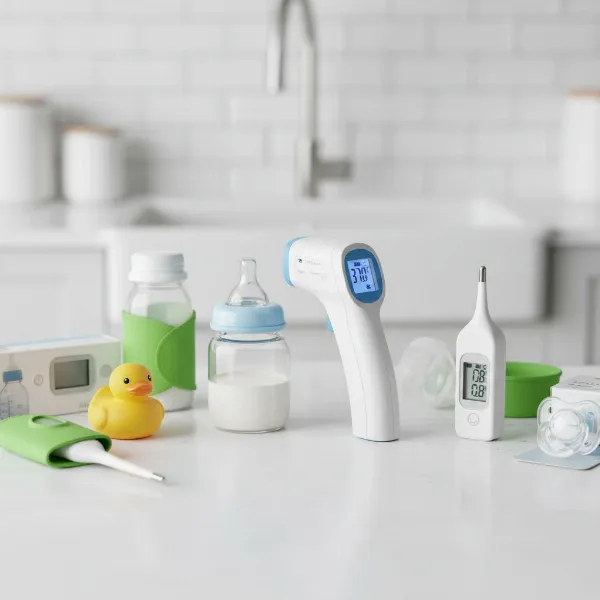 Various types of dedicated baby bottle thermometers, emphasizing hygiene and ease of use.
Best Practices for Warming and Checking Baby Formula and Milk
Ensuring proper temperature involves more than just the right tool; it requires a disciplined approach to preparation and handling.
- Prepare Powdered Formula Safely: If using powdered infant formula, always use boiled water that has cooled to at least 158°F (70°C) to kill harmful bacteria in the powder. Mix thoroughly, then immediately begin the cooling process to reach feeding temperature.
- Choose a Safe Warming Method:
- Water Bath: Place the bottle in a clean bowl of warm water for several minutes, or run under warm tap water. Swirl the bottle periodically to distribute heat evenly.
- Bottle Warmer: If using, set to a gentle warming cycle and monitor closely.
- Never use a Microwave: Microwaves heat unevenly, creating dangerous hot spots within the milk that can scald a baby’s mouth even if the bottle feels cool on the outside.
- Check Temperature Before Every Feeding:
- Once warmed, gently swirl the bottle to ensure an even temperature distribution.
- Use a dedicated baby thermometer for the most accurate reading.
- Alternatively, shake a few drops onto the inside of your wrist; it should feel lukewarm, not hot or cold.
- Avoid Overheating: Breast milk should not exceed 104°F (40°C) to protect nutrients. Formula should be served at body temperature (98.6°F / 37°C). If milk gets too hot, let it cool completely before serving.
- Serve Immediately: Once milk is warmed and at the correct temperature, feed it to your baby right away. Do not store warmed milk for later use, as bacteria can multiply rapidly. Discard any leftover milk after a feeding.
Maintaining Hygiene for All Feeding Equipment
Hygiene is paramount in infant feeding. All equipment that comes into contact with baby formula or milk must be thoroughly cleaned and sterilized.
- Sterilize Bottles and Nipples: Before first use and regularly thereafter, sterilize all feeding bottles, nipples, rings, and caps. Methods include boiling, steam sterilization (electric or microwave), or cold water sterilizing solutions.
- Clean Thermometers Thoroughly: If you must use a general food thermometer in an emergency for milk (though not recommended), ensure it is brand new and dedicated solely for this purpose, never used for raw meats. Even then, clean it thoroughly with hot, soapy water and then sanitize it (e.g., by boiling the probe for several minutes if safe for the device) before and after each use. Store it separately from other kitchen thermometers to prevent any accidental cross-contamination.
Ultimately, prioritizing your baby’s health means being meticulous with every aspect of their feeding, including temperature accuracy and hygiene.
“The safety of our children is non-negotiable. While measuring food temperatures is vital in cooking, for infant feeding, we must choose tools specifically designed for that delicate purpose and adhere to the highest hygiene standards.” – Admin, meatthermometerreviews.com
Conclusion
The quest for the perfect temperature in your baby’s formula or milk is a critical aspect of infant care. While a digital meat thermometer might technically possess the ability to measure liquid temperatures, the paramount concern of cross-contamination from raw meats makes it an unsuitable and risky choice for your baby’s delicate immune system. The health and safety of an infant demand specialized tools and stringent hygiene protocols.
Opting for dedicated baby bottle thermometers or relying on proven safe warming and testing methods like a warm water bath and the wrist test will always be the most responsible approach. Always prioritize accurate temperature readings combined with impeccable hygiene to safeguard your baby’s health and provide them with the best possible nourishment.
What steps will you take today to ensure your baby’s feeding temperature is perfectly safe and precise?
Frequently Asked Questions
Why shouldn’t I use my regular meat thermometer for baby formula or milk?
|
Our Picks for the Best Meat thermometer in 2026
As an Amazon Associate I earn from qualifying purchases.
|
||
| Num | Product | Action |
|---|---|---|
| 1 | TempPro TP829 1000ft Wireless Meat Thermometer Digital for Grilling and Smoking, 4 Meat Probes Grill Thermometer for Outside Grill, BBQ Thermometer for Cooking Food Temperature (Previously ThermoPro) |

|
| 2 | Meat Thermometer Digital, Instant Read Meat ThermometerI for Grill and Cooking, Waterproof Food Thermometer for Kitchen and Outside, BBQ, Turkey, Candy, Liquids, Beef |
|
| 3 | 0.5 Sec Instant Read Meat Thermometer Digital with ±0.5℉ Precision, Food Thermometer for Cooking Kitchen Gadgets, Oven Grill Candy BBQ Essentials Accessories, Gifts for Him Dad Men Birthday, Red |
|
| 4 | ThermoPro TP19H Digital Meat Thermometer for Cooking with Ambidextrous Backlit and Motion Sensing Kitchen Cooking Food Thermometer for BBQ Grill Smoker Oil Fry Candy Instant Read Thermometer |
|
| 5 | Meat Thermometer Digital - Instant Read Food Thermometer for Cooking Grilling, Candy, Air Fryer, Griddle Probe Kitchen Gadgets Essentials BBQ Accessories, Valentines Day Gifts for Him Her, Red |
|
| 6 | Ultrean Digital Meat Thermometer for Cooking,Ultra-Fast Instant Read Food Thermometer with Backlight,Foldable Probe,Waterproof Kitchen Thermometer for BBQ,Grill,Fry,Oven,Candy Making |
|
| 7 | Alpha Grillers Meat Thermometer Digital - Instant Read Food Thermometer for Cooking and Grilling Gifts for Men Valentines Day Gifts for Him Her Mom Dad |
|
| 8 | Meat Thermometer Digital with 1 Second Instant Read, Large LED Display, Food Thermometer |
|
| 9 | Professional Meat Thermometer - Instant Read Food Thermometer with Waterproof Design, Backlight, Hold/Min/Max Function - Cooking Thermometer for Grilling, BBQ, Kitchen Use |
|
| 10 | ThermoPro TP03B Digital Meat Thermometer for Cooking, Instant Read Thermometer with Backlight, Kitchen Food Thermometer for Grill Smoker BBQ Oil Deep Fry Candy Bread Coffee with Pop-up Meat Probe |
|
While some meat thermometers can technically measure liquid temperatures, they pose a significant cross-contamination risk. They are commonly used with raw meats containing harmful bacteria, and it’s nearly impossible to ensure complete sterilization for sensitive infant use, making them unsafe for baby formula or milk.
What is the ideal temperature for serving baby formula or breast milk?
The ideal serving temperature for baby formula and breast milk is around body temperature, typically 98.6°F (37°C) or between 98-102°F (37-39°C). This ensures comfort for the baby and helps preserve vital nutrients.
Can I warm baby milk in the microwave?
No, you should never warm baby formula or breast milk in a microwave. Microwaves heat unevenly, creating dangerous hot spots that can scald your baby’s mouth, even if the bottle itself feels cool.
How do I safely warm baby formula or breast milk without a specialized thermometer?
The safest method is to place the bottle in a bowl of warm (not boiling) water or hold it under warm running tap water until it reaches a lukewarm temperature. Always swirl the bottle and test a few drops on your wrist before feeding to ensure it’s not too hot.
What are better alternatives to a meat thermometer for checking baby milk temperature?
Dedicated baby bottle thermometers, such as non-contact infrared thermometers or bottle-specific probe thermometers designed for infant use, are the safest and most hygienic options. These tools are specifically engineered for sensitive baby feeding applications.