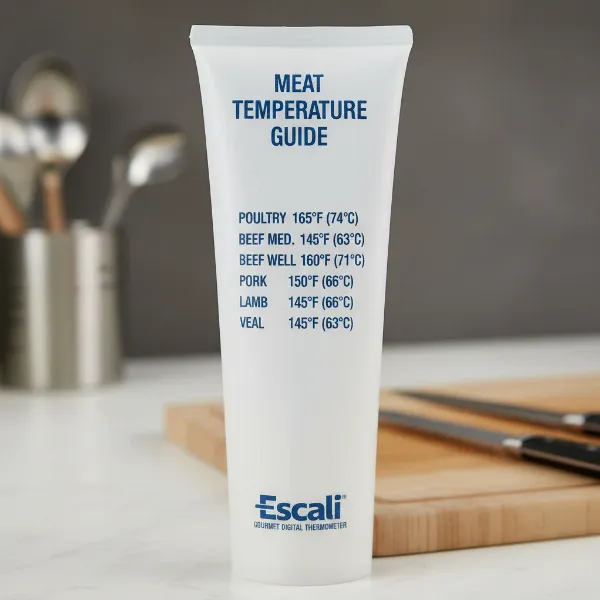
Cooking beef and chicken to perfection is a culinary art, but ensuring they are safely cooked is a critical science. Nothing can ruin a meal or, more importantly, put your health at risk, faster than undercooked meat. Even the most experienced home cooks and professional chefs rely on a crucial tool to guarantee both safety and deliciousness: the meat thermometer. This guide will walk you through the essential internal temperatures for beef and chicken, why they matter, and how to use a meat thermometer effectively to achieve culinary excellence every time.
Understanding Meat Thermometers: Your Kitchen’s Best Friend for Food Safety
A meat thermometer is an indispensable kitchen tool designed to accurately measure the internal temperature of food. Its primary role is to ensure that meat reaches a temperature high enough to destroy harmful bacteria like Salmonella, E. coli, and Listeria, which can cause severe foodborne illnesses. Without it, you’re left guessing, and guesswork can be dangerous.
Many people rely on visual cues like meat color or the clarity of juices to determine doneness. However, these indicators are often misleading. For instance, pinkness in cooked poultry doesn’t always mean it’s undercooked, nor does clear juice guarantee safety. A thermometer takes the uncertainty out of cooking, providing an objective measure of safety and helping you achieve the desired doneness without overcooking and drying out your meat.
There are several types of meat thermometers available, including instant-read digital thermometers, leave-in probe thermometers, and older dial-type models. Each offers unique benefits, but they all serve the same vital purpose: precision in cooking.
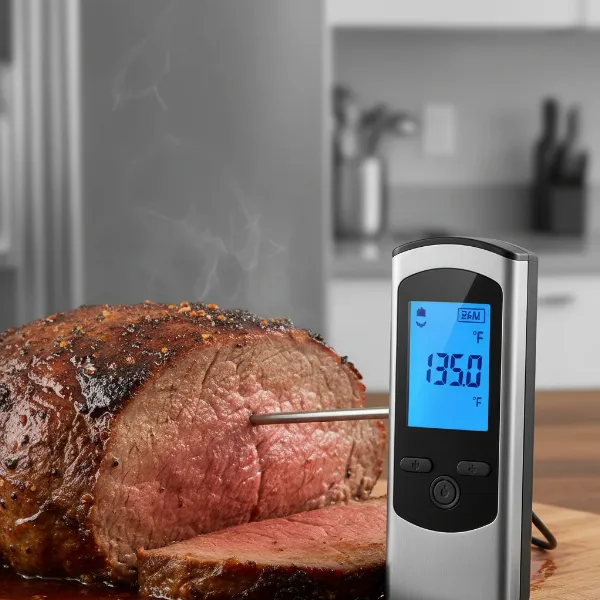 Close-up of a digital meat thermometer probe inserted into a beef roast for accurate temperature reading
Essential Internal Temperatures for Beef: A Guide to Doneness and Safety
Cooking beef safely involves understanding different temperatures for various cuts and preparations. While some cuts can be enjoyed at different levels of doneness (rare, medium, well-done), ground beef requires a consistent, higher temperature to ensure safety.
Beef Safe Minimum Internal Temperature Chart
|
Our Picks for the Best Meat thermometer in 2026
As an Amazon Associate I earn from qualifying purchases.
|
||
| Num | Product | Action |
|---|---|---|
| 1 | Meat Thermometer Digital - Instant Read Food Thermometer for Cooking Grilling, Candy, Air Fryer, Griddle Probe Kitchen Gadgets Essentials BBQ Accessories, Valentines Day Gifts for Him Her, Red |

|
| 2 | Alpha Grillers Meat Thermometer Digital - Instant Read Food Thermometer for Cooking and Grilling Gifts for Men Valentines Day Gifts for Him Her Mom Dad |
|
| 3 | Meat Thermometer Digital, Instant Read Meat ThermometerI for Grill and Cooking, Waterproof Food Thermometer for Kitchen and Outside, BBQ, Turkey, Candy, Liquids, Beef |
|
| 4 | ThermoPro TP03B Digital Meat Thermometer for Cooking, Instant Read Thermometer with Backlight, Kitchen Food Thermometer for Grill Smoker BBQ Oil Deep Fry Candy Bread Coffee with Pop-up Meat Probe |
|
| 5 | ThermoPro TP19H Digital Meat Thermometer for Cooking with Ambidextrous Backlit and Motion Sensing Kitchen Cooking Food Thermometer for BBQ Grill Smoker Oil Fry Candy Instant Read Thermometer |
|
| 6 | Meat Thermometer Digital with 1 Second Instant Read, Large LED Display, Food Thermometer |
|
| 7 | 0.5 Sec Instant Read Meat Thermometer Digital with ±0.5℉ Precision, Food Thermometer for Cooking Kitchen Gadgets, Oven Grill Candy BBQ Essentials Accessories, Gifts for Him Dad Men Birthday, Red |
|
| 8 | Ultrean Digital Meat Thermometer for Cooking,Ultra-Fast Instant Read Food Thermometer with Backlight,Foldable Probe,Waterproof Kitchen Thermometer for BBQ,Grill,Fry,Oven,Candy Making |
|
| 9 | TempPro TP829 1000ft Wireless Meat Thermometer Digital for Grilling and Smoking, 4 Meat Probes Grill Thermometer for Outside Grill, BBQ Thermometer for Cooking Food Temperature (Previously ThermoPro) |
|
| 10 | Professional Meat Thermometer - Instant Read Food Thermometer with Waterproof Design, Backlight, Hold/Min/Max Function - Cooking Thermometer for Grilling, BBQ, Kitchen Use |
|
| Cut of Beef | Minimum Internal Temperature | Rest Time | Notes |
|---|---|---|---|
| Steaks, Roasts, Chops | 145°F (63°C) | 3 minutes | For medium-rare doneness. Color and texture preferences beyond this are personal choices. |
| Ground Beef | 160°F (71°C) | None | Always cook ground beef to this temperature. |
For whole cuts of beef like steaks, roasts, and chops, the United States Department of Agriculture (USDA) recommends a minimum internal temperature of 145°F (63°C), followed by a three-minute rest time. This resting period allows the heat to distribute evenly throughout the meat and ensures maximum juiciness, while also continuing to destroy pathogens. For personal preference, you may choose to cook these cuts to higher temperatures for medium or well-done results.
Ground beef, however, is different. Because grinding mixes meat from various sources, potential bacteria on the surface can be introduced throughout the product. Therefore, all ground beef, regardless of visual doneness, must reach an internal temperature of 160°F (71°C) to be considered safe. There is no rest time required for ground meats.
Crucial Internal Temperatures for Chicken: Ensuring Safe and Delicious Poultry
Unlike beef steaks and roasts, all poultry—whether whole birds, breasts, thighs, or ground chicken—must be cooked to a single, higher internal temperature to eliminate harmful bacteria.
The USDA consistently recommends that all types of chicken and other poultry reach a safe minimum internal temperature of 165°F (74°C). This includes:
- Whole chicken or turkey
- Chicken breasts, thighs, wings, and legs
- Ground chicken or turkey
- Dishes containing chicken, such as casseroles and stuffing
The reason for this universal temperature is the prevalent risk of bacteria like Salmonella and Campylobacter in raw poultry. Cooking chicken to 165°F ensures these pathogens are effectively destroyed, making the meat safe to consume. There is no safe “medium-rare” for chicken; it must be cooked thoroughly.
How to Accurately Use a Meat Thermometer
Using a meat thermometer correctly is key to its effectiveness. Here’s a simple guide to ensure accurate readings every time:
- Preparation: Before and after each use, clean your thermometer probe with warm, soapy water and sanitize it with a food-safe sanitizer. This prevents cross-contamination.
- Insertion Point: Always insert the thermometer into the thickest part of the meat. This is typically the area that cooks slowest.
- Avoid Obstacles: Make sure the probe does not touch bone, gristle, or fat, as these can conduct heat differently and give a false reading.
- For Thin Cuts: When checking thin items like hamburger patties, chicken breasts, or pork chops, insert the thermometer probe horizontally from the side. This ensures the tip reaches the true center of the meat.
- For Large Cuts: For larger roasts or whole poultry, check the temperature in several different locations to ensure even cooking and that all parts have reached the safe minimum.
- Wait for Stability: Once inserted, allow the thermometer a few seconds to stabilize and display an accurate reading. For instant-read thermometers, this is usually very quick.
- When to Check: For best results, start checking the temperature near the end of the estimated cooking time, but before the food is expected to be fully done. This helps prevent overcooking.
“Using a food thermometer ensures not just safety, but also the juiciness and flavor you strive for in every meal.”
The “Danger Zone” and Other Food Safety Tips
Beyond specific internal temperatures, understanding the “Danger Zone” is fundamental to preventing foodborne illness. The “Danger Zone” for bacterial growth is between 41°F (5°C) and 135°F (57°C). In this temperature range, bacteria multiply rapidly.
- Time Limit: Perishable food, including cooked meat, should not be left in the Danger Zone for more than two hours. If the ambient temperature is above 90°F (32°C), this limit reduces to one hour.
- Chilling Leftovers: To keep food safe, refrigerate leftovers promptly within two hours (or one hour if hot) in shallow containers to allow for quick cooling. Reheat leftovers to 165°F (74°C).
- Cross-Contamination: Always use separate cutting boards, utensils, and plates for raw and cooked meat. Wash your hands thoroughly after handling raw meat.
These practices, combined with accurate temperature monitoring, form a robust defense against foodborne illnesses.
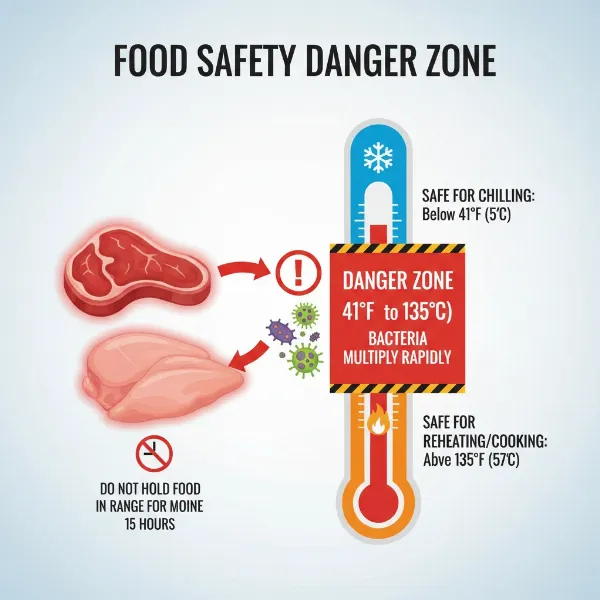 Infographic illustrating the "Danger Zone" for food safety with raw meat and chicken
Achieving Culinary Perfection: Beyond Just Safety
While food safety is paramount, reaching the correct internal temperature also unlocks the full potential of your beef and chicken in terms of taste and texture. Properly cooked meat is tender, juicy, and flavorful, whereas undercooked meat can be tough or unsafe, and overcooked meat can be dry and stringy.
- For Beef: Learning the precise temperatures for rare, medium-rare, medium, and well-done beef allows you to consistently hit your preferred doneness, enhancing the eating experience. Remember the crucial rest time for whole cuts to redistribute juices and finish cooking.
- For Chicken: Cooking to exactly 165°F, rather than significantly higher, helps maintain the moisture and tenderness of chicken breasts and thighs, preventing them from drying out and becoming rubbery.
Investing in a reliable meat thermometer and understanding these simple guidelines elevates your cooking from guesswork to mastery, ensuring every meal is both safe and exceptionally delicious.
Conclusion
Mastering internal cooking temperatures for beef and chicken is the cornerstone of safe and enjoyable home cooking. By consistently using a meat thermometer and adhering to the recommended temperatures – 145°F (with rest) for beef steaks and roasts, 160°F for ground beef, and a steadfast 165°F for all poultry – you safeguard your health and elevate your culinary creations. Eliminate the guesswork, embrace precision, and cook with confidence every single time. Are you ready to transform your cooking and ensure perfect results?
Frequently Asked Questions
What is the primary reason to use a meat thermometer?
The primary reason to use a meat thermometer is to ensure food safety by verifying that meat has reached an internal temperature high enough to destroy harmful bacteria, thereby preventing foodborne illnesses. It also helps achieve desired doneness without overcooking.
Can I tell if chicken is done by checking its color?
No, relying solely on color is not a reliable indicator for chicken doneness. While raw chicken is pink, cooked chicken can sometimes retain a pinkish hue even when fully cooked, and conversely, some chicken may appear white but still be undercooked. A Meat Thermometer is the only accurate way to confirm it has reached 165°F.
Why do whole cuts of beef need a rest time after cooking?
A rest time of at least three minutes for whole cuts of beef (steaks, roasts) allows the internal temperature to equalize throughout the meat, helping it finish cooking evenly and ensuring that juices redistribute, resulting in a more tender and flavorful product.
What is the “Danger Zone” in food safety?
The “Danger Zone” is the temperature range between 41°F (5°C) and 135°F (57°C) where harmful bacteria can multiply rapidly. Perishable foods should not be left in this zone for more than two hours to prevent bacterial growth and potential foodborne illness.
Is it safe to eat beef medium-rare?
Yes, whole cuts of beef like steaks, roasts, and chops can be safely consumed medium-rare at an internal temperature of 145°F (63°C), provided they are allowed to rest for three minutes after cooking. This applies to whole muscle cuts where bacteria are typically only on the surface. Ground beef, however, must always be cooked to 160°F.