Are you tired of overcooked or undercooked meat, ruining your culinary efforts? Achieving the perfect doneness for steaks, roasts, or poultry can be a daunting task, often leaving home cooks frustrated. The secret to consistent, restaurant-quality results lies not just in your technique, but in the precision of your tools. A reliable meat thermometer is indispensable, transforming guesswork into exactitude. This comprehensive review will delve into the Vintorio Digital Meat Thermometer, exploring its features, performance, and overall value to help you decide if it’s the right choice to elevate your cooking game.
Meat Thermometer: Overview and Benefits
A meat thermometer is a crucial kitchen gadget designed to measure the internal temperature of cooked food, particularly meat. Its primary purpose is to ensure food safety by confirming that meat reaches a temperature high enough to kill harmful bacteria, while also preventing overcooking, which can lead to dry, tough results. This simple device empowers home chefs to cook with confidence and precision.
Using a meat thermometer offers numerous benefits. Firstly, it guarantees food safety, protecting you and your guests from foodborne illnesses. Secondly, it ensures consistent doneness, allowing you to replicate perfect results every time, whether you prefer your steak rare or well-done. Thirdly, it saves you from guesswork, reducing stress and increasing enjoyment in the kitchen. Finally, it helps prevent waste by avoiding overcooked or ruined dishes.
The market offers several types of meat thermometers, each with distinct advantages. Digital thermometers are known for their fast, accurate readings and easy-to-read displays. Analog thermometers are traditional, often oven-safe, but can be slower and less precise. Probe thermometers feature a long probe connected by a wire to a base unit, ideal for monitoring temperature while food cooks in an oven or grill. Instant-read thermometers provide a rapid temperature reading, perfect for checking doneness quickly before serving. Each type caters to different cooking needs and preferences.
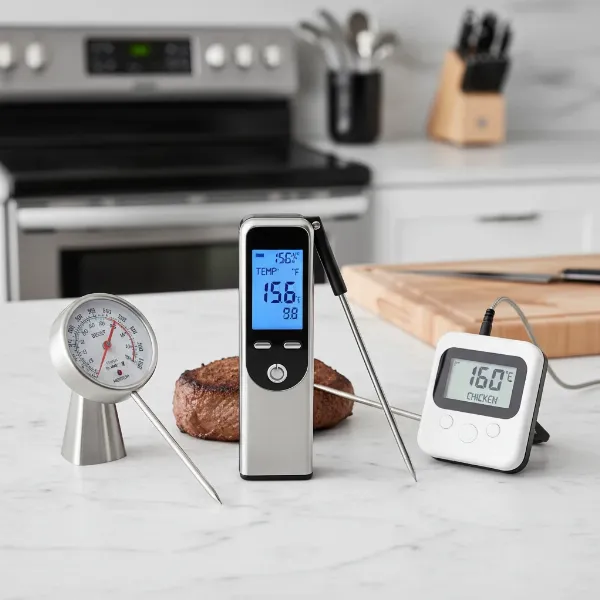 various types of meat thermometers including digital, analog, probe, and instant-read models
Guide to Choosing the Right Meat Thermometer
Selecting the ideal meat thermometer involves considering several key factors to ensure it meets your specific culinary requirements. The right thermometer can significantly impact your cooking success and enjoyment.
When choosing a meat thermometer, consider:
- Type of meat and dishes you usually cook: For roasts and larger cuts, a leave-in probe thermometer is excellent. For quick checks of steaks, burgers, or chicken breasts, an instant-read is superior.
- Budget: Prices vary widely, from basic analog models to advanced smart thermometers. Determine how much you’re willing to invest for the features you need.
- Essential features:
- Accuracy: This is paramount. Look for models with a high degree of accuracy, typically within ±1°F or ±0.5°C.
- Reading speed: Instant-read thermometers typically offer readings in 2-5 seconds, which is crucial for quick checks without overcooking.
- Connectivity: Some advanced models offer Bluetooth or Wi-Fi connectivity, allowing you to monitor temperatures remotely via a smartphone app.
- Temperature range: Ensure the thermometer can handle both low and high temperatures, suitable for various cooking methods like roasting, grilling, and deep frying.
- Display: A large, backlit display is easy to read in all lighting conditions.
- Durability and materials: Stainless steel probes and robust, water-resistant bodies are desirable for longevity and easy cleaning.
Comparing different types of meat thermometers helps highlight their strengths:
- Digital Thermometers: Offer fast, precise readings, often with a clear LCD display. They are versatile for various cooking tasks.
- Analog Thermometers: Generally more affordable and often oven-safe. However, they are slower and less precise than digital models.
- Probe Thermometers: Excellent for continuous monitoring during longer cooking times, especially in ovens or grills. The probe stays in the food, while the display unit remains outside.
- Instant-Read Thermometers: Their speed is their main advantage, providing temperature checks in seconds. Ideal for quick verification of doneness at the end of cooking.
The Vintorio Digital Meat Thermometer: Detailed Review
The Vintorio Digital Meat Thermometer aims to combine speed, accuracy, and user-friendliness into a reliable kitchen tool. Designed for home cooks, it offers features that make achieving perfect doneness simpler and more consistent.
Design and Build Quality
|
Our Picks for the Best Meat thermometer in 2026
As an Amazon Associate I earn from qualifying purchases.
|
||
| Num | Product | Action |
|---|---|---|
| 1 | Alpha Grillers Meat Thermometer Digital - Instant Read Food Thermometer for Cooking and Grilling Gifts for Men Valentines Day Gifts for Him Her Mom Dad |

|
| 2 | ThermoPro TP03B Digital Meat Thermometer for Cooking, Instant Read Thermometer with Backlight, Kitchen Food Thermometer for Grill Smoker BBQ Oil Deep Fry Candy Bread Coffee with Pop-up Meat Probe |
|
| 3 | ThermoPro TP19H Digital Meat Thermometer for Cooking with Ambidextrous Backlit and Motion Sensing Kitchen Cooking Food Thermometer for BBQ Grill Smoker Oil Fry Candy Instant Read Thermometer |
|
| 4 | Meat Thermometer Digital with 1 Second Instant Read, Large LED Display, Food Thermometer |
|
| 5 | Ultrean Digital Meat Thermometer for Cooking,Ultra-Fast Instant Read Food Thermometer with Backlight,Foldable Probe,Waterproof Kitchen Thermometer for BBQ,Grill,Fry,Oven,Candy Making |
|
| 6 | TempPro TP829 1000ft Wireless Meat Thermometer Digital for Grilling and Smoking, 4 Meat Probes Grill Thermometer for Outside Grill, BBQ Thermometer for Cooking Food Temperature (Previously ThermoPro) |
|
| 7 | Meat Thermometer Digital - Instant Read Food Thermometer for Cooking Grilling, Candy, Air Fryer, Griddle Probe Kitchen Gadgets Essentials BBQ Accessories, Valentines Day Gifts for Him Her, Red |
|
| 8 | Professional Meat Thermometer - Instant Read Food Thermometer with Waterproof Design, Backlight, Hold/Min/Max Function - Cooking Thermometer for Grilling, BBQ, Kitchen Use |
|
| 9 | 0.5 Sec Instant Read Meat Thermometer Digital with ±0.5℉ Precision, Food Thermometer for Cooking Kitchen Gadgets, Oven Grill Candy BBQ Essentials Accessories, Gifts for Him Dad Men Birthday, Red |
|
| 10 | Meat Thermometer Digital, Instant Read Meat ThermometerI for Grill and Cooking, Waterproof Food Thermometer for Kitchen and Outside, BBQ, Turkey, Candy, Liquids, Beef |
|
The Vintorio thermometer features a sleek, minimalist design with a durable ABS plastic body and a long, food-grade stainless steel probe. The ergonomic shape fits comfortably in hand, and its compact size makes it easy to store. Many users appreciate the robust feel, indicating it’s built to withstand regular kitchen use. The probe typically measures around 4.5 inches, making it suitable for a variety of meat thicknesses without burning your hand.
Accuracy and Speed
Accuracy is where the Vintorio truly shines. It boasts an accuracy of ±1°F (±0.5°C), which is crucial for precise cooking. Users frequently report very consistent readings, instilling confidence in their cooking decisions. The thermometer also offers impressive speed, delivering temperature readings within 2-3 seconds. This rapid response time is invaluable, allowing you to quickly check internal temperatures without losing too much heat from your food, a common issue with slower thermometers.
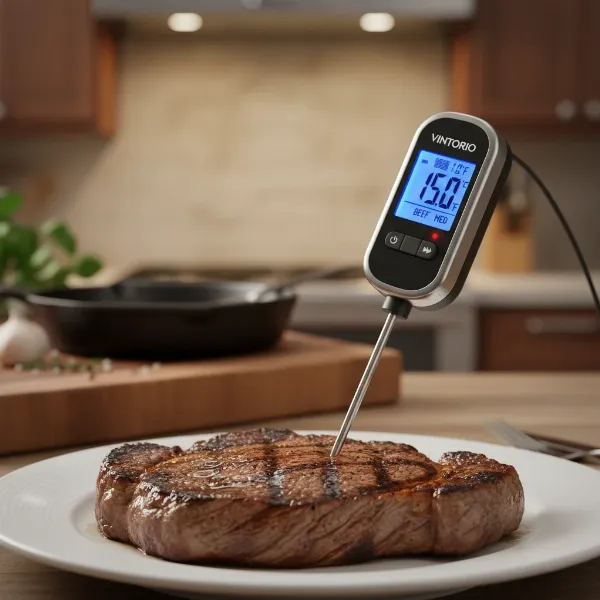 vintorio digital meat thermometer accurately measuring internal temperature of a cooked steak
Special Features
- Large Backlit LCD Display: The Vintorio comes with a bright, easy-to-read LCD screen that is backlit, ensuring visibility even in dimly lit kitchen environments or at night while grilling.
- Auto-Rotating Display: A standout feature, the display automatically rotates 180 degrees depending on how you hold the thermometer, making it convenient for both left and right-handed users and when checking food from awkward angles.
- Magnetic Back and Hanging Hole: For easy storage, the thermometer often includes a magnetic back, allowing it to be affixed to a refrigerator or oven, and a hanging hole for hooks.
- Water Resistance: While not fully waterproof for submersion, the Vintorio typically offers a degree of splash resistance, making it easy to clean under a faucet without fear of damage.
- Temperature Hold Function: This feature allows you to “hold” the current temperature reading on the display even after removing the probe from the food, giving you time to read it comfortably.
- Temperature Range: It generally covers a wide temperature range, suitable for everything from refrigerating to deep frying.
Durability and Longevity
Constructed with quality materials, the Vintorio Digital Meat Thermometer is designed for durability. The stainless steel probe is robust and resistant to corrosion, while the ABS plastic casing is sturdy. With proper care, this thermometer is expected to offer reliable service for years. Many reviews highlight its resilience to accidental drops and splashes, suggesting good build quality.
Ease of Use and Cleaning
The Vintorio is remarkably user-friendly. Its simple interface, usually just a few buttons for power, backlight, and unit conversion (°F/°C), makes it intuitive to operate straight out of the box. The instant-read nature means no complicated setup or calibration. Cleaning is straightforward; simply wipe the probe with a damp cloth or wash under running water (avoiding submerging the main unit if it’s not fully waterproof). The magnetic back and hanging hole also contribute to its ease of storage and accessibility.
Using and Maintaining Your Meat Thermometer
To get the most out of your Vintorio Digital Meat Thermometer and ensure its longevity, proper usage and maintenance are key.
How to Use Your Meat Thermometer Correctly for Accuracy:
- Insert Correctly: For thick cuts of meat (like roasts or whole chickens), insert the probe into the thickest part of the meat, avoiding bone, gristle, or fat pockets, as these can give inaccurate readings. For thinner items like burgers or steaks, insert the probe horizontally from the side.
- Wait for Stability: Although instant-read, allow a few seconds for the temperature reading to stabilize on the display before noting it.
- Check Multiple Spots: For larger cuts, take readings in several locations to ensure even cooking.
- Calibrate (if needed): While most digital thermometers come pre-calibrated, check your manual for instructions on how to recalibrate using an ice bath (32°F/0°C) or boiling water (212°F/100°C at sea level) if you suspect inaccuracies over time.
Cleaning and Storing Your Meat Thermometer:
- Clean Immediately: After each use, clean the probe with hot soapy water or a damp cloth. Never immerse the entire unit in water unless it’s specifically rated as fully waterproof.
- Sanitize: For extra sanitation, wipe the probe with an alcohol swab before and after use.
- Dry Thoroughly: Ensure the probe and main unit are completely dry before storing to prevent rust or damage to electronics.
- Proper Storage: Store in its original protective sleeve or a kitchen drawer where it won’t be exposed to extreme temperatures or physical damage. The magnetic back is excellent for convenient storage on metal surfaces.
Common Issues and Troubleshooting:
- Inaccurate Readings: Ensure proper insertion, check for battery life, and consider recalibrating if the issue persists.
- Slow Readings: Low battery can sometimes affect speed. Replace batteries if necessary.
- Display Not Working: Check battery orientation and power. If exposed to water, ensure it’s dry and try again.
Tips for Better Cooking with a Meat Thermometer
A meat thermometer is more than just a safety tool; it’s your secret weapon for culinary excellence.
“Precision in temperature control is the single biggest factor in elevating your home cooking from good to gourmet. A reliable meat thermometer takes the guesswork out and brings perfect results to your table every time.” – Chef Antoine Dubois, Culinary Instructor and Food Safety Expert
Using a Meat Thermometer for Perfectly Cooked Meats:
- Rest Your Meat: After reaching the target internal temperature, remove the meat from the heat and let it rest for 5-10 minutes (for smaller cuts) or 10-20 minutes (for larger roasts). This allows the juices to redistribute, resulting in a more tender and flavorful product. The internal temperature will also continue to rise a few degrees during this resting period, known as “carryover cooking.”
- Pre-heat Your Grill/Oven: Ensure your cooking appliance is at the correct temperature before placing the meat inside for even cooking.
Ideal Temperatures for Different Types of Meat:
- Beef, Lamb, Veal (Steaks, Roasts, Chops):
- Rare: 125-130°F (52-54°C)
- Medium-Rare: 130-135°F (54-57°C)
- Medium: 135-140°F (57-60°C)
- Well-Done: 155°F (68°C)
- Pork (Chops, Roasts): 145°F (63°C) (then rest for 3 minutes)
- Poultry (Chicken, Turkey, Duck): 165°F (74°C) for all parts
- Ground Meats (Beef, Pork, Lamb, Veal): 160°F (71°C)
- Ground Poultry: 165°F (74°C)
- Fish: 145°F (63°C)
Always refer to USDA guidelines for minimum safe cooking temperatures, especially for poultry and ground meats.
Delicious Recipes Enhanced by a Meat Thermometer:
- Perfectly Seared Steak: Use your Vintorio to ensure your steak hits that ideal medium-rare. Sear each side, then finish in the oven, pulling it out precisely at 130°F for a sublime experience.
- Juicy Roasted Chicken: Insert the probe into the thickest part of the thigh (avoiding bone). Roast until the Vintorio reads 165°F for moist, flavorful chicken every time.
- Smoked Brisket: For low-and-slow cooking, a leave-in probe (or repeated checks with your Vintorio) is essential to monitor the long cooking process, aiming for an internal temperature of around 203°F for fall-apart tenderness.
Conclusion
The Vintorio Digital Meat Thermometer stands out as a highly capable and user-friendly tool for any home cook looking to achieve consistent and safe cooking results. Its rapid and accurate readings, coupled with smart features like the auto-rotating display and magnetic back, make it a valuable addition to any kitchen. Whether you’re a seasoned chef or a beginner, this instant-read thermometer helps eliminate guesswork, ensuring your meats are perfectly cooked every single time. Investing in a reliable meat thermometer like the Vintorio can truly transform your cooking, bringing confidence and precision to every meal. Are you ready to take control of your cooking and banish overcooked or undercooked dishes forever?
Frequently Asked Questions
Is the Vintorio Digital Meat Thermometer waterproof?
The Vintorio Digital Meat Thermometer is typically splash-resistant, meaning it can withstand splashes and be wiped clean under a faucet. However, it is generally not designed to be fully submerged in water, which could damage its internal electronics. Always check the specific model’s manual for its exact water resistance rating.
How often should I calibrate my Vintorio meat thermometer?
Most digital meat thermometers, including the Vintorio, come factory-calibrated and generally hold their accuracy well. However, it’s a good practice to check its calibration every six months or if you suspect it’s providing inaccurate readings. You can do this using an ice-water bath or boiling water method.
Can I leave the Vintorio thermometer in the meat while it’s cooking in the oven?
No, the Vintorio Digital Meat Thermometer is an instant-read thermometer, not designed to be left in food during cooking in an oven or on a grill. Its plastic components can melt or be damaged by sustained high heat. It is intended for quick temperature checks and should be removed after each reading.
What batteries does the Vintorio Digital Meat Thermometer use?
The Vintorio Digital Meat Thermometer typically uses a common button-cell battery, such as a CR2032 or similar, which is usually included with the purchase. Battery life is generally long, but it’s wise to keep a spare on hand.