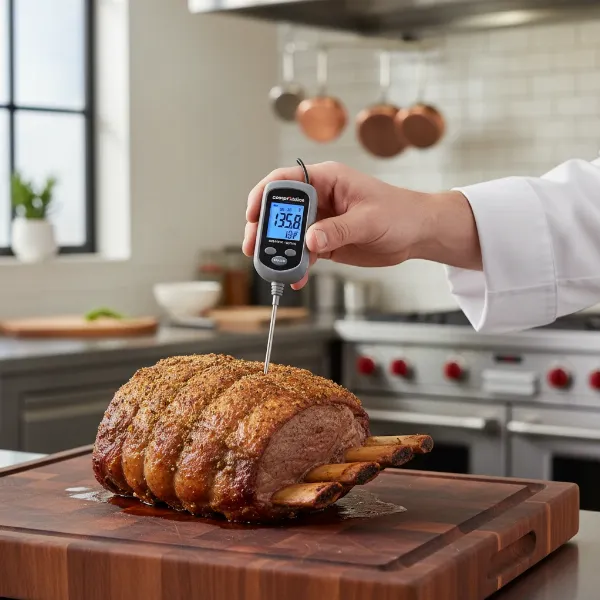
Achieving perfectly cooked meat, whether a succulent roast, a tender steak, or a perfectly smoked brisket, hinges on one critical factor: precise temperature. For years, home cooks and professional chefs alike have relied on various tools to ensure their culinary creations reach optimal doneness and safety. But what exactly is a “Bio-Metric Thermometer,” and can you truly trust it for accuracy in your kitchen? This article dives deep into this intriguing term, exploring its potential interpretations and evaluating the precision of thermometers that might fall under such a description, helping you make an informed choice for your cooking needs.
Bio-Metric Thermometer: An Overview and Its Place in Your Kitchen
The term “Bio-Metric Thermometer” isn’t a standard classification you’ll typically find in the culinary or meat thermometer industry. When we speak of “biometrics,” it often relates to unique biological characteristics used for identification or health monitoring in humans. However, in the context of meat thermometry, the phrase “Bio-Metric” could be interpreted in a couple of ways.
Firstly, it might suggest an advanced, potentially futuristic device that goes beyond simple temperature reading, perhaps sensing other “biological” aspects of the meat, such as moisture content, cellular changes indicating tenderness, or even precise doneness at a molecular level. Such sophisticated “bio-sensing” meat thermometers are still largely conceptual or in nascent stages of development for consumer use.
Secondly, and more practically given existing technology, the term might be a misinterpretation or a unique descriptor for “Bimetallic Thermometers.” Bimetallic thermometers utilize two different metals that expand at varying rates when heated, causing a pointer to move across a dial. While these are distinct from modern digital meat probes, they have a long history in temperature measurement, often found in oven doors or some older, less precise meat thermometers. They are also widely used in industrial settings, including food processing, for general temperature monitoring.
Regardless of the precise interpretation, the fundamental question remains: how accurate is it, especially when your culinary reputation is on the line? The integrity of your cooking—from food safety to flavor—depends on reliable temperature readings. Using an accurate thermometer prevents undercooked, potentially hazardous meals, or overcooked, dry, and unappetizing dishes.
Decoding Accuracy: Is the Bio-Metric Thermometer Reliable?
When evaluating any thermometer, accuracy is paramount. Several factors influence a thermometer’s precision, including its sensor technology, response time, and calibration.
If we interpret “Bio-Metric Thermometer” as a Bimetallic Thermometer, their accuracy varies. Bimetallic thermometers work on a mechanical principle where two bonded metals coil or uncoil due to differing thermal expansion rates, moving a pointer to indicate temperature. They are generally reliable and durable for many applications, including monitoring oven temperatures or in some food processing environments where extreme precision isn’t the sole priority.
However, compared to high-quality digital thermometers, bimetallic models can sometimes be less precise for critical internal meat temperature readings. Factors like the quality of construction, the resolution of the scale, friction within the mechanical components, and hysteresis (a material’s tendency to lag in response to changes) can all impact their accuracy. While a well-constructed bimetallic thermometer can be reasonably accurate, they often lack the fine resolution and quick response times of their digital counterparts, making them less ideal for instant-read internal meat temperature checks.
If “Bio-Metric Thermometer” refers to an advanced “smart” meat thermometer with highly sophisticated sensors, then these devices typically aim for exceptional accuracy. Modern smart thermometers often employ precision digital thermistors or thermocouples, coupled with advanced algorithms, to deliver rapid and highly accurate temperature readings. They frequently offer features like Bluetooth or Wi-Fi connectivity to track temperatures remotely, pre-set alarms, and detailed cooking graphs, emphasizing reliability and precision through technological innovation.
Choosing the Right Thermometer for Precision Cooking
Selecting the best thermometer for your kitchen depends heavily on your specific cooking style, the types of meat you prepare, and your budget.
- Instant-Read Digital Thermometers: These are often considered the gold standard for internal meat temperature. They offer fast, highly accurate readings (often within ±1°F / ±0.5°C) in just a few seconds, making them perfect for quickly checking doneness without overcooking.
- Probe Thermometers (Wired/Wireless): Ideal for roasts, smokers, and grills, these thermometers feature a probe that remains in the meat throughout the cooking process, sending continuous temperature updates to a base unit or a smart device. They are highly accurate and allow for hands-free monitoring, crucial for longer cooks.
- Bimetallic Dial Thermometers: While not typically recommended for direct internal meat temperature (unless specifically designed and calibrated for it, often as an oven-safe leave-in probe), they excel as oven thermometers to verify ambient oven temperature or as grill hood thermometers. Their robustness and no-battery operation are key advantages, though their accuracy for precise internal meat doneness might be less than digital options.
When making your choice, consider the accuracy rating (often found in product specifications), the response time (how quickly it provides a stable reading), and the temperature range suitable for your culinary adventures.
Detailed Insights into Thermometer Types
To further understand what a “Bio-Metric Thermometer” might encompass, let’s look at common types with a focus on accuracy:
Bimetallic Thermometers
- Design and Materials: These thermometers feature a mechanical strip made of two different metals, typically coiled into a helix. As temperature changes, the metals expand or contract at different rates, causing the coil to wind or unwind. This movement directly drives a pointer across a calibrated dial. Common materials include steel and copper or steel and brass.
- Accuracy and Speed: Bimetallic thermometers provide a reliable indication of temperature and are durable. However, their readings are generally not as fast or as precise as digital alternatives. While “reasonably accurate and completely sufficient for home use” in some contexts, they may not offer the near-precise readings of expensive medical-grade or high-end digital alternatives for critical applications. Their accuracy depends significantly on the quality of construction, calibration, and the absence of friction or hysteresis in their mechanism.
- Durability and Longevity: Known for their robust, simple design, bimetallic thermometers are often quite durable and require no external power. They can withstand harsh environments, making them suitable for oven or grill use where digital devices might struggle with heat.
- Ease of Use and Cleaning: Typically simple to read with a clear dial, they don’t require batteries. Cleaning usually involves wiping the probe, though full submersion of the dial part is generally not recommended.
|
Our Picks for the Best Meat thermometer in 2026
As an Amazon Associate I earn from qualifying purchases.
|
||
| Num | Product | Action |
|---|---|---|
| 1 | Meat Thermometer Digital with 1 Second Instant Read, Large LED Display, Food Thermometer |

|
| 2 | Ultrean Digital Meat Thermometer for Cooking,Ultra-Fast Instant Read Food Thermometer with Backlight,Foldable Probe,Waterproof Kitchen Thermometer for BBQ,Grill,Fry,Oven,Candy Making |
|
| 3 | Meat Thermometer Digital, Instant Read Meat ThermometerI for Grill and Cooking, Waterproof Food Thermometer for Kitchen and Outside, BBQ, Turkey, Candy, Liquids, Beef |
|
| 4 | ThermoPro TP03B Digital Meat Thermometer for Cooking, Instant Read Thermometer with Backlight, Kitchen Food Thermometer for Grill Smoker BBQ Oil Deep Fry Candy Bread Coffee with Pop-up Meat Probe |
|
| 5 | TempPro TP829 1000ft Wireless Meat Thermometer Digital for Grilling and Smoking, 4 Meat Probes Grill Thermometer for Outside Grill, BBQ Thermometer for Cooking Food Temperature (Previously ThermoPro) |
|
| 6 | ThermoPro TP19H Digital Meat Thermometer for Cooking with Ambidextrous Backlit and Motion Sensing Kitchen Cooking Food Thermometer for BBQ Grill Smoker Oil Fry Candy Instant Read Thermometer |
|
| 7 | Meat Thermometer Digital - Instant Read Food Thermometer for Cooking Grilling, Candy, Air Fryer, Griddle Probe Kitchen Gadgets Essentials BBQ Accessories, Valentines Day Gifts for Him Her, Red |
|
| 8 | 0.5 Sec Instant Read Meat Thermometer Digital with ±0.5℉ Precision, Food Thermometer for Cooking Kitchen Gadgets, Oven Grill Candy BBQ Essentials Accessories, Gifts for Him Dad Men Birthday, Red |
|
| 9 | Alpha Grillers Meat Thermometer Digital - Instant Read Food Thermometer for Cooking and Grilling Gifts for Men Valentines Day Gifts for Him Her Mom Dad |
|
| 10 | Professional Meat Thermometer - Instant Read Food Thermometer with Waterproof Design, Backlight, Hold/Min/Max Function - Cooking Thermometer for Grilling, BBQ, Kitchen Use |
|
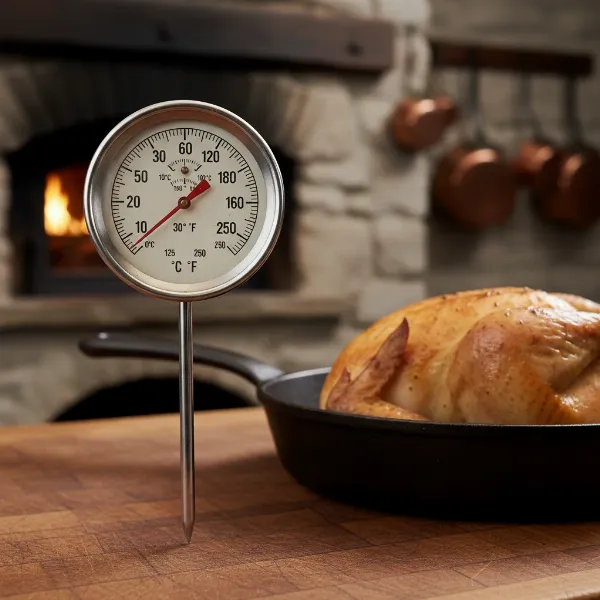 a close up of an old bimetallic dial thermometer in a kitchen setting
Advanced Smart Thermometers (The “Bio-Metric” Potential)
If “Bio-Metric Thermometer” implies a device using cutting-edge biological sensing or advanced analytics beyond basic temperature, then smart thermometers are the closest existing technology.
- Design and Features: These are digital thermometers with sophisticated sensors (thermistors or thermocouples) connected to a smart hub or directly to an app via Bluetooth or Wi-Fi. Features often include multiple probes, customizable alarms, predictive cook times, and data logging.
- Accuracy and Speed: High-end smart thermometers are designed for exceptional accuracy and speed, often providing readings within 1-3 seconds with a precision of ±1°F (±0.5°C). The advanced digital processing minimizes human error and external influences.
- Durability and Longevity: While often more delicate than bimetallic types due to electronic components, many smart thermometers are built with robust probes and water-resistant main units to withstand kitchen environments. Proper care is essential for their longevity.
- Ease of Use and Cleaning: Controlled via intuitive apps, they offer a user-friendly experience. Probes are typically easy to clean, but the electronic components require careful handling.
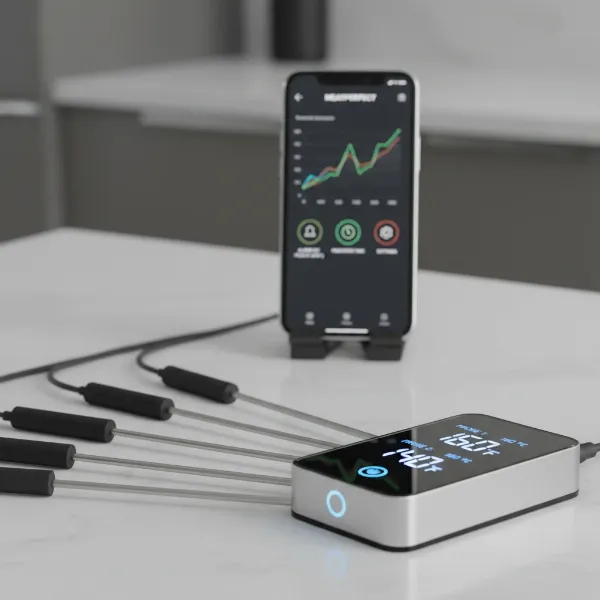 a sleek smart digital meat thermometer with multiple probes and an app interface
Mastering Your Thermometer: Usage and Maintenance
To ensure the highest accuracy and longevity from any meat thermometer, proper usage and maintenance are key.
- Correct Usage: Always insert the probe into the thickest part of the meat, avoiding bone, fat, and gristle, as these can give inaccurate readings. For poultry, place it in the thigh. Ensure the probe is deep enough to reach the core temperature.
- Calibration Tips: Even the best thermometers can drift over time.
- Ice Bath Method: Fill a glass with crushed ice and water. Stir well and let it sit for a few minutes. Insert your thermometer probe without touching the sides or bottom. It should read 32°F (0°C). Adjust if your thermometer has a calibration nut.
- Boiling Water Method: (Use with caution for bimetallic only if rated for high temps) Place the probe in vigorously boiling water. It should read 212°F (100°C) at sea level.
- Cleaning and Storage: Always clean your thermometer probe immediately after use with hot, soapy water or an antibacterial wipe. Never submerge the entire thermometer body unless it’s explicitly waterproof. Store it in a protective sleeve or drawer to prevent damage to the probe or sensor.
- Common Errors:
- Incorrect Placement: Placing the probe too shallow or hitting bone/fat leads to inaccurate readings.
- Not Waiting for a Stable Reading: Especially with slower thermometers, always wait for the temperature to stabilize before reading.
- Neglecting Calibration: Regular calibration ensures your thermometer remains precise.
Elevate Your Culinary Skills with Precise Temperature Monitoring
A reliable thermometer is your secret weapon for culinary excellence. It removes the guesswork, guaranteeing that every dish is cooked to perfection, both in terms of taste and safety.
- Food Safety: Reaching the correct internal temperature is crucial for killing harmful bacteria. A thermometer ensures your chicken is safe, your pork is cooked through, and your ground beef meets safety standards.
- Optimal Doneness: Beyond safety, internal temperature dictates doneness. Whether you prefer a rare steak (125-130°F / 52-54°C), a medium-rare lamb (130-135°F / 54-57°C), or tender pork loin (145°F / 63°C), a thermometer allows you to hit your desired target every time.
- Enhanced Flavor and Texture: Overcooked meat becomes dry and tough, while perfectly cooked meat retains its juiciness and flavor. A precise thermometer helps you unlock the full potential of your ingredients.
Using an accurate thermometer, regardless of whether you call it “Bio-Metric” or simply “digital probe,” is the single most effective way to consistently produce delicious and safe meals.
Conclusion
While the term “Bio-Metric Thermometer” isn’t standard in the world of meat thermometers, its core implication—advanced and reliable accuracy—is vital for any home cook or professional chef. Whether you interpret it as a robust bimetallic thermometer for general oven use or a sophisticated smart digital probe for precise internal temperature monitoring, the pursuit of accuracy remains paramount. High-quality digital and smart thermometers generally offer the fastest and most precise readings for internal meat doneness. Bimetallic options, while durable, are often better suited for ambient oven temperatures. Investing in a reliable, accurately calibrated thermometer is investing in consistent culinary success and food safety.
What kind of precision are you seeking for your next culinary masterpiece?
Frequently Asked Questions
What is a “Bio-Metric Thermometer” in the context of cooking?
The term “Bio-Metric Thermometer” is not a recognized industry standard for meat thermometers. It might be used to describe a highly advanced smart thermometer with sophisticated sensing capabilities or could be a misnomer for a bimetallic thermometer, which uses two different metals to measure temperature and has applications in cooking (like oven thermometers).
Are bimetallic thermometers accurate enough for meat?
Bimetallic thermometers can be reliable for general temperature monitoring, such as oven temperature. However, for precise internal meat temperatures, high-quality digital instant-read or probe thermometers are generally more accurate and faster, making them preferable for ensuring perfect doneness and food safety.
How often should I calibrate my meat thermometer?
You should calibrate your Meat Thermometer regularly, ideally once a month if you use it frequently, or whenever you suspect a reading might be off. Calibrating with an ice bath (should read 32°F/0°C) is a simple and effective method to ensure your thermometer remains accurate.