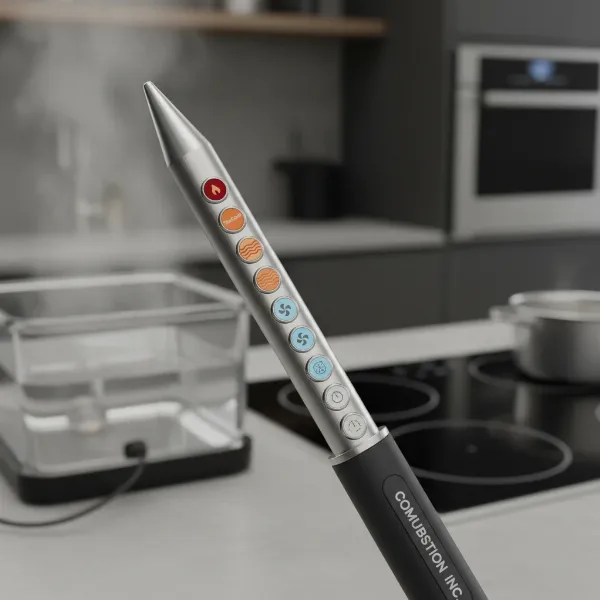
Imagine slicing into a perfectly cooked steak or pulling tender, juicy chicken from your charcoal grill, knowing it’s not only delicious but also perfectly safe to eat. This isn’t just a dream for master grillers; it’s an achievable reality when you incorporate a meat thermometer into your charcoal grilling routine. Gone are the days of guesswork, questionable doneness, or dry, overcooked meat. A reliable meat thermometer transforms your grilling, giving you the confidence to cook any cut to perfection, every single time. This guide will walk you through everything you need to know, from choosing the right thermometer to mastering placement and understanding those critical internal temperatures.
Meat Thermometer: Overview and Benefits for Charcoal Grilling
What exactly is a meat thermometer? At its core, it’s a culinary tool designed to measure the internal temperature of food, providing an accurate reading that visual cues simply cannot. For anyone regularly firing up a charcoal grill, this isn’t just a convenience; it’s an indispensable gadget that elevates your outdoor cooking.
Why is a meat thermometer essential for charcoal grilling? Firstly, it’s about food safety. Harmful bacteria can linger in undercooked meat, posing a significant health risk. A thermometer confirms that your poultry, pork, or other meats have reached the minimum safe internal temperature recommended by food safety authorities, ensuring they are safe for consumption. Secondly, it guarantees optimal doneness. Whether you prefer your beef medium-rare, your pork juicy, or your chicken thoroughly cooked but still moist, a meat thermometer allows you to hit that sweet spot consistently. This precision dramatically reduces the guesswork often associated with charcoal grilling, where heat can fluctuate more than on a gas grill.
The market offers several common types of meat thermometers, each with advantages for grilling. Instant-read thermometers provide quick temperature checks, perfect for thinner cuts like steaks or burgers. Probe or leave-in thermometers, often equipped with Wi-Fi or Bluetooth, are ideal for larger cuts and longer cooks, allowing you to monitor temperatures remotely without constantly lifting the grill lid and losing precious heat.
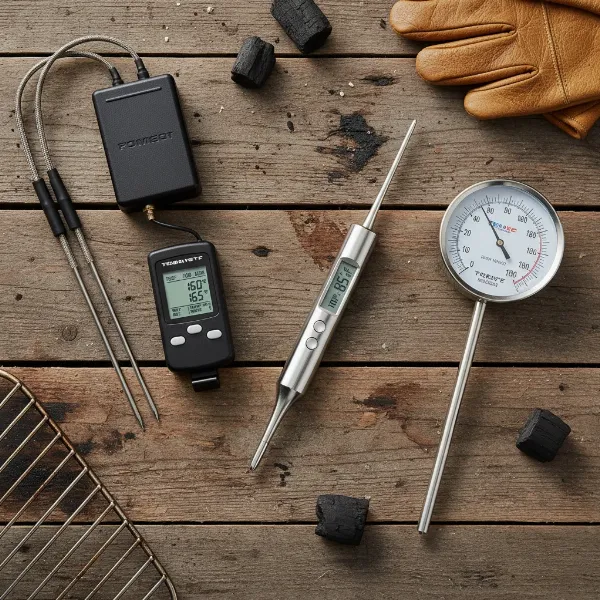 An assortment of meat thermometers, including instant-read and leave-in probe types, ready for charcoal grilling.
Choosing the Right Meat Thermometer for Your Charcoal Grill
Selecting the perfect meat thermometer for your charcoal grilling adventures involves considering a few key factors to ensure it meets your specific needs and cooking style. The right tool can make all the difference in achieving consistently delicious results.
When choosing, first think about the type of meat and the dishes you typically grill. If you primarily cook quick-searing steaks, burgers, or chicken breasts, an instant-read thermometer will be your best friend. For larger roasts, briskets, or whole chickens that require hours on the charcoal, a leave-in probe thermometer with remote monitoring capabilities is invaluable. Your budget is another consideration, as prices can range from basic analog models to high-tech wireless devices. Finally, consider essential features: accuracy and speed of measurement are paramount. For charcoal grilling, features like high heat resistance for probes, a durable build that can withstand outdoor conditions, and for wireless models, a reliable connection range are important.
Here’s a comparison of common meat thermometer types and their suitability for charcoal grilling:
- Digital Instant-Read Thermometers:
- Pros: Extremely fast readings (often within 1-5 seconds), highly accurate, versatile for various food types and thicknesses. Easy to read digital display.
- Cons: Not designed to be left in meat during cooking, requiring you to briefly open the grill to take a reading.
- Best for: Steaks, burgers, chops, chicken breasts, and quick checks on any grilled item.
- Digital Leave-in Probe Thermometers:
- Pros: Stays in the meat throughout the cook, often with a wired connection to an external display or wireless (Bluetooth/Wi-Fi) connection to a smartphone app. Ideal for long, slow cooks. Many models have alarms for target temperatures.
- Cons: Probes and wires must be heat-resistant, and some cheaper models might have less durable wiring. Can be more expensive.
- Best for: Roasts, briskets, pork butts, whole chickens, and anything requiring continuous temperature monitoring.
- Analog/Dial Thermometers:
- Pros: Inexpensive, simple to use, often built into grill lids (though these measure ambient air, not meat internal temp). Some meat-specific analog probes exist.
- Cons: Slower to read, less precise than digital, can be harder to read in low light. Not ideal for quick spot checks.
- Best for: General roasting, less critical applications, or as a backup. Often not recommended as the primary tool for precise grilling.
Understanding these differences helps you make an informed decision, ensuring your chosen thermometer is perfectly suited to your charcoal grilling style.
Top Meat Thermometers for Charcoal Grilling: A Comparison
Choosing the right tool can significantly impact your grilling success. Here’s a comparative overview of some top-rated meat thermometers that excel in charcoal grilling environments, focusing on their key characteristics.
| Product Type | Key Advantages | Potential Drawbacks | Price Range (Approx.) | User Rating (Typical) |
|---|---|---|---|---|
| Instant-Read Digital | Fastest readings, highly accurate, compact, versatile | Not for leave-in use, requires grill lid opening | $20 – $100+ | 4.5 – 5 stars |
| Wireless Leave-in Probe | Remote monitoring via app, continuous tracking, alarms | Higher cost, reliance on connectivity, battery life | $50 – $150+ | 4 – 4.5 stars |
| Wired Leave-in Probe | Continuous tracking, generally durable, less expensive | Wire management on grill, limited mobility | $30 – $80 | 4 – 4.5 stars |
This table provides a snapshot, but deeper insights into design, accuracy, and special features are crucial for making your final decision. The best thermometer for you will balance your grilling frequency, the types of food you prepare, and your desired level of convenience.
In-Depth Reviews of Recommended Meat Thermometers
Let’s delve deeper into what makes a meat thermometer truly stand out for charcoal grilling, examining features critical for durability, accuracy, and ease of use in a high-heat, often smoky environment.
For a high-quality Instant-Read Digital Thermometer, look for models with a thin, sharp probe for minimal impact on the meat and quick insertion. Stainless steel construction for the probe and a splash-proof or waterproof rating are crucial for durability and easy cleaning after handling raw meat. Speed is its greatest asset; the best models read within 1-3 seconds, essential when you don’t want to lose heat by keeping the grill open too long. Features like a rotating display, backlight for evening grilling, and a strong magnetic back for easy storage near the grill enhance usability. The design should be ergonomic, fitting comfortably in hand.
When it comes to Wireless Leave-in Probe Thermometers, the core benefit is hands-free monitoring. Look for models with robust Bluetooth or Wi-Fi connectivity and a significant range, allowing you to move freely while your meat cooks. The probe itself must be highly heat-resistant, often capable of withstanding ambient grill temperatures up to 500-700°F (260-370°C) without damage. Multiple probes are a common and useful feature, allowing you to monitor different cuts of meat or the grill’s ambient temperature simultaneously. Battery life for both the probe and receiver/base station is also an important consideration for long cooks. These thermometers often come with user-friendly apps that provide graphs, alarms, and preset temperatures for various meats and doneness levels, making them a “smart” addition to your grilling arsenal.
For Wired Leave-in Probe Thermometers, the emphasis is on reliability and often a more budget-friendly price point compared to their wireless counterparts. The probe wire needs to be long enough to reach the external display safely, without being crimped by the grill lid. High-grade, heat-resistant wiring is paramount to prevent damage. Accuracy and speed of temperature updates to the display are also critical, ensuring you have real-time information. A durable, easy-to-read display unit, possibly with a stand or magnet, is beneficial for keeping it visible on your prep station.
Regardless of type, durability and longevity are key. Charcoal grilling exposes tools to heat, smoke, and often grease. Stainless steel probes, robust plastic casings, and good seals against moisture contribute to a thermometer’s lifespan. Ease of cleaning, often requiring just a simple wipe down with a damp cloth, also affects overall user experience. Investing in a quality thermometer means fewer replacements and more reliable results over many grilling seasons.
How to Properly Use and Care for Your Meat Thermometer on a Charcoal Grill
Mastering the art of charcoal grilling involves more than just managing coals; it requires precise temperature control. Your meat thermometer is your most valuable tool for this, but only if used correctly.
Here’s a step-by-step guide for using your meat thermometer on a charcoal grill:
- Pre-Grill Checks (Calibration): Before you even light the coals, it’s wise to periodically check your thermometer’s accuracy. A simple “ice bath test” is effective. Fill a glass with ice and then water. Insert the thermometer probe, ensuring it doesn’t touch the sides or bottom. After 20-30 seconds (or 1-2 minutes for analog dials), a well-calibrated thermometer should read 32°F (0°C). If it’s off by more than a couple of degrees, either recalibrate (if your model allows) or consider replacing it.
- When to Check Temperature: For instant-read thermometers, begin checking your meat towards the end of the anticipated cooking time. For example, if chicken breasts usually take 10-15 minutes, start checking around the 8-minute mark. For leave-in probe thermometers, insert them at the start of the cook and monitor continuously.
- Placement in Meat: This is critical for an accurate reading.
- Thick Cuts (Roasts, Briskets, Whole Chickens): Insert the probe into the thickest part of the meat, aiming for the center. Ensure the tip avoids bone, large pockets of fat, or gristle, as these can give inaccurate readings. For large roasts, take readings from 3-4 different areas to ensure even cooking.
- Thinner Cuts (Steaks, Chops, Chicken Breasts): For thinner cuts, insert the probe from the side, parallel to your grilling surface, until the tip reaches the very center of the thickest part.
- Technique for Instant-Read: Push the probe slightly past what you estimate to be the center, then slowly pull it back. The lowest temperature displayed as you pull it out is the most accurate internal temperature of the coldest part.
- Avoid Common Pitfalls: Never let the probe tip touch bones, excessive fat, or the hot grill grate itself, as these will give falsely high readings. For wired probes, ensure the wire is not directly over the intense heat of the coals, which can melt or damage the insulation.
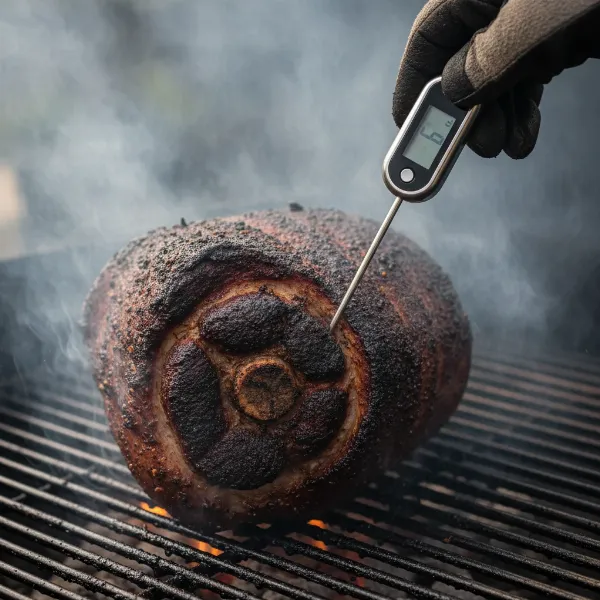 Hand inserting a digital instant-read thermometer into a thick cut of meat on a charcoal grill, showing correct probe placement.
Cleaning and Storage Tips:
After each use, clean your meat thermometer thoroughly. Wipe the probe with hot, soapy water and rinse, or follow manufacturer instructions. Most probes are not dishwasher safe. Ensure the probe and any display units are completely dry before storing to prevent bacterial growth and damage to electronics. Store it in a protective sleeve or case, especially for instant-read models, to protect the probe tip. For wired or wireless units, carefully coil wires and store in a safe place, away from extreme temperatures or moisture.
Troubleshooting Common Issues:
- Inaccurate readings: Beyond calibration, check for improper probe placement (touching bone/fat), or if the probe isn’t inserted deep enough.
- Slow readings: Can indicate a dying battery (for digital models) or a low-quality thermometer.
- Intermittent wireless connection: Ensure the receiver/smartphone is within range, check for battery levels, and minimize physical obstructions between the probe and receiver.
Achieving Perfect Results: Grilling Tips with Your Meat Thermometer
Your meat thermometer is your secret weapon for consistently turning out perfectly cooked, incredibly flavorful grilled dishes. Understanding how to interpret its readings and apply them to various meats is key.
Using your meat thermometer to achieve various doneness levels:
Different meats and even different cuts of the same meat have ideal target temperatures for optimal taste and texture. For beef, aiming for 130-135°F (54-57°C) will yield a medium-rare steak, while 140-145°F (60-63°C) will give you medium. Pork is often best at 145°F (63°C) for a juicy, tender result, while all poultry, including chicken and turkey, must reach 165°F (74°C) for food safety. Fish typically cooks quickly and is done around 140-145°F (60-63°C), flaking easily with a fork. Always refer to a reliable meat temperature chart for specific guidance.
The importance of “carryover cooking” and resting meat:
This is one of the most crucial concepts in grilling. Meat continues to cook even after it’s removed from the charcoal grill due to residual heat, a phenomenon known as “carryover cooking.” For smaller cuts like steaks and burgers, their internal temperature can rise by about 5°F (3°C) during resting. Larger cuts, such as roasts or briskets, can see a temperature increase of up to 10°F (6°C). To account for this, you should pull your meat off the grill 5-10°F (3-6°C) below your target final temperature.
Equally important is resting the meat. Once off the grill, transfer it to a cutting board and tent loosely with foil. Resting allows the muscle fibers to relax and reabsorb juices that have migrated to the center during cooking, resulting in a more tender and juicy product. Skipping the rest time means those delicious juices will spill out when you cut, leaving you with dry meat. Rest times vary: 5-10 minutes for steaks and chops, and 15-30 minutes for larger roasts.
Grilling recipes enhanced by accurate temperature monitoring:
- Perfect Medium-Rare Steak: Grill your favorite cut of steak over direct high heat on your charcoal grill. Once a good sear is achieved, move to indirect heat if necessary. Begin checking with your instant-read thermometer when you anticipate it’s close to done. Pull the steak off when it reads 125-130°F (52-54°C) for medium-rare, letting carryover cooking bring it to the perfect 135°F (57°C) while it rests.
- Juicy Grilled Chicken Breast: Grill chicken breasts over medium-high direct heat. Use your instant-read thermometer to check the thickest part. Pull the chicken off when it reaches 160°F (71°C) and let it rest, knowing it will reach the safe 165°F (74°C) during the rest, ensuring maximum juiciness.
- Tender Smoked Brisket/Pork Butt: For these long cooks, a leave-in probe thermometer is indispensable. Insert the probe into the thickest part. Set your target temperature to 195-203°F (90-95°C), depending on desired tenderness. Monitor continuously and pull when the probe glides in with minimal resistance, indicating the collagen has broken down. Allow ample rest time to redistribute juices.
By consistently using your meat thermometer, you’ll gain an intuitive understanding of how different cuts behave on the charcoal grill, transforming every cookout into a culinary success.
Conclusion
Embracing the use of a meat thermometer fundamentally transforms your charcoal grilling experience. It’s not merely a gadget; it’s an indispensable tool that ensures both the safety and the culinary perfection of your grilled meats. By meticulously monitoring internal temperatures, you eliminate the guesswork, confidently preventing undercooked hazards and frustrating overcooked dryness. From instant-read models for quick checks on steaks to sophisticated wireless probes for long, slow smokes, there’s a thermometer suited for every grilling enthusiast.
Remember the key takeaways: always insert the probe into the thickest part of the meat, avoiding bones and fat, and account for carryover cooking by removing your meat a few degrees below the target temperature. A properly used and cared-for meat thermometer will not only elevate the flavor and texture of your dishes but also instill confidence in your grilling abilities, making every cookout a stress-free and delicious event.
So, are you ready to take control of your charcoal grill and achieve consistently perfect results, every time?
Frequently Asked Questions
How do I ensure my meat thermometer is accurate before grilling?
|
Our Picks for the Best Meat thermometer in 2026
As an Amazon Associate I earn from qualifying purchases.
|
||
| Num | Product | Action |
|---|---|---|
| 1 | TempPro TP829 1000ft Wireless Meat Thermometer Digital for Grilling and Smoking, 4 Meat Probes Grill Thermometer for Outside Grill, BBQ Thermometer for Cooking Food Temperature (Previously ThermoPro) |

|
| 2 | Meat Thermometer Digital, Instant Read Meat ThermometerI for Grill and Cooking, Waterproof Food Thermometer for Kitchen and Outside, BBQ, Turkey, Candy, Liquids, Beef |
|
| 3 | Professional Meat Thermometer - Instant Read Food Thermometer with Waterproof Design, Backlight, Hold/Min/Max Function - Cooking Thermometer for Grilling, BBQ, Kitchen Use |
|
| 4 | ThermoPro TP03B Digital Meat Thermometer for Cooking, Instant Read Thermometer with Backlight, Kitchen Food Thermometer for Grill Smoker BBQ Oil Deep Fry Candy Bread Coffee with Pop-up Meat Probe |
|
| 5 | Meat Thermometer Digital with 1 Second Instant Read, Large LED Display, Food Thermometer |
|
| 6 | Meat Thermometer Digital - Instant Read Food Thermometer for Cooking Grilling, Candy, Air Fryer, Griddle Probe Kitchen Gadgets Essentials BBQ Accessories, Valentines Day Gifts for Him Her, Red |
|
| 7 | ThermoPro TP19H Digital Meat Thermometer for Cooking with Ambidextrous Backlit and Motion Sensing Kitchen Cooking Food Thermometer for BBQ Grill Smoker Oil Fry Candy Instant Read Thermometer |
|
| 8 | Ultrean Digital Meat Thermometer for Cooking,Ultra-Fast Instant Read Food Thermometer with Backlight,Foldable Probe,Waterproof Kitchen Thermometer for BBQ,Grill,Fry,Oven,Candy Making |
|
| 9 | Alpha Grillers Meat Thermometer Digital - Instant Read Food Thermometer for Cooking and Grilling Gifts for Men Valentines Day Gifts for Him Her Mom Dad |
|
| 10 | 0.5 Sec Instant Read Meat Thermometer Digital with ±0.5℉ Precision, Food Thermometer for Cooking Kitchen Gadgets, Oven Grill Candy BBQ Essentials Accessories, Gifts for Him Dad Men Birthday, Red |
|
To ensure accuracy, perform an ice bath test. Fill a glass with ice and water, insert the probe, and wait 20-30 seconds. A precise thermometer should read 32°F (0°C). If it’s significantly off, recalibrate if possible or replace it to ensure safe and accurate cooking.
Can I leave an instant-read thermometer in meat while it cooks on the charcoal grill?
No, instant-read thermometers are designed for quick spot checks and should not be left in the meat during the entire cooking process. The high heat of the grill can damage the thermometer, and the constant exposure isn’t what they’re built for.
Where exactly should I insert the meat thermometer in a thick cut of meat like a roast?
For thick cuts, insert the thermometer probe into the very center of the thickest part of the meat. Be sure to avoid any bones, large pockets of fat, or gristle, as these can conduct heat differently and lead to inaccurate temperature readings.
How does “carryover cooking” affect my meat’s final temperature on the grill?
Carryover cooking means the meat’s internal temperature continues to rise after it’s removed from the grill. For smaller cuts, this can be about 5°F, and for larger cuts, up to 10°F. Always remove meat 5-10°F below your desired final temperature to account for this rise during resting.
What’s the difference between a wired probe and a wireless meat thermometer for grilling?
A wired probe thermometer has a sensor connected to an external display via a heat-resistant wire, requiring you to manage the wire. A wireless thermometer transmits readings to a receiver or smartphone app, offering greater freedom of movement and remote monitoring without wires.
Should I take multiple temperature readings for large cuts of meat on the grill?
Yes, for large cuts like briskets or roasts, it’s highly recommended to take temperature readings from 3-4 different spots. This ensures that the entire cut has reached your desired doneness and safe internal temperature, as heat distribution can be uneven.
How do I clean and care for my meat thermometer after using it on a charcoal grill?
Always clean the probe with hot, soapy water immediately after use, then rinse and dry thoroughly. Avoid immersing the display unit unless it’s specifically rated as waterproof. Proper cleaning and drying prevent bacterial growth and extend the lifespan of your thermometer.