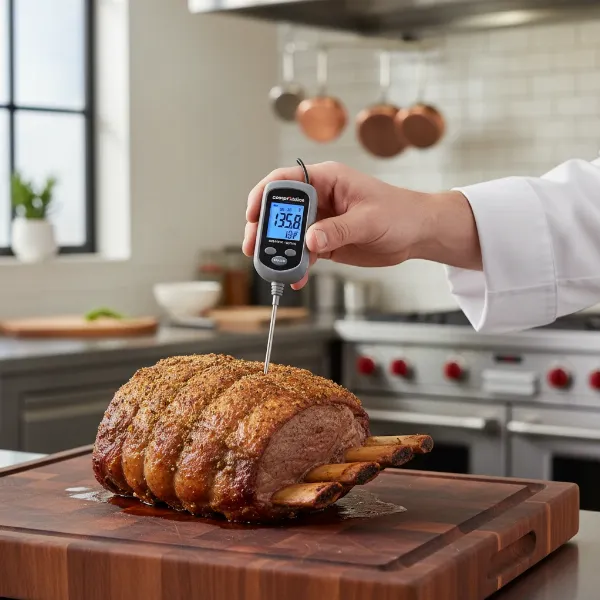
Cooking delicious meals for family and friends is a rewarding experience, but ensuring food safety is paramount. As an Admin of meatthermometerreviews.com with over a decade of expertise in meat thermometers, I understand the critical role these devices play not just in achieving perfect doneness, but in preventing dangerous foodborne illnesses. While using a meat thermometer to check internal temperatures is a fundamental step, understanding how to properly sanitize its probe, especially when moving between different types of raw meat like chicken and beef, is equally vital. This guide will equip you with the knowledge and practical steps to maintain impeccable kitchen hygiene and safeguard your culinary creations.
Meat Thermometers: Your Essential Tool for Food Safety
A meat thermometer is more than just a gadget for precision cooking; it is your frontline defense against undercooked food and the harmful bacteria it can harbor. By accurately measuring the internal temperature of meats, poultry, and other dishes, it ensures they reach a safe minimum temperature where pathogens are destroyed. Without this critical tool, you risk serving food that appears cooked on the outside but remains a hazard internally, leading to potential foodborne illnesses caused by bacteria like Salmonella, E. coli, and Campylobacter. The peace of mind that comes from knowing your food is both perfectly cooked and safe to eat is invaluable.
Understanding Cross-Contamination: Why Sanitization Between Meats Matters
Cross-contamination is a silent threat in any kitchen, referring to the transfer of harmful bacteria from one food item to another, or from a surface/utensil to food. When you’re cooking multiple types of meat, such as chicken and beef, the risk of cross-contamination escalates significantly if your thermometer probe is not properly sanitized between uses.
Raw chicken, for example, is notoriously associated with bacteria like Salmonella and Campylobacter. If you check the internal temperature of raw chicken and then immediately insert the same uncleaned probe into raw beef, you risk transferring these dangerous pathogens to the beef. Similarly, if you check partially cooked chicken, find it’s not yet at a safe temperature, and then re-insert the probe without cleaning it, you can reintroduce bacteria back into the very food you’re trying to make safe. This invisible transfer can lead to serious health issues, highlighting why meticulous probe sanitization is not just good practice, but an absolute necessity.
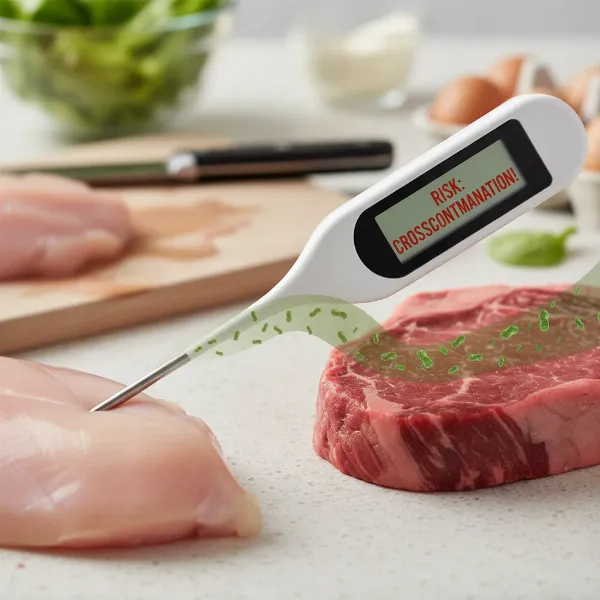 Meat thermometer probe transferring bacteria between raw chicken and beef, illustrating cross-contamination.
Essential Methods to Sanitize Your Meat Thermometer Probe
Ensuring your meat thermometer probe is thoroughly sanitized between checking different types of meat is a simple yet effective way to prevent cross-contamination. Here are the most reliable methods:
Hot, Soapy Water: The Gold Standard for Home Kitchens
This is the most common and widely recommended method by food safety authorities, including the USDA. It’s effective for removing food particles and significantly reducing bacterial load.
- How to do it: Immediately after probing raw meat, wash the probe thoroughly with warm, soapy water. Use dish soap and scrub the probe for at least 20 seconds, paying close attention to any crevices or textured areas. Rinse the probe under hot running water until all soap residue is gone.
- Important considerations: For most digital instant-read thermometers, you should only wash the metal probe, avoiding submerging the entire unit, especially the display and battery compartment, unless the device is explicitly rated as fully waterproof. Air dry the probe completely or wipe it with a clean, disposable towel before its next use or storage.
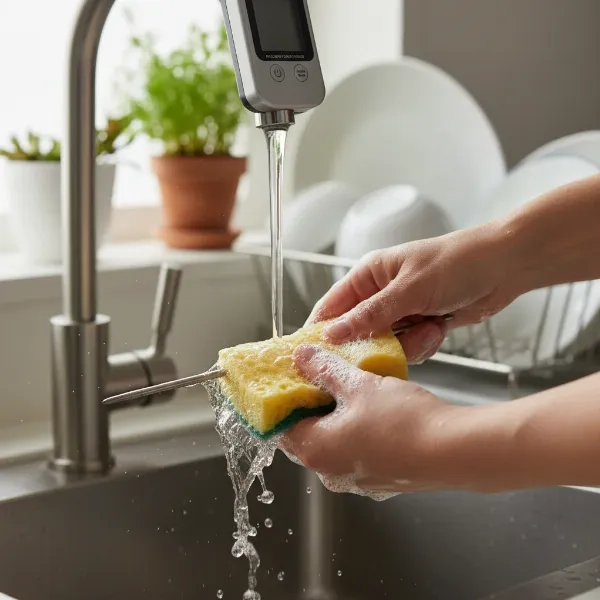 Hands washing a meat thermometer probe with hot, soapy water to sanitize it, preventing foodborne illness.
|
Our Picks for the Best Meat thermometer in 2026
As an Amazon Associate I earn from qualifying purchases.
|
||
| Num | Product | Action |
|---|---|---|
| 1 | 0.5 Sec Instant Read Meat Thermometer Digital with ±0.5℉ Precision, Food Thermometer for Cooking Kitchen Gadgets, Oven Grill Candy BBQ Essentials Accessories, Gifts for Him Dad Men Birthday, Red |

|
| 2 | Ultrean Digital Meat Thermometer for Cooking,Ultra-Fast Instant Read Food Thermometer with Backlight,Foldable Probe,Waterproof Kitchen Thermometer for BBQ,Grill,Fry,Oven,Candy Making |
|
| 3 | Meat Thermometer Digital, Instant Read Meat ThermometerI for Grill and Cooking, Waterproof Food Thermometer for Kitchen and Outside, BBQ, Turkey, Candy, Liquids, Beef |
|
| 4 | ThermoPro TP03B Digital Meat Thermometer for Cooking, Instant Read Thermometer with Backlight, Kitchen Food Thermometer for Grill Smoker BBQ Oil Deep Fry Candy Bread Coffee with Pop-up Meat Probe |
|
| 5 | ThermoPro TP19H Digital Meat Thermometer for Cooking with Ambidextrous Backlit and Motion Sensing Kitchen Cooking Food Thermometer for BBQ Grill Smoker Oil Fry Candy Instant Read Thermometer |
|
| 6 | Meat Thermometer Digital with 1 Second Instant Read, Large LED Display, Food Thermometer |
|
| 7 | TempPro TP829 1000ft Wireless Meat Thermometer Digital for Grilling and Smoking, 4 Meat Probes Grill Thermometer for Outside Grill, BBQ Thermometer for Cooking Food Temperature (Previously ThermoPro) |
|
| 8 | Professional Meat Thermometer - Instant Read Food Thermometer with Waterproof Design, Backlight, Hold/Min/Max Function - Cooking Thermometer for Grilling, BBQ, Kitchen Use |
|
| 9 | Alpha Grillers Meat Thermometer Digital - Instant Read Food Thermometer for Cooking and Grilling Gifts for Men Valentines Day Gifts for Him Her Mom Dad |
|
| 10 | Meat Thermometer Digital - Instant Read Food Thermometer for Cooking Grilling, Candy, Air Fryer, Griddle Probe Kitchen Gadgets Essentials BBQ Accessories, Valentines Day Gifts for Him Her, Red |
|
Alcohol Wipes or Rubbing Alcohol: Quick and Convenient
Alcohol is a powerful disinfectant, making alcohol wipes or rubbing alcohol a great option for rapid sanitization, especially when hot water and soap aren’t readily available, such as during outdoor grilling.
- How to do it: Use a pre-packaged alcohol swab or saturate a clean cotton ball or paper towel with 70% isopropyl rubbing alcohol. Vigorously wipe down the entire length of the probe that came into contact with the meat.
- Important considerations: Allow the alcohol to evaporate and air dry completely. The alcohol needs a moment of contact time to be effective. While some sources suggest rinsing with cool water afterward, many prefer to let it air dry to ensure maximum sanitization. This method is particularly useful for quick checks between different cuts of meat on the grill.
Boiling Water: High-Heat Disinfection
For probes that are fully submersible and heat-resistant, boiling water offers an excellent method of sterilization.
- How to do it: Bring a small pot of water to a rolling boil. Carefully immerse only the metal probe of your thermometer into the boiling water for at least one minute.
- Important considerations: Ensure you do not immerse the entire thermometer, especially the electronic components, unless the manufacturer explicitly states it is safe to do so. After the minute, carefully remove the probe and allow it to cool and air dry completely before use. This method is highly effective for killing bacteria through sustained high temperature.
While bleach solutions (e.g., 1 tablespoon unscented bleach per gallon of water) are effective for sanitizing surfaces, hot soapy water or alcohol wipes are generally more practical and safer for regular probe sanitization for home cooks. Always refer to your specific thermometer’s manufacturer instructions for any special cleaning requirements.
Beyond the Probe: Comprehensive Food Safety Practices
Proper thermometer sanitization is a cornerstone of food safety, but it’s part of a larger ecosystem of hygienic kitchen practices. To ensure complete protection against foodborne illnesses, integrate these habits into your cooking routine:
- Hand Hygiene: Always wash your hands thoroughly with warm water and soap for at least 20 seconds before and after handling raw meat, and after cleaning your thermometer.
- Separate Surfaces and Utensils: Use dedicated cutting boards and utensils for raw meats, and separate ones for cooked foods or ready-to-eat produce. Consider color-coded boards to easily distinguish them. Never place cooked food back on a plate that held raw meat.
- Sanitize All Surfaces: After preparing raw meats, thoroughly clean and sanitize all countertops, sinks, and other surfaces that may have come into contact with raw meat juices. A solution of 1 tablespoon of unscented liquid chlorine bleach per gallon of water can be used for effective surface sanitization.
- Proper Storage: Store your clean and dry meat thermometer in a protective sheath or case to prevent re-contamination and protect the probe from damage. Keep it away from raw meat storage areas.
- Cook to Safe Temperatures: While sanitizing your thermometer prevents cross-contamination, the ultimate goal is to cook food to safe minimum internal temperatures. Using your sanitized thermometer reliably ensures this crucial step is met.
Safe Internal Temperatures for Chicken and Beef
Knowing the correct internal temperatures for different meats is key to both safety and optimal taste. Here are the USDA-recommended minimum internal temperatures for chicken and beef:
| Food Type | Minimum Internal Temperature | Rest Time (after removing from heat) |
|---|---|---|
| All Poultry (whole, parts, ground) | 165°F (73.9°C) | None Required |
| Ground Meats (beef, pork, veal, lamb) | 160°F (71.1°C) | None Required |
| Beef, Pork, Veal, Lamb (steaks, roasts, chops) | 145°F (62.8°C) | 3 minutes |
It’s important to note that while some meats like steaks and roasts can be safely cooked to 145°F with a rest time, ground meats and all poultry require a higher temperature to ensure safety due to the way they are processed and the potential for bacteria to be distributed throughout.
Choosing a Meat Thermometer for Easy Sanitization and Longevity
When selecting a meat thermometer, considering how easily it can be sanitized is a practical aspect of long-term food safety. Digital instant-read thermometers and probe thermometers are excellent choices for home cooks due to their accuracy and design.
- Digital Instant-Read Thermometers: These often feature a slim metal probe and a digital display. Look for models with a sealed probe and a splash-proof or waterproof rating, which makes cleaning with hot soapy water or wiping with alcohol much simpler without fear of damaging the electronics. Their quick readings minimize the time the probe is in contact with food, further aiding hygiene.
- Probe Thermometers: Designed to be left in the meat during cooking, these typically have a durable, heat-resistant cable connecting the probe to a separate display unit. Ensure the probe itself is made from food-grade stainless steel and can withstand rigorous cleaning. Detachable probes can sometimes simplify the cleaning process.
Regardless of the type, durable construction and materials like high-grade stainless steel are easier to clean and resist bacterial adherence. Proper care, including storing the probe in its sheath and occasional calibration checks (often in an ice bath), will ensure your thermometer remains accurate and a reliable tool in your food safety arsenal for years to come.
Conclusion
The journey from raw ingredients to a perfectly cooked meal is filled with crucial steps, and none are more important than ensuring food safety. Mastering the art of sanitizing your meat thermometer probe between checking chicken and beef, or any raw and cooked meats, is a non-negotiable aspect of responsible cooking. By consistently using hot, soapy water, alcohol wipes, or even boiling water, you effectively eliminate the risk of cross-contamination, protecting your loved ones from potential foodborne illnesses. Couple this with good kitchen hygiene and precise temperature monitoring, and you empower yourself to cook with confidence and peace of mind. Make probe sanitization a mindful habit—your health, and the deliciousness of your meals, depend on it.
What’s your go-to method for keeping your meat thermometer sparkling clean between different meats?
Frequently Asked Questions
How often should I sanitize my meat thermometer probe?
You should sanitize your meat thermometer probe after every single use, especially when moving between different types of raw meat, or between raw and cooked foods, to prevent cross-contamination. This practice ensures that no harmful bacteria are transferred, maintaining the highest level of food safety in your kitchen.
Can I use household bleach to sanitize my meat thermometer?
While a diluted bleach solution (1 tablespoon of unscented household bleach per gallon of water) is effective for sanitizing kitchen surfaces, for meat thermometer probes, hot, soapy water, alcohol wipes (70% isopropyl alcohol), or boiling water are generally preferred and more practical methods for home cooks. Always rinse thoroughly if using bleach on any food-contact surface.
What happens if I don’t clean my meat thermometer between checking raw chicken and raw beef?
Not cleaning your meat thermometer probe between checking raw chicken and raw beef can lead to cross-contamination. This means bacteria present on the raw chicken (like Salmonella or Campylobacter) can be transferred to the raw beef, potentially causing foodborne illness even if the beef is later cooked to a safe temperature.
Is wiping with a paper towel enough to clean the probe?
No, simply wiping the probe with a paper towel is not sufficient for sanitization. A paper towel may remove visible food particles, but it will not effectively kill or remove harmful bacteria. You need to use hot, soapy water, an alcohol wipe, or boiling water to properly clean and sanitize the probe.
Can I submerge my entire meat thermometer in water for cleaning?
It depends on the specific thermometer. Many digital and instant-read thermometers are not designed to be fully submerged and doing so can damage the electronic components. Always check the manufacturer’s instructions. If it’s not explicitly labeled as fully waterproof, only clean the metal probe and avoid getting the display unit wet.
How do I store my clean meat thermometer?
After thoroughly cleaning and drying your Meat Thermometer probe, store it in its protective sheath or case. This prevents it from coming into contact with other potentially contaminated surfaces or utensils in your drawer and protects the probe from damage, ensuring it’s ready and safe for its next use.
Why is 70% isopropyl alcohol recommended for sanitizing?
70% isopropyl alcohol is recommended because it is highly effective at denaturing proteins and dissolving lipids, which are essential components of bacteria and viruses. This concentration allows the alcohol to penetrate cell walls more effectively than higher concentrations, leading to better disinfection.