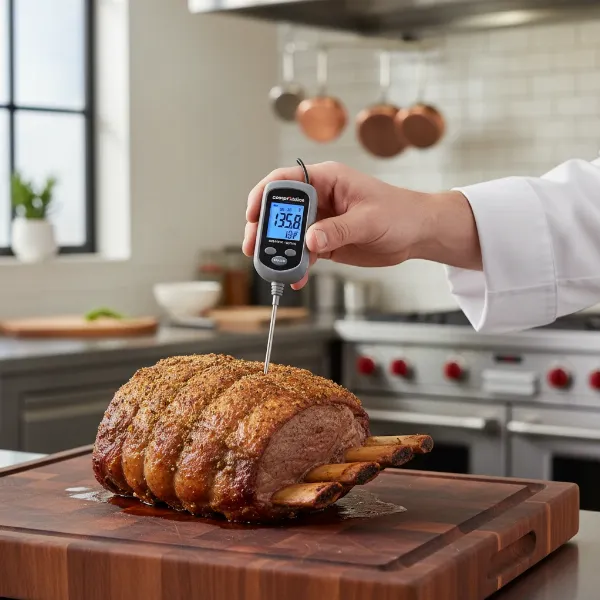
Grilling and smoking are culinary arts that demand precision, and a reliable meat thermometer is your essential guide to perfectly cooked food. Yet, nothing is more frustrating than a burnt or faulty probe wire, rendering your trusted tool useless. These delicate wires, designed to relay crucial temperature data, are often the first casualty of high heat, direct flames, or careless handling in the harsh grilling environment. Protecting them is not just about extending the life of your equipment; it’s about ensuring consistent, accurate readings that lead to delicious, safe meals every time. This guide will walk you through proven strategies and practical tips to keep your meat thermometer probe wires safe and functional, even under the most intense grilling conditions.
Understanding the Enemy: Why Probe Wires Burn on the Grill
It’s a common misconception that if your grill’s ambient temperature is, say, 275°F for a low-and-slow cook, your probe wires are automatically safe. The reality is far more complex. Probe wires often fail not from the overall cooking temperature but from localized hotspots and direct radiant heat that can easily exceed their rated limits.
When wood or charcoal burns, it does so at temperatures well over 1,100°F (593°C). While your grill or smoker is designed to diffuse this extreme heat to cook food gently, pockets of intense radiant heat can still exist, especially near the firebox, hot coals, or a direct flame. A probe wire accidentally draped over such a zone can quickly succumb to temperatures far beyond its design specifications, even if the meat itself is cooking at a moderate pace.
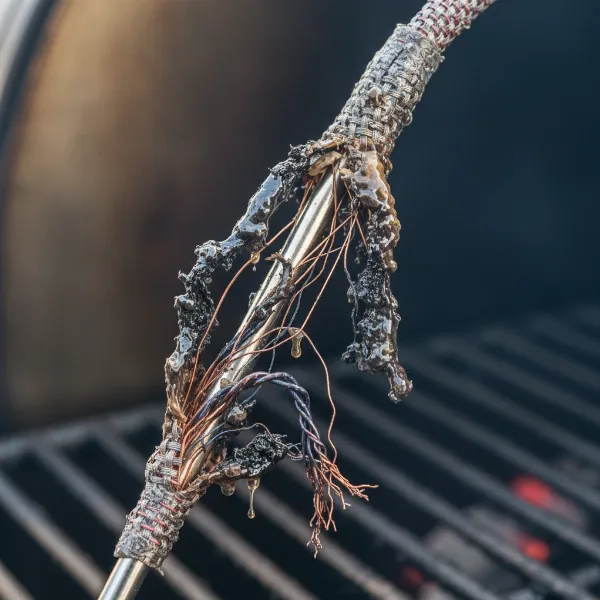 A visibly burnt and melted meat thermometer probe wire showing heat damage.
Beyond extreme heat, probe wires are also vulnerable to mechanical stress. Pinching a wire under a heavy grill lid can sever internal conductors or damage the insulation, leading to short circuits or inaccurate readings. Repeated abrasion against sharp edges or rough surfaces can also wear down the protective braiding, exposing the internal wires to further damage and heat. Understanding these threats is the first step in implementing effective protection strategies for your valuable meat thermometer.
Essential Strategies for Protecting Your Probe Wires
Safeguarding your meat thermometer probe wires requires a combination of smart placement, physical barriers, and the right equipment. By adopting these strategies, you can significantly extend the life of your probes and maintain their accuracy.
Smart Routing and Placement
The simplest and often most effective defense is careful positioning. Always route your probe wires away from direct flames, hot coals, or the hottest parts of the grill grate.
- Indirect Heat Zones: For smokers and grills with indirect cooking setups, thread your wires along the cooler edges, away from the heat source. If using a plate setter or diffuser, run the wire along its legs or under the cooler sections.
- Avoid Pinching: Never clamp your grill lid down directly on the probe wire. This can easily crimp or sever the delicate internal conductors, causing irreversible damage.
|
Our Picks for the Best Meat thermometer in 2026
As an Amazon Associate I earn from qualifying purchases.
|
||
| Num | Product | Action |
|---|---|---|
| 1 | Meat Thermometer Digital - Instant Read Food Thermometer for Cooking Grilling, Candy, Air Fryer, Griddle Probe Kitchen Gadgets Essentials BBQ Accessories, Valentines Day Gifts for Him Her, Red |

|
| 2 | Meat Thermometer Digital with 1 Second Instant Read, Large LED Display, Food Thermometer |
|
| 3 | TempPro TP829 1000ft Wireless Meat Thermometer Digital for Grilling and Smoking, 4 Meat Probes Grill Thermometer for Outside Grill, BBQ Thermometer for Cooking Food Temperature (Previously ThermoPro) |
|
| 4 | ThermoPro TP03B Digital Meat Thermometer for Cooking, Instant Read Thermometer with Backlight, Kitchen Food Thermometer for Grill Smoker BBQ Oil Deep Fry Candy Bread Coffee with Pop-up Meat Probe |
|
| 5 | Meat Thermometer Digital, Instant Read Meat ThermometerI for Grill and Cooking, Waterproof Food Thermometer for Kitchen and Outside, BBQ, Turkey, Candy, Liquids, Beef |
|
| 6 | Professional Meat Thermometer - Instant Read Food Thermometer with Waterproof Design, Backlight, Hold/Min/Max Function - Cooking Thermometer for Grilling, BBQ, Kitchen Use |
|
| 7 | Alpha Grillers Meat Thermometer Digital - Instant Read Food Thermometer for Cooking and Grilling Gifts for Men Valentines Day Gifts for Him Her Mom Dad |
|
| 8 | Ultrean Digital Meat Thermometer for Cooking,Ultra-Fast Instant Read Food Thermometer with Backlight,Foldable Probe,Waterproof Kitchen Thermometer for BBQ,Grill,Fry,Oven,Candy Making |
|
| 9 | ThermoPro TP19H Digital Meat Thermometer for Cooking with Ambidextrous Backlit and Motion Sensing Kitchen Cooking Food Thermometer for BBQ Grill Smoker Oil Fry Candy Instant Read Thermometer |
|
| 10 | 0.5 Sec Instant Read Meat Thermometer Digital with ±0.5℉ Precision, Food Thermometer for Cooking Kitchen Gadgets, Oven Grill Candy BBQ Essentials Accessories, Gifts for Him Dad Men Birthday, Red |
|
Physical Barriers and Insulation
When direct heat exposure is unavoidable, or for added peace of mind, physical barriers provide an extra layer of protection.
- Aluminum Foil: A tried-and-true method, but it must be done correctly. Wrap the section of the probe wire that will cross a hot zone in a small ball or loose bundle of heavy-duty aluminum foil. Do not wrap the entire length tightly, as this can create a channel that funnels hot air down to the probe’s transition point (where the wire meets the probe body), actually increasing the risk of damage. The loose ball creates air pockets, which act as an insulator.
- High-Temperature Silicone Grommets: Many modern grills and smokers come with dedicated probe ports. If yours doesn’t, consider installing a high-temp silicone grommet. These fit into a drilled hole in your grill’s side, providing a soft, heat-resistant, and secure passage for multiple wires without pinching or abrasion. They are a game-changer for serious grillers.
- External High-Temp Sleeving: For ultimate protection, especially for wires that frequently traverse extremely hot areas, specialized high-temperature sleeving can be used. Materials like fiberglass or ceramic-coated fabric (often found in automotive applications for protecting engine wires) can withstand temperatures far beyond standard probe wire insulation. You can cut these to size and slip them over your existing probe wires for a robust shield.
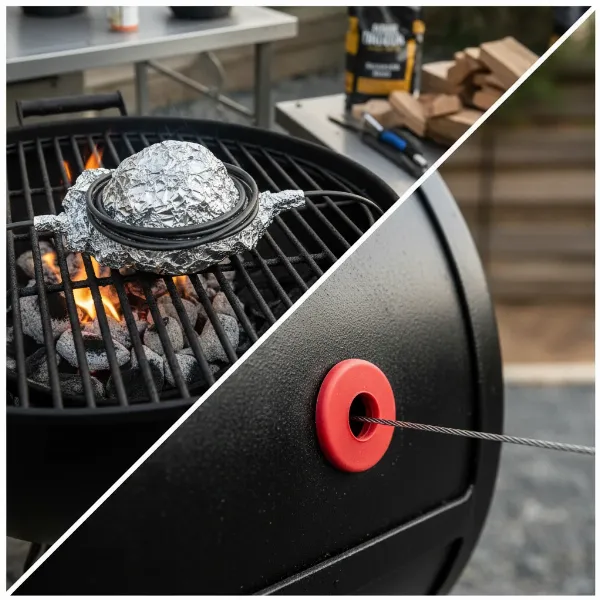 Various methods to protect grill thermometer wires, including foil and silicone grommet.
Innovative Tools and Accessories
The market offers several clever solutions to aid in probe wire protection.
- Magnetic Probe Holders/Hooks: These handy accessories attach magnetically to the side of your grill or smoker, allowing you to suspend probe wires away from hot surfaces. They keep wires organized, prevent tangling, and ensure they don’t accidentally fall into a direct flame.
- Dedicated Probe Ports: Some enthusiasts even create custom probe ports using a drilled hole and a cork or a small metal tube to provide a permanent, safe entry point for wires.
Choosing the Right Probe
Prevention also starts with your equipment.
- High-Temperature Rated Probes: Invest in meat thermometer probes explicitly designed for high-heat applications. Look for probes rated to 600°F (315°C) or higher. These often feature robust stainless steel braiding and advanced internal insulation.
- Durable Construction: Probes with a strong stainless steel over-braid offer superior protection against physical damage and heat compared to simpler designs. Look for spring-supported transitions where the wire meets the probe, as this is a common point of failure due to kinking.
Step-by-Step Guide: Preventing Probe Wire Damage During Grilling
To consistently protect your meat thermometer probes, integrate these steps into your grilling routine.
Before You Start Grilling
- Inspect Your Probes: Before every cook, visually inspect your probe wires for any signs of fraying, kinks, exposed inner wires, or melted spots. A damaged wire is a fire hazard and will provide inaccurate readings.
- Plan Your Route: Mentally map out how you will position your probes and route their wires. Identify potential hot spots and plan to keep wires away from them.
- Prepare Protection (if needed): If you anticipate wires crossing a hot zone, prepare your aluminum foil ball, ensure your silicone grommet is in place, or consider adding high-temp sleeving.
During the Cook
- Careful Placement: Insert the probe into the thickest part of the meat, avoiding bone. Route the wire through a dedicated probe port or, if using a hinge-style lid, through a spot where the lid can close without pinching.
- Monitor Wire Position: As your grill heats up and you adjust vents or add fuel, periodically check the position of your probe wires. They can shift, or new hot spots might develop.
- Avoid Excessive Heat: While probes are heat-resistant, they are not impervious. If you’re searing at extremely high temperatures, consider removing the probes until the searing phase is complete, then reinserting them for the low-and-slow portion.
After the Cook
- Gentle Removal: Always allow probes to cool slightly before handling. Gently remove them from the meat and the grill. Avoid yanking or sharply bending the wires.
- Proper Cleaning: Clean your probes immediately after use. Use a damp cloth to wipe down the wire and probe body. Avoid immersing the entire probe or the wire-to-probe transition point in water, as moisture can seep in and damage the electronics.
- Safe Storage: Coil the wires loosely without kinks. Store probes in a dedicated case or a drawer where they won’t be tangled, crushed, or have heavy objects placed on them.
Maximizing the Lifespan of Your Meat Thermometer Probes
Even with the best protection, meat thermometer probes operate in a harsh environment. However, diligent care can significantly extend their operational life.
- Gentle Handling is Key: Treat your probes with care. Avoid bending the wires at sharp angles, especially near the probe tip or where the wire connects to the main unit. The transition point between the wire and the probe shaft is particularly vulnerable to kinking.
- Correct Cleaning Methods: As mentioned, avoid full immersion. Wipe down the stainless steel probe tip and wire with warm, soapy water and a cloth, then rinse and dry thoroughly. Be mindful not to get water into the connection point of the probe or the main unit. This prevents corrosion and preserves accuracy.
- Optimal Storage: Store your probes in a way that prevents tangling and physical damage. Many high-quality meat thermometers come with cases or spools for wire management. If not, a small zippered pouch or a designated compartment in your kitchen drawer will suffice. Keeping them separate from other utensils prevents accidental nicks or bends.
- Recognizing End-of-Life Signs: Probes don’t last forever. If your readings become erratic, consistently inaccurate, or if you notice visible damage to the wire or sensor, it’s time for a replacement. Trying to “fix” a damaged probe is rarely successful and can compromise food safety.
By integrating these practices into your grilling routine, you’ll not only protect your investment but also ensure that your meat thermometer consistently provides the precise information you need for perfectly cooked meals, every single time.
Conclusion
Protecting your meat thermometer probe wires from the rigors of grilling and smoking is a vital step in achieving culinary success and ensuring food safety. From understanding the dangers of localized high heat and mechanical stress to implementing clever routing techniques, physical barriers like foil and silicone grommets, and utilizing innovative accessories, you now have a comprehensive toolkit at your disposal. Choosing high-temperature rated probes and practicing diligent care, including proper cleaning and storage, will further extend the life and accuracy of your invaluable cooking companion. By making these protective measures a natural part of your grilling routine, you can confidently cook your favorite meats to perfection, knowing your tools are as resilient as your passion for BBQ. What strategies have you found most effective in keeping your meat thermometer probes safe and sound on the grill?
Frequently Asked Questions
Can I wash my meat thermometer probe wires in the dishwasher?
No, it is generally not recommended to put meat thermometer probes or their wires in the dishwasher. The harsh detergents, high heat, and intense water jets can damage the delicate wiring, insulation, and electronic components, leading to inaccurate readings or complete failure. Hand washing with a damp cloth and mild soap is always the safest method.
What is the maximum temperature a standard probe wire can withstand?
Most standard Meat Thermometer probe wires are rated to withstand temperatures between 400°F and 700°F (200°C to 370°C). However, specialized high-temperature probes or those with external sleeving can tolerate significantly higher temperatures, sometimes exceeding 1000°F (538°C). Always check the manufacturer’s specifications for your specific probe.
Why does my probe wire keep burning even in a “low-and-slow” smoker?
Even in a low-and-slow smoker, localized hot spots, direct radiant heat from the firebox, or accidental contact with hot grates can expose the probe wire to temperatures far exceeding the ambient cooking temperature. Ensure the wire is routed away from direct heat sources and consider using foil or a probe port for protection.
Is it safe to drill a hole in my grill for a probe port?
Drilling a hole in your grill for a probe port is a common modification among avid grillers. While it generally doesn’t affect the grill’s performance, be aware that it might void your grill’s warranty. Use a step bit for clean holes and install a high-temperature silicone grommet for a safe, secure, and heat-resistant seal.
Can using aluminum foil actually damage my probe wire?
If used incorrectly, yes. Wrapping the entire length of the probe wire tightly in foil can create a channel that funnels hot air down to the probe’s weakest point, potentially causing more damage. Instead, loosely ball foil around only the section of the wire that is exposed to extreme heat to create an insulating air pocket.