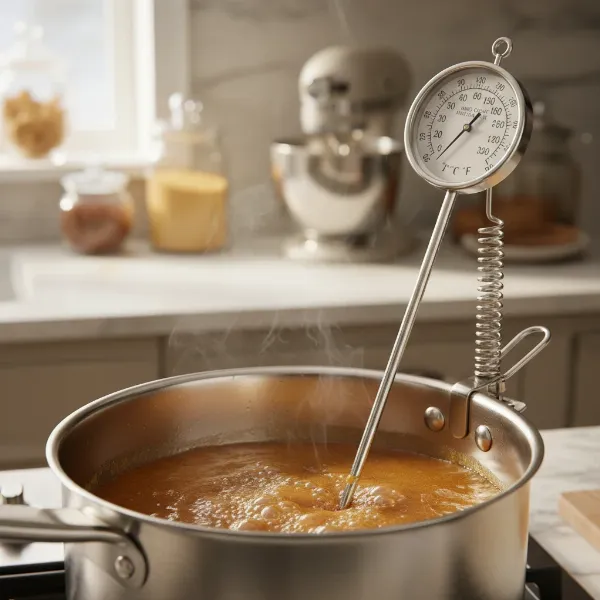
In the vast world of culinary tools, few are as essential yet often debated as the meat thermometer. For decades, home cooks and professional chefs alike have relied on these devices to ensure perfectly cooked, safe, and succulent meals. But as technology advances, a perennial question arises: when it comes to meat thermometers, is the reliability of “old school” analog truly better than the advanced precision of digital? This comprehensive guide dives into the heart of this debate, exploring the mechanics, advantages, and disadvantages of both analog and digital meat thermometers to help you decide which one best suits your cooking style.
The Essential Role of a Meat Thermometer
A meat thermometer is more than just a gadget; it’s your culinary compass, guiding you to the ideal internal temperature for any cut of meat. Its primary benefits include ensuring food safety by reaching temperatures that eliminate harmful bacteria, preventing overcooking to retain moisture and flavor, and guaranteeing consistent results every time. Whether you’re roasting a holiday turkey, grilling steaks, or slow-cooking a brisket, a reliable thermometer is the secret ingredient to culinary success. Meat thermometers primarily come in two forms: analog and digital, each offering a distinct approach to temperature measurement.
Analog Meat Thermometers: The Enduring Charm of Old School
Analog meat thermometers, often called dial or bimetallic thermometers, represent the traditional approach to temperature measurement. They operate without batteries, relying on a simple, robust mechanical system. Typically, a bimetallic coil or a colored alcohol (formerly mercury) column expands or contracts with heat, moving a needle across a dial to indicate the temperature.
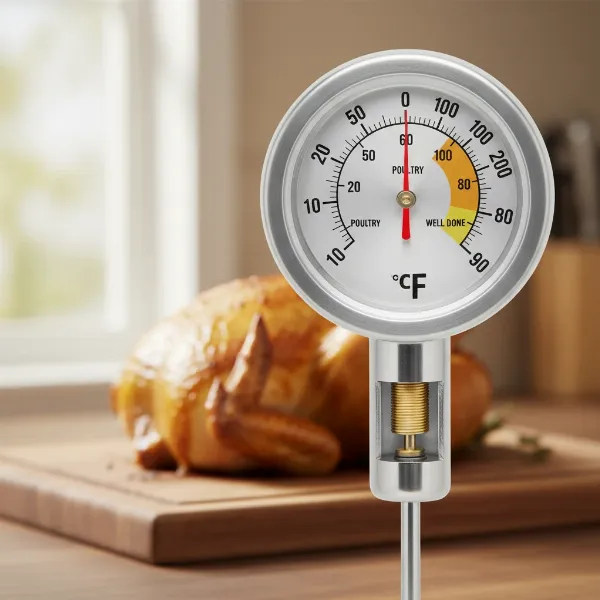 Close-up of an analog meat thermometer with a visible dial and bimetallic coil.
Advantages of Analog Thermometers:
- Durability and Reliability: Analog thermometers are renowned for their sturdy construction. With fewer electronic components, they are generally more resilient to drops and less prone to moisture damage, making them a reliable choice in busy kitchen environments.
- Cost-Effectiveness: Often significantly more affordable than their digital counterparts, analog thermometers offer an excellent entry point for home cooks seeking a basic yet effective temperature-monitoring tool.
- No Batteries Required: The absence of batteries means you’ll never face the frustration of a dead thermometer mid-cook. This makes them particularly suitable for situations where consistent power isn’t guaranteed or in steamy environments where electronics might falter.
- Continuous Monitoring: Many analog models are designed as “leave-in” thermometers, safe to remain in the meat throughout the cooking process, particularly useful for roasts or longer cooks.
|
Our Picks for the Best Meat thermometer in 2026
As an Amazon Associate I earn from qualifying purchases.
|
||
| Num | Product | Action |
|---|---|---|
| 1 | ThermoPro TP03B Digital Meat Thermometer for Cooking, Instant Read Thermometer with Backlight, Kitchen Food Thermometer for Grill Smoker BBQ Oil Deep Fry Candy Bread Coffee with Pop-up Meat Probe |

|
| 2 | ThermoPro TP19H Digital Meat Thermometer for Cooking with Ambidextrous Backlit and Motion Sensing Kitchen Cooking Food Thermometer for BBQ Grill Smoker Oil Fry Candy Instant Read Thermometer |
|
| 3 | Alpha Grillers Meat Thermometer Digital - Instant Read Food Thermometer for Cooking and Grilling Gifts for Men Valentines Day Gifts for Him Her Mom Dad |
|
| 4 | Ultrean Digital Meat Thermometer for Cooking,Ultra-Fast Instant Read Food Thermometer with Backlight,Foldable Probe,Waterproof Kitchen Thermometer for BBQ,Grill,Fry,Oven,Candy Making |
|
| 5 | TempPro TP829 1000ft Wireless Meat Thermometer Digital for Grilling and Smoking, 4 Meat Probes Grill Thermometer for Outside Grill, BBQ Thermometer for Cooking Food Temperature (Previously ThermoPro) |
|
| 6 | Meat Thermometer Digital with 1 Second Instant Read, Large LED Display, Food Thermometer |
|
| 7 | Meat Thermometer Digital - Instant Read Food Thermometer for Cooking Grilling, Candy, Air Fryer, Griddle Probe Kitchen Gadgets Essentials BBQ Accessories, Valentines Day Gifts for Him Her, Red |
|
| 8 | 0.5 Sec Instant Read Meat Thermometer Digital with ±0.5℉ Precision, Food Thermometer for Cooking Kitchen Gadgets, Oven Grill Candy BBQ Essentials Accessories, Gifts for Him Dad Men Birthday, Red |
|
| 9 | Professional Meat Thermometer - Instant Read Food Thermometer with Waterproof Design, Backlight, Hold/Min/Max Function - Cooking Thermometer for Grilling, BBQ, Kitchen Use |
|
| 10 | Meat Thermometer Digital, Instant Read Meat ThermometerI for Grill and Cooking, Waterproof Food Thermometer for Kitchen and Outside, BBQ, Turkey, Candy, Liquids, Beef |
|
Disadvantages of Analog Thermometers:
- Slower Response Time: Analog thermometers typically take longer to register and display the final temperature, requiring more patience from the cook.
- Lower Precision and Readability: Reading an analog dial can be challenging, especially in low light or when dealing with fine increments. They usually display temperatures in whole numbers or 1-2 degree increments, lacking the decimal-point precision of digital models.
- Limited Features: They offer a straightforward temperature reading, but lack advanced features like alarms, remote monitoring, or preset temperature guides.
Digital Meat Thermometers: The Rise of Modern Precision
Digital meat thermometers have surged in popularity due to their technological advancements, offering speed, precision, and a host of convenient features. These devices use electronic sensors (thermocouples or thermistors) to measure temperature, converting the reading into an electrical signal that is then displayed digitally on an LCD screen.
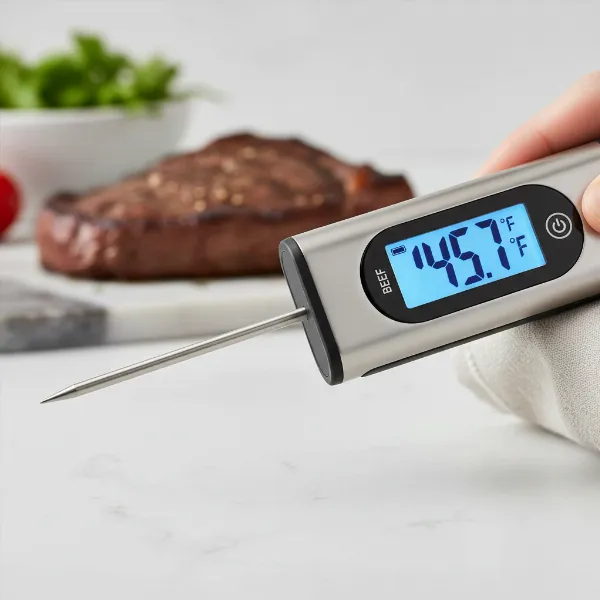 Modern digital instant-read meat thermometer with a clear LCD screen displaying temperature.
Advantages of Digital Thermometers:
- Exceptional Speed and Precision: Digital thermometers are lauded for their rapid response times, often providing accurate readings within seconds. They typically measure temperature to the tenth of a degree, offering a level of precision that analog models cannot match.
- Ease of Reading: The clear, digital display eliminates guesswork, making it easy to read the exact temperature at a glance. Many models feature backlights, further enhancing readability in any lighting condition.
- Advanced Features: This is where digital thermometers truly shine. Many come equipped with features like preset temperature alarms, programmable settings for different meats, hold functions, and even wireless connectivity for remote monitoring via smartphone apps.
- Versatility: With different styles such as instant-read probes and leave-in probe-style thermometers, digital models are adaptable to nearly all cooking methods, from grilling and roasting to stovetop cooking and baking.
Disadvantages of Digital Thermometers:
- Battery Dependency: Digital thermometers require batteries to function, which can be an inconvenience if they die during a crucial cooking moment. Batteries are also generally not ideal in very steamy or wet environments.
- Higher Cost: Due to their advanced technology and features, digital thermometers, especially high-end models, tend to be more expensive than analog options.
- Potential Fragility: Electronic components can be more sensitive to shock and moisture, potentially making them less durable than their rugged analog counterparts if not handled with care.
Head-to-Head: Analog vs. Digital Comparison
To simplify your decision, let’s look at a direct comparison of key attributes:
| Feature | Analog Meat Thermometers | Digital Meat Thermometers |
|---|---|---|
| Accuracy | Good, but less precise (whole numbers, 1-2° increments) | Excellent, highly precise (to 0.1° F/C) |
| Speed | Slower (takes longer to stabilize) | Very fast (instant-read in seconds) |
| Readability | Dial display, can be hard to read, requires eye-level | Clear digital display, often backlit, easy to read |
| Durability | High, robust, less sensitive to drops | Moderate, more sensitive to impact and moisture |
| Power Source | No batteries required | Battery-dependent |
| Cost | Generally more affordable | Typically more expensive |
| Features | Basic temperature reading, some with marked zones | Alarms, presets, remote monitoring, memory, calibration |
| Calibration | Easy for dial types (ice water & wrench) | Often auto-calibrating or user-adjustable |
| Best Use Cases | Deep-frying, candy making, general roasting where exact tenths of a degree aren’t critical, steaming liquids. | Grilling, smoking, delicate roasts, any cooking requiring rapid, precise readings. |
When renowned culinary figures like Alton Brown suggest owning both types of thermometers, it highlights that each has its place in a well-equipped kitchen. An analog thermometer might be your go-to for monitoring the oil temperature for deep frying or when making delicate candy where steam might interfere with electronics. Conversely, a digital instant-read is invaluable for quickly checking the doneness of a steak on the grill without losing precious heat.
Choosing Your Ideal Meat Thermometer: Factors to Consider
Selecting the “better” meat thermometer ultimately depends on your individual cooking habits, preferences, and priorities. Here are the crucial factors to weigh:
- Your Cooking Style: Do you frequently grill, smoke, roast large cuts, or dabble in candy making and deep-frying? If precision and speed for meats are paramount, digital excels. If you need a robust, battery-free option for high-heat or steamy environments, analog shines.
- Budget: Analog thermometers offer a reliable, low-cost entry point. If advanced features and decimal-point accuracy are worth the investment, digital models offer a wide price range.
- Desired Features: Do you want smart features like alarms and remote monitoring, or do you prefer a straightforward, no-frills tool? Digital leads in smart functionality.
- Ease of Maintenance: Consider whether you prefer a device that never needs batteries or one that might require occasional battery changes but offers easy calibration.
- Readability Needs: If visual acuity is a concern, a large, backlit digital display will be far more user-friendly than an analog dial.
Mastering Your Meat Thermometer for Perfect Results
Regardless of whether you choose analog or digital, proper usage and care are paramount to achieving accurate readings and extending your thermometer’s lifespan.
Usage Tips:
- Insertion Depth: Always insert the thermometer into the thickest part of the meat, avoiding bones, which can give inaccurate readings.
- Stabilization: Allow the thermometer adequate time to stabilize and display the final temperature before taking a reading. Digital thermometers do this quickly, while analog models require a longer wait.
- Doneness Temperatures: Familiarize yourself with the USDA recommended internal temperatures for various meats to ensure both safety and optimal texture.
Care and Storage:
- Cleaning: After each use, thoroughly clean the probe with warm, soapy water. Many digital probes are waterproof, but always check manufacturer instructions for the main unit. Analog thermometers are generally easier to wipe clean.
- Storage: Store your thermometer in a safe place where it won’t be dropped or damaged. For digital models, ensure the probe is protected.
- Calibration: Periodically check your thermometer’s accuracy. Most digital thermometers are factory-calibrated, but some allow for user calibration. Dial analog thermometers can often be recalibrated easily using an ice bath and a small wrench.
Conclusion
The debate between analog and digital meat thermometers isn’t about one being inherently “better” across the board, but rather about which tool is better suited for specific tasks and preferences. While the “old school” analog thermometer offers unmatched durability, affordability, and reliability in challenging environments, the modern digital thermometer provides superior speed, precision, and an array of smart features that enhance the cooking experience. For the discerning home cook or seasoned grill master, understanding the strengths of each type allows for an informed choice, or perhaps even the wisdom to incorporate both into your culinary arsenal. Ultimately, the best meat thermometer is the one that empowers you to cook with confidence, ensuring every meal is cooked to perfection.
How do I know if my meat thermometer is accurate?
You can test your meat thermometer’s accuracy using an ice bath. Fill a glass with crushed ice and water. Insert your thermometer into the center of the ice bath, ensuring the probe doesn’t touch the bottom or sides of the glass. The thermometer should read 32°F (0°C). If it reads differently, some analog models can be adjusted, while digital ones may need replacement or factory reset.
Can I leave an analog meat thermometer in the oven?
Many analog meat thermometers are designed to be oven-safe or “leave-in” thermometers. These are typically larger dial thermometers that are inserted into the meat before cooking and remain there throughout the process. Always check the manufacturer’s instructions to confirm if your specific analog model is oven-safe.
What’s the main advantage of an instant-read digital thermometer?
The main advantage of an instant-read digital thermometer is its speed and precision. It provides a highly accurate temperature reading within a few seconds, allowing you to quickly check the doneness of meat without significantly cooling the oven or grill. This rapid feedback is crucial for preventing overcooking.