Ensuring food safety and achieving perfectly cooked meals hinges on one often-overlooked tool: your meat thermometer. While it’s invaluable for gauging internal temperatures, an unclean probe can quickly become a vector for harmful bacteria, compromising both your health and your culinary efforts. Mastering the art of cleaning and sanitizing your meat thermometer probe is not just a good practice; it’s an essential skill for every home cook and professional chef. This comprehensive guide will walk you through the proper steps, methods, and crucial precautions to keep your thermometer pristine, accurate, and ready for every culinary adventure.
Understanding Why Proper Probe Hygiene Matters
At its core, a meat thermometer probe is designed to penetrate food, accurately reading its internal temperature. However, this direct contact means it can easily pick up food particles, fats, and, more importantly, microorganisms like bacteria from raw or undercooked ingredients.
- Preventing Foodborne Illness: The primary reason for meticulous cleaning and sanitizing is to halt the spread of foodborne pathogens. Cross-contamination occurs when bacteria from raw food on the probe transfer to cooked food or other surfaces. This unseen danger can lead to serious health risks if ignored.
- Ensuring Accuracy: Beyond hygiene, residual food particles or grime on the probe can act as an insulating layer, affecting the sensor’s ability to read temperature accurately. A dirty probe might give you a false reading, leading to undercooked (and unsafe) or overcooked (and dry) food.
- Extending Lifespan: Regular and correct cleaning prevents corrosion, buildup, and damage to the probe’s delicate components. Just like any quality kitchen tool, proper care significantly extends your thermometer’s life and maintains its reliability.
Essential Steps for Cleaning Your Meat Thermometer Probe
Cleaning and sanitizing are two distinct but equally vital steps. Cleaning removes visible debris, while sanitizing kills microorganisms. Always start with cleaning.
Initial Wipe-Down
|
Our Picks for the Best Meat thermometer in 2026
As an Amazon Associate I earn from qualifying purchases.
|
||
| Num | Product | Action |
|---|---|---|
| 1 | 0.5 Sec Instant Read Meat Thermometer Digital with ±0.5℉ Precision, Food Thermometer for Cooking Kitchen Gadgets, Oven Grill Candy BBQ Essentials Accessories, Gifts for Him Dad Men Birthday, Red |

|
| 2 | ThermoPro TP03B Digital Meat Thermometer for Cooking, Instant Read Thermometer with Backlight, Kitchen Food Thermometer for Grill Smoker BBQ Oil Deep Fry Candy Bread Coffee with Pop-up Meat Probe |
|
| 3 | Meat Thermometer Digital with 1 Second Instant Read, Large LED Display, Food Thermometer |
|
| 4 | Professional Meat Thermometer - Instant Read Food Thermometer with Waterproof Design, Backlight, Hold/Min/Max Function - Cooking Thermometer for Grilling, BBQ, Kitchen Use |
|
| 5 | Meat Thermometer Digital - Instant Read Food Thermometer for Cooking Grilling, Candy, Air Fryer, Griddle Probe Kitchen Gadgets Essentials BBQ Accessories, Valentines Day Gifts for Him Her, Red |
|
| 6 | Alpha Grillers Meat Thermometer Digital - Instant Read Food Thermometer for Cooking and Grilling Gifts for Men Valentines Day Gifts for Him Her Mom Dad |
|
| 7 | Meat Thermometer Digital, Instant Read Meat ThermometerI for Grill and Cooking, Waterproof Food Thermometer for Kitchen and Outside, BBQ, Turkey, Candy, Liquids, Beef |
|
| 8 | ThermoPro TP19H Digital Meat Thermometer for Cooking with Ambidextrous Backlit and Motion Sensing Kitchen Cooking Food Thermometer for BBQ Grill Smoker Oil Fry Candy Instant Read Thermometer |
|
| 9 | Ultrean Digital Meat Thermometer for Cooking,Ultra-Fast Instant Read Food Thermometer with Backlight,Foldable Probe,Waterproof Kitchen Thermometer for BBQ,Grill,Fry,Oven,Candy Making |
|
| 10 | TempPro TP829 1000ft Wireless Meat Thermometer Digital for Grilling and Smoking, 4 Meat Probes Grill Thermometer for Outside Grill, BBQ Thermometer for Cooking Food Temperature (Previously ThermoPro) |
|
Immediately after each use, and before any residue has a chance to dry and harden, take a moment to wipe the probe. Use a paper towel or a clean, disposable cloth to remove any large food particles, grease, or sticky sauces. This makes the subsequent washing much easier and more effective.
Washing with Soap and Water
Once the initial debris is removed, proceed to a thorough wash:
- Prepare a Solution: Fill a small basin with warm water and a few drops of mild dish soap. Avoid harsh detergents that could potentially damage the probe’s material.
- Focus on the Probe: Dip only the metal probe into the soapy water. It is crucial to never submerge the entire thermometer (especially the display, battery compartment, or any electronic components) unless your specific model is explicitly labeled as fully waterproof or dishwasher-safe by the manufacturer. Water can easily damage the delicate internal electronics, rendering your thermometer useless.
- Gentle Scrubbing: Use a soft sponge, a clean cloth, or a gentle brush to scrub the probe stem thoroughly. Pay close attention to the tip and any grooves where food particles might hide.
- Thorough Rinsing: Rinse the probe under warm running water until all traces of soap and food residue are gone. Ensure no soapy film remains, as it can affect food taste or harbor bacteria.
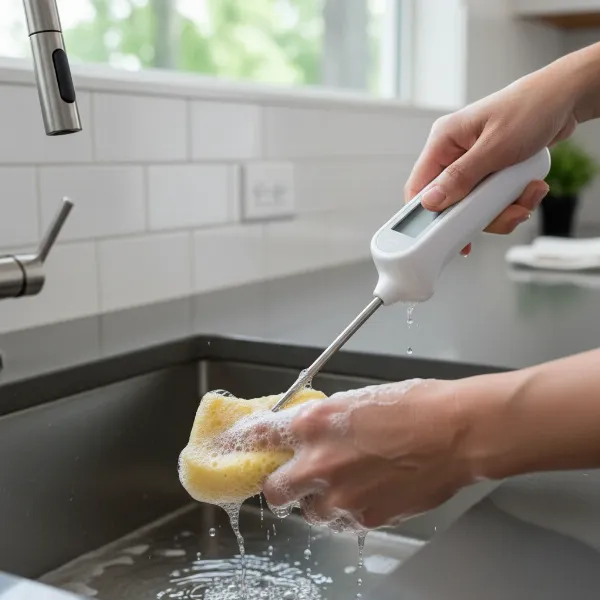 A person carefully hand washing a meat thermometer probe with soap and water in a kitchen sink
Effective Methods for Sanitizing Your Thermometer Probe
After cleaning, sanitization is the critical step to eliminate bacteria. Choose one of the following proven methods:
Alcohol Swabs (Isopropyl Alcohol 60-70%)
This is one of the most common and convenient methods for food-safe sanitization.
- Method of Application: Take a fresh alcohol swab or saturate a cotton ball/clean cloth with 60-70% isopropyl (rubbing) alcohol.
- Wipe Thoroughly: Vigorously wipe down the entire probe surface, ensuring complete coverage. The alcohol will evaporate quickly, killing most surface bacteria.
- Rinsing Consideration: While many alcohol wipes are designed to air dry without residue, some sources recommend a quick rinse with cool water after using liquid alcohol to wash away any remaining alcohol, especially if the probe will immediately contact food. Always refer to your thermometer’s instructions.
Boiling Water Method
High heat is an excellent sanitizer, but caution is paramount with this method.
- Temperature and Duration: Bring a small pot of water to a rolling boil (above 212°F or 100°C).
- Dip the Probe: Carefully immerse only the metal probe stem into the boiling water. Keep it submerged for at least one minute to effectively kill bacteria. Some food safety guidelines suggest at least 30 seconds for water at 77°C or hotter.
- Crucial Caution: Absolutely do NOT immerse the entire thermometer into the boiling water, as the high temperature and steam can severely damage the thermometer’s internal components, casing, or display. Hold it by the handle, ensuring only the probe is submerged.
Food-Safe Bleach Solution
For a more robust sanitization, a diluted bleach solution can be used.
- Dilution Ratio: Create a sanitizing solution by mixing one tablespoon of unscented liquid chlorine bleach with one gallon of water. Ensure it’s a food-safe concentration.
- Soaking Time: After washing and rinsing, immerse the probe (again, only the probe) into the bleach solution for about ten minutes.
- Mandatory Thorough Rinsing: This step is non-negotiable. After soaking, rinse the probe meticulously under running water to remove all traces of the bleach solution. Any residual bleach can be toxic and affect food flavor. Follow with another soap and water wash if desired, then rinse completely.
Commercial Probe Wipes
Specialized probe wipes are available that contain food-safe sanitizers.
- Convenience and Usage: These are designed for quick and effective sanitization, especially in professional settings. Ensure the wipes are moist; if they dry out, they won’t disinfect properly. Follow the product’s instructions for best results.
Common Cleaning Mistakes to Avoid
Even with the best intentions, certain practices can harm your thermometer or undermine your cleaning efforts.
- Submerging the Entire Thermometer: This is the most critical mistake. Unless explicitly stated as fully submersible or dishwasher-safe (and very few are), water damage to the electronic head unit is almost inevitable, leading to malfunction or complete failure. Always check your manufacturer’s instructions.
- Using Harsh Abrasives or Chemicals: Steel wool, abrasive scrubbers, or strong, undiluted chemical cleaners (like industrial-strength bleach) can scratch the probe, damage its coating, or leave chemical residues that are unsafe for food contact. Stick to mild soap and recommended sanitizers.
- Employing Open Flames for Sterilization: While high heat sanitizes, exposing the probe directly to an open flame (like a stovetop burner) can easily exceed the probe’s tolerance, destroying the delicate internal temperature sensor. This will render your thermometer inaccurate or completely broken.
- Re-contaminating with Dirty Towels: Drying your freshly cleaned and sanitized probe with a dirty kitchen towel can reintroduce bacteria and undo all your hard work. Always use a clean, dry, disposable paper towel or allow it to air dry.
- Ignoring Manufacturer’s Instructions: Each thermometer model can have specific care requirements. Always consult the user manual for your particular device, especially regarding submergibility and recommended cleaning agents.
Maintaining Your Probe for Longevity and Accuracy
Proper post-cleaning care and handling contribute significantly to your thermometer’s performance and lifespan.
Proper Drying Techniques
After washing and sanitizing, ensure the probe is completely dry before storing. Air drying in a clean environment is ideal. Alternatively, thoroughly dry the probe with a fresh, clean, disposable paper towel.
Safe Storage Practices
Store your meat thermometer in a clean, dry place, away from extreme temperatures, direct sunlight, and liquids. Many probes come with a protective sheath or case; use it to prevent damage to the delicate tip and keep it clean between uses. Avoid tossing it into a cluttered drawer where it could be bent or knocked.
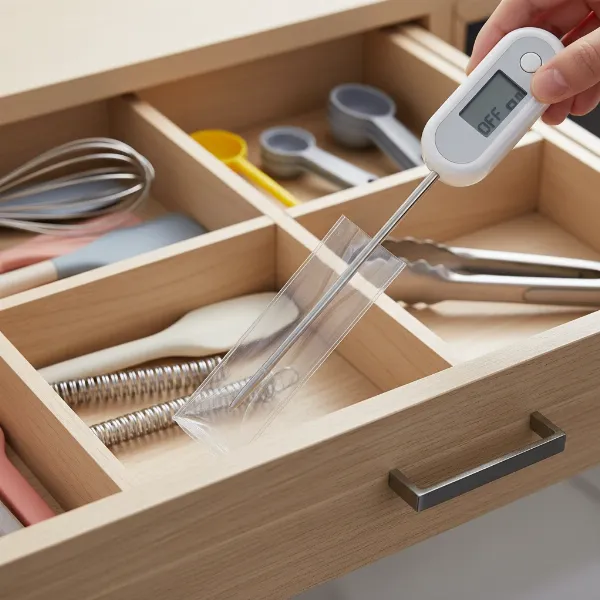 A perfectly clean and dry meat thermometer being placed into its protective sheath for safe storage in a kitchen drawer
Regular Calibration
Even with meticulous cleaning, a thermometer’s accuracy can drift over time. Regularly calibrating your thermometer (e.g., using the ice bath method or boiling water method as per manufacturer instructions) ensures it continues to provide reliable temperature readings. This check confirms that your efforts in cleaning and sanitizing are supported by an accurate tool.
Gentle Handling
Your thermometer probe is a sensitive instrument. Avoid using it to stab food forcefully, as this can bend or damage the probe. Likewise, refrain from using it to pry open packages, lift heavy pieces of meat, or as an ice pick. Treat it with care to prevent physical damage to the tip and internal wiring.
Conclusion
A clean and sanitized meat thermometer probe is a cornerstone of safe and successful cooking. By consistently following the simple steps of washing with soap and water, sanitizing with an appropriate method like alcohol or boiling water, and adhering to proper drying and storage, you protect your loved ones from foodborne illness and guarantee the most accurate temperature readings for your culinary masterpieces. Make probe hygiene a non-negotiable part of your kitchen routine, and you’ll enjoy peace of mind and perfectly cooked results every time.
What’s your go-to method for keeping your thermometer pristine and ready for your next culinary adventure?
Frequently Asked Questions
How often should I clean and sanitize my meat thermometer?
You should clean and sanitize your meat thermometer probe after every single use, especially when switching between different types of raw and cooked foods, or after it has been inserted into raw meat. This prevents cross-contamination and maintains accuracy.
Can I put my meat thermometer in the dishwasher?
Generally, no. Most meat thermometers, especially digital ones with electronic components in the handle or display, are not dishwasher-safe and should not be submerged in water. Always check your specific product’s manufacturer instructions; only probes explicitly rated as fully waterproof or dishwasher-safe can withstand this.
What kind of alcohol should I use to sanitize a thermometer probe?
Isopropyl rubbing alcohol with a concentration of 60-70% is recommended for sanitizing thermometer probes. Apply it with a clean swab or cloth, ensuring complete coverage of the probe surface.
Is boiling water enough to sanitize a thermometer probe?
Yes, immersing only the metal probe into boiling water (above 212°F or 100°C) for at least one minute is an effective method for sanitization. However, be extremely careful not to submerge the entire thermometer, as this can cause severe damage to the electronic head unit.
What happens if I don’t clean my thermometer probe?
Failing to clean your thermometer probe can lead to foodborne illness due to the spread of bacteria from raw food to other ingredients or cooked dishes (cross-contamination). Additionally, accumulated food residue can impair the probe’s accuracy, resulting in unsafe or undesirable cooking temperatures.
How do I know if my thermometer probe is clean enough?
After washing with soap and water, the probe should be visibly free of all food particles and grease. After sanitizing, it should be free of any chemical residues (if applicable) and thoroughly dried. A truly clean probe is one that has gone through both the cleaning and sanitizing steps.