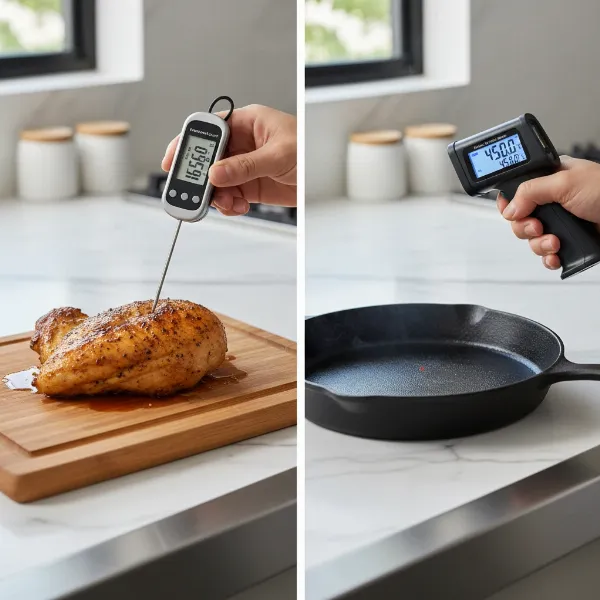
Achieving the perfect medium-rare steak at home can feel like a culinary quest, often resulting in steaks that are either undercooked or overdone. The secret to consistently hitting that sweet spot of a warm, pink center with exceptional juiciness and flavor lies not in guesswork, but in precision: using a reliable meat thermometer to guide your cooking. This comprehensive guide will demystify the process, empowering you to cook steak like a seasoned chef, ensuring every bite is tender, flavorful, and cooked to absolute perfection.
Understanding Medium Rare Steak: The Golden Standard
Medium rare is widely celebrated by chefs and steak aficionados as the ideal doneness for most cuts of beef. This preference stems from the balance it strikes: the meat is tender, incredibly juicy, and boasts a rich, beefy flavor that truly shines.
What exactly defines a medium-rare steak? It features a warm, reddish-pink center that transitions to a lightly browned exterior, a result of the Maillard reaction. This chemical process creates a savory crust on the surface, locking in moisture and developing complex flavors that are unattainable at lower or higher temperatures. The texture is yielding yet firm, offering a satisfying chew without being tough or raw. Beyond personal preference, understanding the science behind this doneness helps you appreciate why temperature control is paramount.
The Essential Tool: Your Meat Thermometer
Without a doubt, the most critical piece of equipment for mastering medium-rare steak is a high-quality meat thermometer. Relying on visual cues or the “touch test” can be misleading, as steak thickness, cut, and even ambient kitchen temperature can affect cooking times and external appearance. A thermometer provides an accurate, objective measure of the internal temperature, eliminating guesswork.
There are primarily two types of thermometers best suited for steak:
- Instant-Read Thermometers: These are ideal for quickly checking the temperature of thinner cuts of steak. They provide a reading within a few seconds, allowing you to monitor doneness without overcooking.
- Leave-In Probe Thermometers: For thicker cuts or when using methods like reverse searing, a leave-in probe thermometer is invaluable. You can insert the probe into the steak, and it will continuously monitor the internal temperature, often with an alarm to signal when your target temperature is reached.
To properly use a meat thermometer, insert the probe into the thickest part of the steak, ensuring it does not touch any bone, gristle, or fat, as these can give inaccurate readings. For medium-rare steak, the target final internal temperature range is typically 130°F to 135°F (54°C to 57°C). However, it’s crucial to understand the concept of “pull temperature” due to carryover cooking.
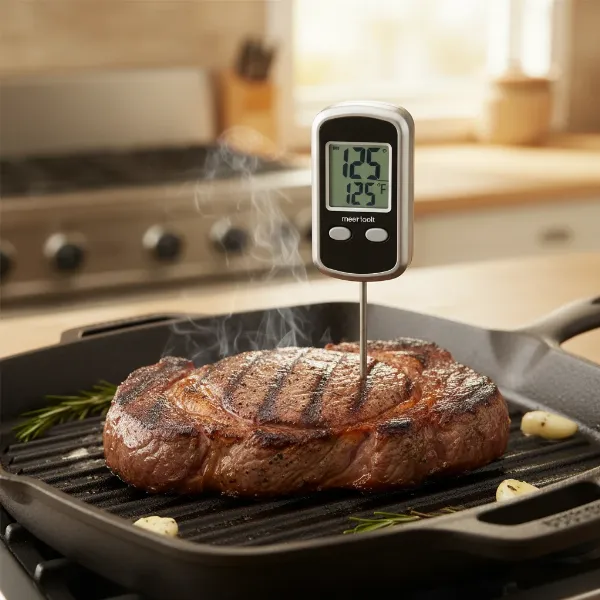 An instant-read meat thermometer accurately checking the internal temperature of a cooking steak.
Achieving Medium Rare: Step-by-Step Temperature Guide
Cooking a perfect medium-rare steak is a blend of careful preparation, precise temperature monitoring, and proper resting. Here’s a step-by-step guide to help you achieve consistent results.
Preparation is Key
Before your steak even touches the heat, a few simple steps can dramatically improve its outcome:
- Choose the Right Cut: While most cuts can be cooked medium-rare, fattier cuts like ribeye, New York strip, and sirloin often shine brightest at this doneness, as the fat renders beautifully, adding immense flavor and juiciness. Leaner cuts like filet mignon also benefit from medium-rare preparation to prevent dryness.
- Bring to Room Temperature: Remove your steak from the refrigerator at least 30-60 minutes, or even up to 1-2 hours for thicker cuts, before cooking. This allows the steak to cook more evenly, preventing the outside from overcooking while the inside struggles to reach temperature.
- Pat Dry Thoroughly: Use paper towels to pat both sides of the steak completely dry. Moisture on the surface will inhibit the Maillard reaction, preventing that desirable crust from forming. A dry surface is essential for a great sear.
- Season Generously: Season your steak liberally with salt and freshly ground black pepper just before cooking. Some chefs also recommend a light seasoning with garlic powder, onion powder, or a sprig of rosemary or thyme for added aromatic depth.
|
Our Picks for the Best Meat thermometer in 2026
As an Amazon Associate I earn from qualifying purchases.
|
||
| Num | Product | Action |
|---|---|---|
| 1 | Ultrean Digital Meat Thermometer for Cooking,Ultra-Fast Instant Read Food Thermometer with Backlight,Foldable Probe,Waterproof Kitchen Thermometer for BBQ,Grill,Fry,Oven,Candy Making |

|
| 2 | Meat Thermometer Digital with 1 Second Instant Read, Large LED Display, Food Thermometer |
|
| 3 | ThermoPro TP19H Digital Meat Thermometer for Cooking with Ambidextrous Backlit and Motion Sensing Kitchen Cooking Food Thermometer for BBQ Grill Smoker Oil Fry Candy Instant Read Thermometer |
|
| 4 | Meat Thermometer Digital - Instant Read Food Thermometer for Cooking Grilling, Candy, Air Fryer, Griddle Probe Kitchen Gadgets Essentials BBQ Accessories, Valentines Day Gifts for Him Her, Red |
|
| 5 | Alpha Grillers Meat Thermometer Digital - Instant Read Food Thermometer for Cooking and Grilling Gifts for Men Valentines Day Gifts for Him Her Mom Dad |
|
| 6 | Meat Thermometer Digital, Instant Read Meat ThermometerI for Grill and Cooking, Waterproof Food Thermometer for Kitchen and Outside, BBQ, Turkey, Candy, Liquids, Beef |
|
| 7 | ThermoPro TP03B Digital Meat Thermometer for Cooking, Instant Read Thermometer with Backlight, Kitchen Food Thermometer for Grill Smoker BBQ Oil Deep Fry Candy Bread Coffee with Pop-up Meat Probe |
|
| 8 | Professional Meat Thermometer - Instant Read Food Thermometer with Waterproof Design, Backlight, Hold/Min/Max Function - Cooking Thermometer for Grilling, BBQ, Kitchen Use |
|
| 9 | 0.5 Sec Instant Read Meat Thermometer Digital with ±0.5℉ Precision, Food Thermometer for Cooking Kitchen Gadgets, Oven Grill Candy BBQ Essentials Accessories, Gifts for Him Dad Men Birthday, Red |
|
| 10 | TempPro TP829 1000ft Wireless Meat Thermometer Digital for Grilling and Smoking, 4 Meat Probes Grill Thermometer for Outside Grill, BBQ Thermometer for Cooking Food Temperature (Previously ThermoPro) |
|
Cooking Methods and Their Temperatures
The method you choose will depend on your equipment and desired outcome, but the principle of internal temperature remains constant.
- Pan-Searing: Ideal for steaks up to 1.5 inches thick.
- Heat a heavy-bottomed skillet (cast iron is excellent) over medium-high to high heat until it’s smoking lightly. Add a high smoke point oil (like grapeseed or avocado oil).
- Sear the steak for 2-4 minutes per side until a deep, golden-brown crust forms.
- Reduce heat to medium, and continue cooking, flipping every minute or so, until the internal temperature reaches your target pull temperature. You can also baste with butter, garlic, and herbs during this phase.
- Grilling: Perfect for a smoky flavor and attractive grill marks.
- Preheat your grill to high heat.
- Place the seasoned steak on the hot grates. Grill for 3-5 minutes per side for a 1-inch thick steak, rotating to create crosshatch marks if desired.
- Move to a slightly cooler part of the grill if necessary, or reduce heat, and continue cooking until it reaches the pull temperature.
- Reverse Searing: Best for thicker steaks (1.5 inches or more) for edge-to-edge evenness.
- Preheat oven to a low temperature (around 225-275°F / 107-135°C).
- Place seasoned steak on a wire rack over a baking sheet. Cook in the oven until the internal temperature reaches 100-110°F (38-43°C). This can take 30-60 minutes depending on thickness.
- Remove from oven. Heat a cast-iron skillet to very high heat with a little oil.
- Sear the steak for 60-90 seconds per side, including the edges, until a beautiful crust develops and the internal temperature reaches your pull temperature.
The Crucial Pull Temperature
Understanding carryover cooking is vital for a truly perfect medium-rare steak. Meat continues to cook for several minutes after being removed from the heat source due to residual heat trapped within. For steaks, this can raise the internal temperature by 5-10°F.
Therefore, for a final medium-rare temperature of 130-135°F (54-57°C), you should remove your steak from the heat source when its internal temperature reads between 120°F and 125°F (49°C and 52°C). This early removal accounts for the temperature rise during resting, ensuring your steak doesn’t overcook.
The Art of Resting
Skipping the resting period is one of the most common mistakes, leading to dry, less flavorful steak. As a steak cooks, the muscle fibers contract, pushing the juices towards the center. Resting allows these juices to redistribute evenly throughout the meat.
- How Long: Rest your steak on a cutting board, loosely tented with foil, for 5-10 minutes after removing it from the heat. A good rule of thumb is to rest for half the cooking time or roughly 5 minutes per inch of thickness.
- The Result: A perfectly rested steak will be significantly juicier and more tender, as the reabsorbed juices will enhance its flavor and texture.
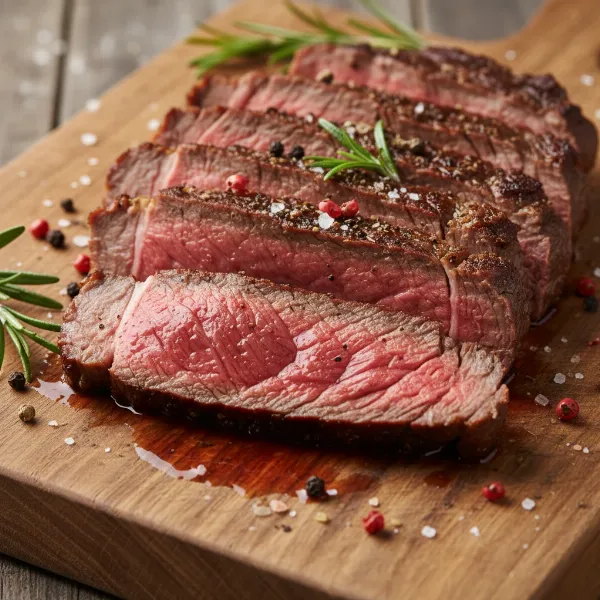 Slices of a perfectly cooked medium-rare steak showing a warm pink center and juicy texture.
Troubleshooting Common Medium Rare Steak Mistakes
Even with a thermometer, achieving perfection takes practice. Here are common pitfalls and how to avoid them:
- Overcooking/Undercooking: This is almost always due to not using a thermometer or not trusting its reading. Invest in a reliable instant-read thermometer and pull the steak at the recommended carryover temperature.
- Not Resting the Steak: As discussed, cutting into a steak immediately causes the precious juices to run out, leaving you with dry meat. Always allow adequate rest time.
- Uneven Cooking: If your steak is cold in the center and well-done on the edges, it likely went into the pan too cold or was cooked at too high a heat for too long. Ensure the steak comes to room temperature before cooking, and adjust heat as needed.
- No Crust Development: A lack of a good sear (Maillard reaction) usually happens if the steak surface is too wet or the pan isn’t hot enough. Pat your steak very dry and preheat your cooking surface until it’s smoking hot.
Elevate Your Steak Game: Expert Tips for Medium Rare Perfection
Beyond the basics, these tips can help you truly master the art of medium-rare steak:
- High-Quality Cuts Matter: While technique is crucial, starting with a good piece of meat makes a significant difference. Look for steaks with good marbling (flecks of fat within the muscle), as this contributes to flavor and tenderness.
- Achieve an Incredible Sear: A dark, flavorful crust is a hallmark of a well-cooked steak. Don’t be afraid of high heat initially. If pan-searing, consider pressing down lightly on the steak with tongs to ensure full contact with the hot surface.
- Basting for Flavor: During the final minutes of pan-searing, add a tablespoon of butter, a few cloves of crushed garlic, and a sprig of rosemary or thyme to the pan. Tilt the pan and use a spoon to baste the melting butter mixture over the steak repeatedly. This infuses the steak with incredible flavor.
- Understand USDA Guidelines vs. Culinary Preference: While the USDA recommends an internal temperature of 145°F (63°C) for beef for safety, this typically results in a medium doneness. For the classic medium-rare experience—where flavor, tenderness, and juiciness are maximized—chefs and connoisseurs consistently aim for the 130-135°F range. For whole cuts of beef, the risk of foodborne illness at medium-rare temperatures is generally considered low if the meat is sourced from a reputable butcher and handled properly.
Cooking a perfect medium-rare steak is a rewarding experience that elevates any meal. By embracing the precision of a meat thermometer, understanding the nuances of temperature, and practicing the techniques outlined, you’ll consistently deliver steaks that are tender, juicy, and bursting with flavor. Trust your thermometer, respect the resting period, and savor the delicious results of your culinary expertise.
What’s your favorite steak cut to cook medium-rare, and what’s one tip you swear by for achieving perfection every time?
Frequently Asked Questions
What is the ideal medium rare steak temperature?
The ideal final internal temperature for a medium-rare steak is between 130°F and 135°F (54°C to 57°C). However, you should remove the steak from the heat a few degrees lower, typically between 120°F and 125°F (49°C and 52°C), to account for carryover cooking during the resting period.
Why do I need to rest my steak after cooking?
Resting your steak is crucial because it allows the muscle fibers, which contract during cooking and push juices to the center, to relax. This relaxation enables the juices to redistribute evenly throughout the meat, resulting in a much juicier, more tender, and flavorful steak. Without resting, the juices would simply run out when you slice into it.
Can I cook a medium rare steak without a thermometer?
While it is possible to cook a steak to medium-rare using the “touch test” or timing, it is significantly more challenging and less consistent. Relying on a meat thermometer is the most reliable method to ensure your steak reaches the precise internal temperature for perfect medium-rare doneness every single time, eliminating guesswork and preventing over or undercooking.
What is carryover cooking?
Carryover cooking refers to the phenomenon where food continues to cook and its internal temperature rises after it has been removed from the heat source. This occurs because the exterior of the food is hotter than the interior, and the heat energy continues to transfer inwards. For steaks, this usually means the temperature can rise by an additional 5-10°F during the resting period.