Achieving that golden-brown, crispy-skinned, and unbelievably juicy rotisserie chicken at home is a culinary triumph. Yet, for many home cooks, the journey from raw bird to succulent centerpiece is fraught with peril, often resulting in dry, overcooked meat. The secret weapon against this common kitchen tragedy? A reliable meat thermometer. It’s the difference between guessing and knowing, transforming your rotisserie chicken from hit-or-miss to consistently perfect.
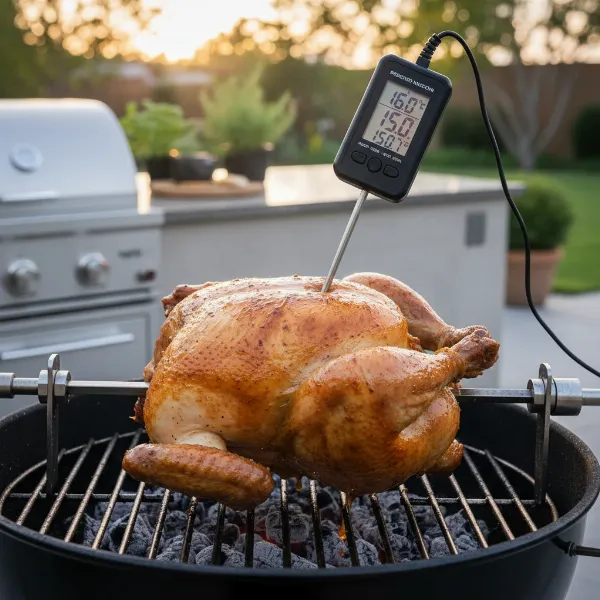 Golden-brown rotisserie chicken with a meat thermometer inserted for perfect juiciness.
Understanding Meat Thermometers: Types and Benefits for Rotisserie Cooking
At its core, a meat thermometer is a device designed to measure the internal temperature of your food, providing an accurate indicator of doneness. For rotisserie chicken, where constant rotation and even cooking are paramount, the right thermometer is indispensable.
Why You Need a Meat Thermometer for Rotisserie Chicken
Cooking poultry, especially a whole chicken, requires precise temperature control. Without it, you risk two major pitfalls:
- Dry, Overcooked Chicken: Guessing often leads to leaving the chicken on the spit for too long, evaporating precious moisture and resulting in a tough, dry texture.
- Food Safety Concerns: Undercooked chicken can harbor harmful bacteria. A thermometer ensures your chicken reaches the safe internal temperature of 165°F (74°C), guaranteeing it’s safe to eat.
- Consistent Results: With a thermometer, you can replicate perfect results every time, confidently achieving that ideal balance of crispy skin and tender, juicy meat.
- Eliminates Guesswork: No more poking, prodding, or cutting into the chicken to check for doneness, which only releases juices and interrupts the cooking process.
|
Our Picks for the Best Meat thermometer in 2026
As an Amazon Associate I earn from qualifying purchases.
|
||
| Num | Product | Action |
|---|---|---|
| 1 | Ultrean Digital Meat Thermometer for Cooking,Ultra-Fast Instant Read Food Thermometer with Backlight,Foldable Probe,Waterproof Kitchen Thermometer for BBQ,Grill,Fry,Oven,Candy Making |

|
| 2 | ThermoPro TP19H Digital Meat Thermometer for Cooking with Ambidextrous Backlit and Motion Sensing Kitchen Cooking Food Thermometer for BBQ Grill Smoker Oil Fry Candy Instant Read Thermometer |
|
| 3 | Meat Thermometer Digital with 1 Second Instant Read, Large LED Display, Food Thermometer |
|
| 4 | 0.5 Sec Instant Read Meat Thermometer Digital with ±0.5℉ Precision, Food Thermometer for Cooking Kitchen Gadgets, Oven Grill Candy BBQ Essentials Accessories, Gifts for Him Dad Men Birthday, Red |
|
| 5 | ThermoPro TP03B Digital Meat Thermometer for Cooking, Instant Read Thermometer with Backlight, Kitchen Food Thermometer for Grill Smoker BBQ Oil Deep Fry Candy Bread Coffee with Pop-up Meat Probe |
|
| 6 | Alpha Grillers Meat Thermometer Digital - Instant Read Food Thermometer for Cooking and Grilling Gifts for Men Valentines Day Gifts for Him Her Mom Dad |
|
| 7 | Meat Thermometer Digital, Instant Read Meat ThermometerI for Grill and Cooking, Waterproof Food Thermometer for Kitchen and Outside, BBQ, Turkey, Candy, Liquids, Beef |
|
| 8 | Professional Meat Thermometer - Instant Read Food Thermometer with Waterproof Design, Backlight, Hold/Min/Max Function - Cooking Thermometer for Grilling, BBQ, Kitchen Use |
|
| 9 | TempPro TP829 1000ft Wireless Meat Thermometer Digital for Grilling and Smoking, 4 Meat Probes Grill Thermometer for Outside Grill, BBQ Thermometer for Cooking Food Temperature (Previously ThermoPro) |
|
| 10 | Meat Thermometer Digital - Instant Read Food Thermometer for Cooking Grilling, Candy, Air Fryer, Griddle Probe Kitchen Gadgets Essentials BBQ Accessories, Valentines Day Gifts for Him Her, Red |
|
Types of Meat Thermometers
While various types of meat thermometers exist, not all are created equal when it comes to the unique demands of rotisserie cooking.
- Instant-Read Thermometers: These provide quick temperature readings (often in 1-3 seconds) and are excellent for spot-checking. However, they are not designed to be left in the chicken during the entire cooking process. They are useful for a final verification once the chicken is removed from the rotisserie. Popular examples include the ThermoWorks Thermapen One and ChefsTemp Finaltouch X10.
- Leave-in Probe Thermometers (Wired): These thermometers consist of a probe connected by a heat-resistant wire to a base unit that displays the temperature. While great for roasting in an oven or smoker, the wire makes them unsuitable for rotisserie setups, as it would inevitably tangle with the spinning spit.
- Truly Wireless Probe Thermometers: This is where rotisserie cooking truly shines. These innovative thermometers feature a probe with built-in sensors that transmit temperature data wirelessly to a receiver unit or a smartphone app, eliminating any wires that could get caught. They allow you to monitor your chicken’s temperature continuously without opening the grill or oven door or interfering with the rotation.
- Smart Thermometers (Bluetooth/WiFi): Often synonymous with truly wireless probes, smart thermometers leverage Bluetooth or Wi-Fi connectivity to provide real-time temperature monitoring directly to your smartphone or tablet. They typically come with intuitive apps offering presets, customizable alerts, and even estimated cook times.
Key Factors When Choosing a Meat Thermometer for Rotisserie Chicken
Selecting the best meat thermometer for rotisserie chicken involves considering several specific features that cater to this dynamic cooking method.
- Wireless Capability is Crucial: For rotisserie, a truly wireless probe is non-negotiable. It allows the chicken to spin freely without wires getting tangled, ensuring uninterrupted cooking and consistent results.
- Accuracy and Speed: Your thermometer must provide highly accurate readings (ideally within +/- 1°F) to avoid under or overcooking. While not as critical as for instant-reads, a reasonably quick update rate for continuous monitoring is also beneficial.
- Probe Design and Durability:
- Multiple Sensors: Many advanced wireless probes include both internal meat temperature sensors and ambient temperature sensors. This allows you to monitor not just the chicken’s core temperature but also the cooking environment, which is vital for managing heat.
- Heat Resistance: Ensure the probe and its components can withstand the high temperatures of your rotisserie setup (often up to 700°F or even 1000°F for ambient sensors).
- Minimum Insertion Depth: Pay attention to the recommended insertion depth to ensure the internal sensors are accurately reading the coldest part of the meat.
- Connectivity and Range:
- Bluetooth: Typically offers a range of up to 100-200 feet, which can be affected by physical obstructions like walls or grill lids. Ideal if you stay relatively close to your rotisserie setup.
- WiFi: Provides a much greater range, often allowing you to monitor your cook from anywhere you have an internet connection. This is perfect for longer cooking sessions when you might be inside or away from the grill. Some systems use a base station to bridge Bluetooth to WiFi.
- App Features & User Experience: A well-designed app enhances the cooking experience. Look for:
- Customizable Alerts: Set alarms for target temperatures, high/low ambient temperatures.
- Presets: Pre-programmed USDA-recommended temperatures for various meats and doneness levels.
- Estimated Cook Times: Some apps can predict how much longer your chicken will take based on current temperatures.
- Historical Graphing: Track temperature progression over time to refine your cooking techniques.
- Intuitive Interface: Easy navigation and clear, readable displays are essential.
- Battery Life and Charging: Consider the battery life, especially for longer rotisserie cooks. Most wireless probes come with a charging dock; ensure it’s convenient to use.
- Ease of Cleaning: Probes should be easy to clean. Some are dishwasher-safe, while others require hand washing.
Top Picks: Best Meat Thermometers for Rotisserie Chicken
Based on performance, features, and suitability for rotisserie, these models stand out:
- Meater Plus/Duo/Pro XL: These truly wireless probes are favorites among rotisserie enthusiasts. They feature multiple internal sensors and an ambient sensor, transmitting data via Bluetooth to an app. The Meater Plus boasts a 1000-foot Bluetooth range (outdoors with the repeater in the charger), while the Pro Duo and Pro XL offer even more probes and enhanced WiFi capabilities for unlimited range with an internet connection. Their sophisticated app offers excellent presets, estimated cook times, and detailed graphing.
- Typhur Sync Dual WiFi Thermometer: This model offers two completely wireless probes with multiple sensors for both meat and ambient temperatures. It connects via Bluetooth/WiFi to an intuitive app, providing excellent range and accuracy. Users appreciate its robust design and reliable performance for rotisserie.
- ThermoPro Twin TempSpike (TP962/TP972 Plus): The ThermoPro TempSpike series offers truly wireless probes that connect via Bluetooth to a base unit and app. They are known for their strong Bluetooth connectivity, good accuracy, and audible alarms on both the base and your phone. The twin probes allow you to monitor different parts of the chicken or multiple pieces of meat.
- ThermoWorks RFX Wireless Probe Starter Kit: While this system involves a “Gateway” unit, its “Meat” probe is truly wireless and connects to the Gateway, which then uses WiFi or RF to transmit to your phone. It’s highly praised for its exceptional accuracy and impressive wireless range, making it a reliable choice for monitoring your rotisserie chicken, provided the wireless meat probe-to-gateway range meets your needs (around 40 feet without significant obstruction).
How to Master Rotisserie Chicken with Your Meat Thermometer
Owning a great thermometer is only half the battle; knowing how to use it effectively is the other.
- Proper Probe Placement: For a whole rotisserie chicken, insert the probe into the thickest part of the breast or thigh, ensuring it avoids touching any bones. Bones can give an artificially high reading. Aim for the very center of the thickest muscle mass.
- Target Temperature: Poultry, including chicken, is safely cooked when it reaches an internal temperature of 165°F (74°C). However, many chefs recommend removing the chicken from the heat when it reaches 160-162°F (71-72°C), as carryover cooking will cause the temperature to rise a few more degrees while it rests. This helps ensure maximum juiciness.
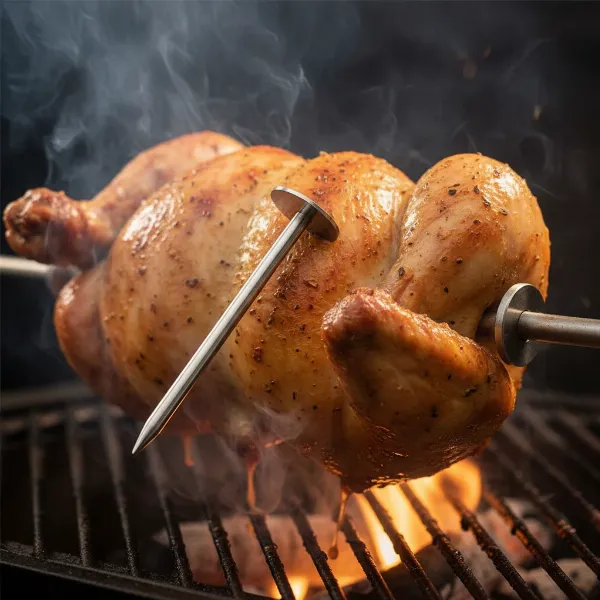 Wireless meat thermometer probe in a rotating rotisserie chicken on a grill.
- Monitoring During Cooking: Utilize the wireless capabilities of your thermometer. Place the probe correctly, set your target temperature and alarms in the app, and let it monitor the cooking process. You’ll receive alerts when your chicken is approaching or has reached the desired temperature, freeing you from constant supervision.
- Resting the Chicken: Once your chicken reaches its target temperature, remove it from the rotisserie and let it rest for 10-15 minutes before carving. This crucial step allows the juices to redistribute throughout the meat, resulting in a more tender and juicy chicken. Do not cut it immediately, as the juices will run out, leaving you with dry meat.
- Troubleshooting Common Issues: If your chicken is consistently dry, double-check your probe placement and ensure your thermometer is calibrated correctly. Uneven cooking might indicate hot spots in your grill or oven, but a thermometer helps you compensate by monitoring the coldest parts.
Care and Maintenance for Your Meat Thermometer
Proper care extends the life and ensures the accuracy of your investment.
- Cleaning: After each use, wipe down the probe with a damp cloth and mild soap. Many truly wireless probes are designed to be fully submergible or even dishwasher-safe, but always check the manufacturer’s instructions. Avoid immersing the electronic base unit or charger in water.
- Storage: Store your thermometer in its original casing or a dedicated drawer to protect the probe and electronics from damage. Keep it away from extreme temperatures.
- Battery Management: For rechargeable wireless probes, ensure they are fully charged before long cooks. Replace batteries in non-rechargeable models as needed.
- Calibration: While many modern digital thermometers come factory-calibrated and rarely need adjustment, you can periodically check accuracy using an ice bath (32°F / 0°C) or boiling water (212°F / 100°C at sea level). Consult your thermometer’s manual for specific calibration instructions if needed.
Conclusion
A high-quality meat thermometer is an indispensable tool for anyone serious about achieving consistently tender, juicy, and safely cooked rotisserie chicken. By opting for a truly wireless model, you unlock the freedom of continuous monitoring without the hassle of tangled wires, transforming your cooking experience and the quality of your meals. Investing in the right thermometer provides not just precision, but also peace of mind, allowing you to confidently deliver culinary perfection every time.
What’s your secret to the most delicious rotisserie chicken, and how does your favorite meat thermometer play a role?
Frequently Asked Questions
What is the ideal internal temperature for rotisserie chicken?
The ideal internal temperature for safely cooked chicken is 165°F (74°C). For rotisserie chicken, many chefs recommend removing it from the heat when it reaches 160-162°F (71-72°C), as the temperature will continue to rise a few degrees during the resting period, ensuring a perfectly juicy result.
Can I use a wired thermometer for rotisserie?
No, wired thermometers are generally not suitable for rotisserie cooking. The continuous rotation of the chicken would cause the wire to tangle around the spit, potentially damaging the thermometer or interfering with the cooking process. Truly wireless probes are specifically designed for this purpose.
How do wireless meat thermometers work?
Truly wireless meat thermometers feature a probe that is inserted into the meat, containing sensors for internal food temperature and often ambient cooking temperature. This probe then transmits data via Bluetooth or WiFi to a base unit or directly to a smartphone app, allowing you to monitor temperatures remotely without any physical wire connections to the food itself.
Where should I insert the thermometer in a rotisserie chicken?
For the most accurate reading, insert the thermometer probe into the thickest part of the chicken’s breast or thigh. It is crucial to ensure the tip of the probe does not touch any bone, as bones heat up faster than meat and can give an artificially high temperature reading.
How do I clean my wireless meat thermometer?
Always refer to the manufacturer’s instructions for cleaning. Most wireless probes are designed to be waterproof and can be wiped down with warm soapy water. Some models are even dishwasher-safe. However, never submerge the electronic charging base or receiver unit in water.